From Guiyang to Congjiang — A Week in Guizhou by Bus and on Foot
Independent travel from Guiyang to Congjiang in Guizhou: buses, minibuses, journey times, seasonal road conditions, and village guesthouses explained.
The high-speed train from Chengdu sets you down in Guiyang in under two hours. The station is clean, the food is good, and the departures board flips like clockwork. It all feels predictable. Then you buy your onward ticket and head south, and something quietly changes. The roads grow narrow. The hills crowd in. The passengers around you shift from Mandarin to something older and harder to parse. By the time you reach Congjiang, two or three travel days later, you are in a part of China that runs on its own logic, and the journey itself has become part of the point.
The south Guizhou route is one of the most rewarding slow-travel corridors in mainland China, and it rewards those who plan around its friction rather than expecting it to behave like a standard tourist circuit.
- The route runs Guiyang to Kaili by high-speed rail, then south through Rongjiang to Congjiang by long-distance coach, with each leg on a different class of transport
- Village guesthouses in the Dong clusters around Congjiang are family-run, walk-in only, and entirely cash-based
- Wet season conditions from May through September can delay the mountain road sections unpredictably, sometimes significantly
How Guizhou's Transport Tiers Actually Work
China's long-distance transport system is excellent if you stay on the main corridors. High-speed rail connects the big cities at speeds and prices that still surprise first-time visitors. Airports handle the longer jumps. But once you move into a rural minority region like southern Guizhou, you drop through the gears fast. Understanding getting around China as a tiered system, with intercity rail at the top and informal village transport at the bottom, is the mental model that makes a route like this readable before you attempt it.
In Guizhou specifically, the rail network expanded considerably during the 2010s and now connects most of the major prefecture-level cities. That is the first tier. Below it sits a network of long-distance coach services connecting county towns, generally operated out of official bus terminals. That is the second tier. The third tier, which dominates everything south of Rongjiang, is the informal minibus and shared-vehicle network that links individual villages to the nearest town with a proper bus station.
None of these tiers share an app or a booking system. Rail tickets are straightforward for foreign travelers to buy through third-party platforms in advance. Long-distance bus tickets generally require turning up at the terminal window on the day. The village minibuses have no schedule, no signage, and no ticketing system at all. You ask, you wait, you go. Once you accept that the third tier runs on patience rather than planning, the whole route becomes much less stressful to think about.
Guiyang to Kaili: The Gateway You Cannot Skip
Almost every route into southern Guizhou passes through Kaili first. The city sits around an hour and twenty minutes from Guiyang South station on the Hurong high-speed line, with frequent departures across the day. Tickets are cheap by Chinese rail standards and available on the same day without difficulty. The ride is smooth and fast, threading through tunnels and across river viaducts in a way that gives no real sense of the terrain you will be crossing by road later.
Kaili is the capital of the Miao and Dong Autonomous Prefecture and earns a night's stay on its own terms. The old market area near Zhaoshan road is genuinely useful for picking up supplies, including snacks that survive a bus journey and basic toiletries that will be harder to find further south. The city has a reliable range of accommodation from budget hostels to mid-range hotels, and the long-distance bus terminal is walkable from the central area if you travel light.
South from Kaili: The Coach Legs to Rongjiang and Congjiang
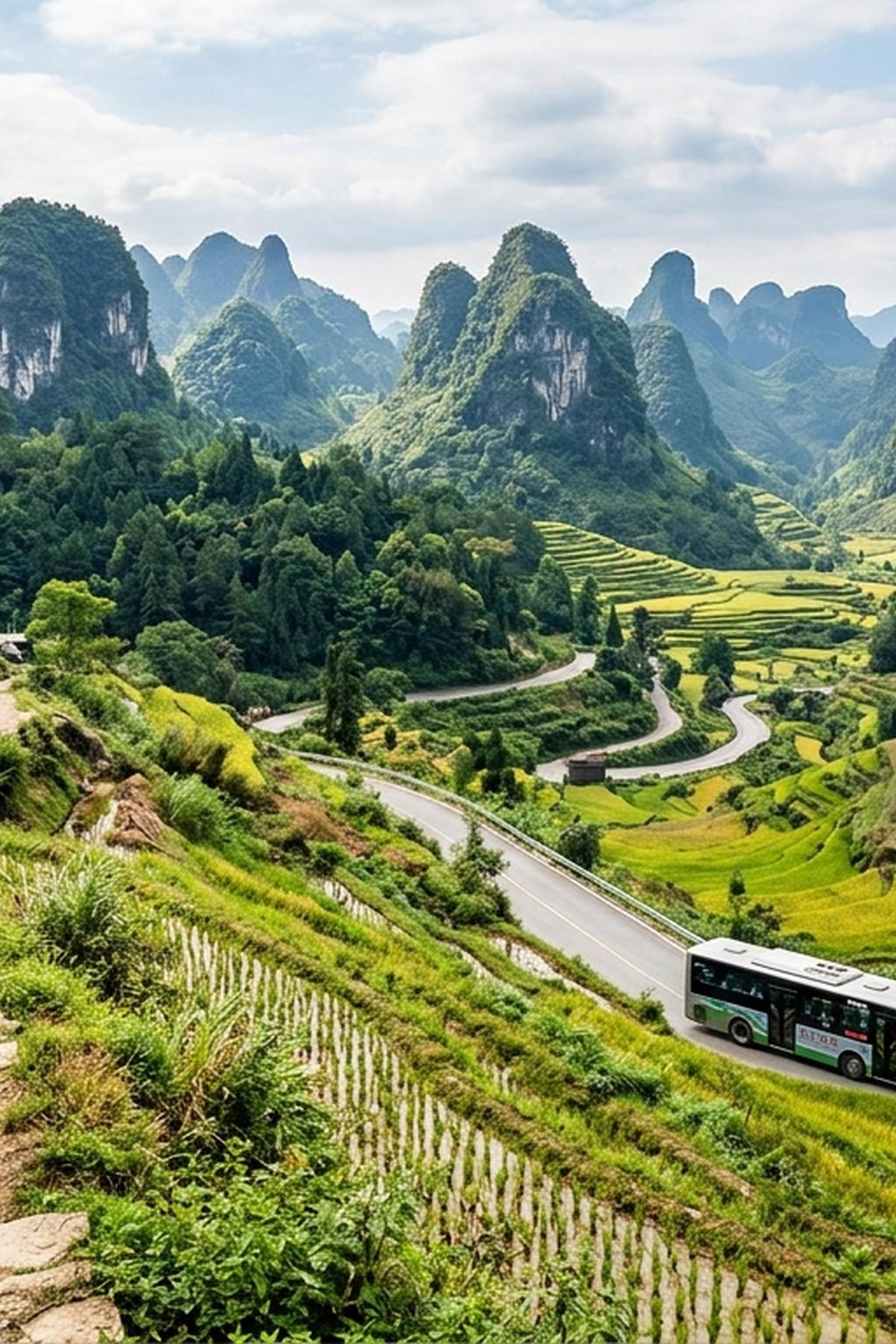
From Kaili's long-distance bus terminal, coaches run south to Rongjiang through most of the morning. The journey takes around three hours on a dry road and longer after rain, because the mountain sections involve sustained curves and the occasional surface damage that slows traffic to a crawl. The road is entirely paved and the coaches are standard Chinese long-distance buses. Anyone sensitive to motion should sit near the front and avoid eating heavily beforehand.
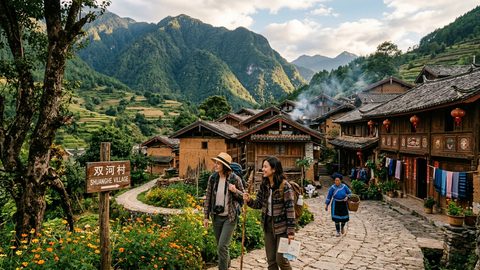
Rongjiang is a workable stopover. It has hotels across a range of prices, a functioning bus station, and enough restaurants to eat well without effort. Most travelers push through to Congjiang in the same day if the timing allows, but the Kaili bus can arrive late in the afternoon, and taking Rongjiang as an overnight stop rather than rushing the final leg is a sensible call. The Congjiang bus runs from Rongjiang's main terminal and covers the remaining distance in roughly an hour and a half to two hours, depending on stops and road conditions. The scenery through this section is among the best on the whole route, with the road following river valleys and passing through villages where the drum towers and covered bridges of Dong architecture first appear in earnest.
Congjiang town itself has an Agricultural Bank branch with an ATM near the riverside. Draw enough cash to cover your entire time in the surrounding villages before heading further out. Card payments are nonexistent once you leave the main road.
Local Minibuses and the Final Stretch into the Villages
The Dong village clusters around Congjiang, including Basha, Zhaoxing, and the smaller settlements along the Duliu River valley, are not served by long-distance coaches. Getting into them means either hiring a private driver or using the informal minibus network that operates out of a secondary vehicle area near Congjiang's morning market. Drivers cluster loosely by destination, and other passengers or nearby vendors will generally point you toward the right vehicle without much trouble.
Here is how a typical village access trip runs from Congjiang town:
- Head to the minibus area near the morning market between seven and ten in the morning, when vehicles and drivers are most active.
- Ask for a vehicle heading to your destination. Drivers and locals will redirect you if you approach the wrong cluster.
- Agree on a fare before boarding. Prices follow an unwritten convention for each route and are generally fair to both sides.
- Wait for the vehicle to fill, or negotiate paying for the empty seats to leave sooner.
- Expect the ride to take between thirty minutes and ninety minutes depending on how far your destination sits from the main road.
The drivers know every bend. The vehicles are older vans or small minibuses that move quickly through the curves. Roads get noticeably narrower as you go deeper into the valley networks, and on the final approaches to some villages the track is single-lane with passing bays cut into the hillside at intervals. It is not alarming, but it is a long way from the rail station in Guiyang.
What the Seasons Do to the Mountain Roads
Rain is the main variable on this route and it matters more than most travelers account for. Guizhou receives heavy precipitation from late April through September, and the mountain roads south of Rongjiang are vulnerable to surface damage, rockfall debris, and occasional partial washouts. The access track to Basha village has flooded enough in past wet seasons to leave passengers continuing on foot for a stretch. That is not the norm, but it is possible, and building time for it into your plans costs nothing.
Traveling in October or November puts you on dry roads with cooler but very manageable temperatures, and rice harvest activity across the terraced fields adds texture to every stop along the route. The light in this period is also excellent for photography. December through February is colder than most visitors expect for a region this far south, with mountain mornings that bite hard, but the village festivals around lunar new year draw almost no foreign travelers and are worth planning around if your schedule has room.
Spring from March to early April brings the rapeseed bloom across the terraces, which is visually striking and popular with Chinese domestic tourists. By mid-April the rains pick up and the roads start to show it. Traveling in wet season, build at least one additional day into each southern leg to absorb delays without derailing your wider itinerary.
Village Guesthouses Where No App Can Book You In
The smaller Dong villages have no presence on any booking platform. Zhaoxing, the most visited of the cluster and accessible on a road improved enough to handle tourist coaches, has a handful of guesthouses with online listings, but even there the best rooms go to walk-ins who negotiate directly at the door. Everywhere else, guesthouses are family homes with a spare room or two rented out when someone shows up wanting one.
Finding a bed in these places follows a simple pattern. Look for a sign reading 住宿 on a house wall as you walk through the main village area. If you do not spot one, ask any adult you pass. Someone often offers before you need to ask, particularly in villages that see occasional foreign visitors. The rooms are basic, typically a wood-framed bed, a thick blanket, and shared bathroom facilities down the hall or across a courtyard. Prices sit between 50 and 100 yuan per night, always in cash. Meals are usually available from the same family for a fixed price, and eating them is worth doing.
The Dong Grand Song, recognized on UNESCO's Intangible Cultural Heritage list, is the cultural anchor of this entire region, and the communities that maintain it are the same ones running these informal guesthouses. Staying inside a village rather than commuting from Congjiang town changes the experience in ways that are hard to overstate. You share evening meals cooked over a wood fire. You hear the polyphonic singing without planning to hear it. You see the drum tower at dawn with no one else in the square, and the scale of it registers in a way that it does not on a day trip.
The Route Worth Every Slow Hour
From Guiyang to Congjiang, nothing is quite on time and nothing is quite smooth. The last leg always takes longer than the map suggests it should. A few phrases of Mandarin and a decent offline map help considerably. Leaving more buffer in your schedule than you think you need helps more. Arriving with cash, without fixed expectations, and without a return ticket that cannot shift helps most of all.
What the route returns is something that has become genuinely hard to find in large parts of China. You move slowly enough to feel the geography change beneath you. You arrive in places that exist for their own reasons rather than for visitors. The bus is crowded, the road curves in ways your stomach notices, and the village at the end of it is exactly where you needed to be.