Dalian: The Seaside City with Russian and Japanese Bones
Dalian is the seaside city the Russians and Japanese both built, leaving Zhongshan Square mansions, Lushun's Port Arthur history, and the Binhai coastal drive.
- Flag
-

- ISO code
- CN
- Population
- 4,913,879
- Currency
- CNY
- Timezone
- Asia/Shanghai
Dalian: the Seaside City with Russian and Japanese Bones
The Right Way to Navigate Dalian
Xinghai Square is the obvious landmark and you should go there exactly once. At 1,100,000 square metres, it is one of the largest city squares in the world, completed in 1997 with a 239.9 metre outer diameter. The original central huabiao pillar, a 19.97 metre tall stone column, was removed in 2016, so the square now reads as a vast empty plaza with a view of the bay. Walk across it at sunset, take the photo, then move on. The real Dalian is in the ten Russian planned squares and the Japanese era blocks between them. Do not spend your trip on a 1990s plaza.
The tram system still uses two routes: the older Route 201 at 10.8 kilometres and the modern Route 202 at 12.6 kilometres. Ride both. They cost ¥1 to ¥2 per trip and give you a moving tour of the colonial street grid from the window.
When to Go and What to Avoid
Peak summer, July and August, brings the highest sea temperatures and the Dalian International Seafood Festival, but also domestic tourism crowds. Book accommodation at least three weeks ahead for August. September and early October offer milder air and fewer people, but the water cools fast. Winter is punishing: average January air temperature is −4.8°C with persistent northerly wind off the Bohai Sea. If you come for architecture and seafood without intention to swim, aim for late May or June, when the southeast monsoon has not yet arrived and the city is quiet.
The high speed rail to Harbin, opened in 2012, covers 921 kilometres, so Dalian connects easily to the northeast circuit. Do not combine Dalian with Beijing or Shanghai on the same trip. That is a mistake that turns this city into a blurry afternoon. Commit three full days minimum: one for the Russian and Japanese centre, one for Binhai Road and the port, and one for Lushun.
Who This City Suits and Who It Does Not
This city suits travellers who read history before they travel, who want to see a Chinese city that is structurally unlike any other, who value a working port over a curated waterfront, and who eat seafood with the same seriousness they bring to sightseeing. It does not suit anyone looking for a polished tropical beach resort with towel service and cocktails. The beaches are rocky in places, the water is not the South China Sea, and the industrial port is never out of view.
It does not suit travellers with tight schedules who try to add Dalian as a quick side trip from Beijing. That is a five hour high speed rail ride each way. Do that only if you have four full days to give. And it does not suit anyone who dismisses colonial architecture as irrelevant to modern China. Dalian's bones are Russian and Japanese. Pretending otherwise is how you end up eating at a KFC in Xinghai Square wondering what the fuss was about.
.jpg)
More on Dalian
Common Questions
How many days should I spend in Dalian?
Three full days minimum. Day one for the Russian and Japanese centre including Zhongshan Square and the tram routes. Day two for Binhai Road, Tiger Beach, and the port. Day three for Lushun (Port Arthur) as a day trip. Any less and you skip either the colonial architecture or the military history, which are the two things that make this city distinct.
Is Dalian beach weather the same as southern China?
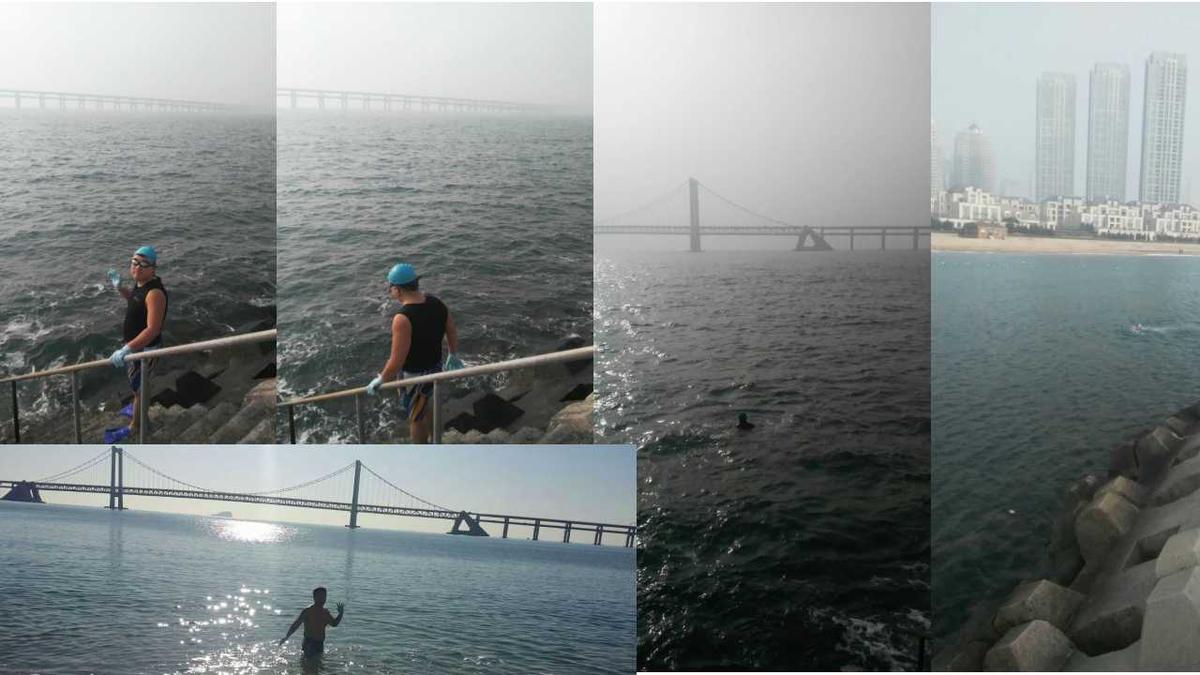
No. August sea temperature averages 24°C and air temperature 24.1°C, which is comfortable but not tropical. February sea temperature drops to 2°C. The swimming window is July through September. The 4.5 kilometre beach at Jinshitan is the best option, but expect cooler water and more wind than Hainan or Xiamen.
How do I get from Dalian to Lushun?
Hire a private driver from Dalian city centre for the day. The drive takes about one hour each way. Public buses exist but add transit time and require navigation in Chinese. A driver lets you stop at the Russo Japanese War memorial, the Russian cemetery, and the naval port in a single day without rushing.
Is the tram actually useful for sightseeing?
Yes. Route 201 runs 10.8 kilometres through the old colonial core using DL3000 rolling stock built in the 1930s. It costs about ¥1 to ¥2 per ride. Board at Dalian Railway Station and ride east to see the Japanese era street grid and Russian squares from the window. Route 202 is a modern 12.6 kilometre line that serves newer areas.
What is the best month to visit Dalian?
Late May to June for architecture and seafood without swimming. September for swimming with fewer crowds and slightly cooler air. Avoid January and February when the average temperature is −4.8°C and the wind comes straight off the Bohai Sea. Avoid Chinese National Day (1 to 7 October) and Labour Day (1 to 5 May) when domestic tourism overwhelms the city.
Is Dalian expensive compared to other Chinese cities?
Mid range. Accommodation costs less than Beijing or Shanghai but more than smaller northeast cities. Seafood is cheaper than in the south because it is local. A private day trip to Lushun with driver is a modest fixed cost. The tram costs ¥1 to ¥2. Budget for translation app data and a VPN before arrival, not for the city itself.
Why does Dalian look different from other Chinese coastal cities?
Because it was designed by Russian engineers in 1899 with a radial circular street pattern centred on ten squares, then built out by Japanese administrators from 1905 to 1945. The city never developed organically as a Chinese fishing port. It was a colonial invention. The architecture around Zhongshan Square is Renaissance revival mansions and neoclassical columns, not Chinese vernacular.
Read next
-
 Provincial China Beyond Beijing Shanghai Guangzhou and Xi’an
Provincial China rewards slow travellers with compressed continents of culture, cuisine, and landscape far beyond the standard megacity circuit.
Provincial China Beyond Beijing Shanghai Guangzhou and Xi’an
Provincial China rewards slow travellers with compressed continents of culture, cuisine, and landscape far beyond the standard megacity circuit.
-
 Dalian Seafood Guide The Markets the Season and How to Order
Dalian's cold-water Bohai seafood, shaped by Russian and Japanese culinary influence, demands a seasonal market strategy and an ordering plan.
Dalian Seafood Guide The Markets the Season and How to Order
Dalian's cold-water Bohai seafood, shaped by Russian and Japanese culinary influence, demands a seasonal market strategy and an ordering plan.
-
 Planning a Slow Travel Route Through Yunnan’s Lesser-Visited Villages
Plan a slower Yunnan journey through Dali, Shaxi, and Nuodeng, with realistic transport allowances, guesthouse advice, and respectful village visits.
Planning a Slow Travel Route Through Yunnan’s Lesser-Visited Villages
Plan a slower Yunnan journey through Dali, Shaxi, and Nuodeng, with realistic transport allowances, guesthouse advice, and respectful village visits.
-
 From Guiyang to Congjiang — A Week in Guizhou by Bus and on Foot
Independent travel from Guiyang to Congjiang in Guizhou: buses, minibuses, journey times, seasonal road conditions, and village guesthouses explained.
From Guiyang to Congjiang — A Week in Guizhou by Bus and on Foot
Independent travel from Guiyang to Congjiang in Guizhou: buses, minibuses, journey times, seasonal road conditions, and village guesthouses explained.