Shangri-La Is the High Tibetan Plateau, and the Thin Air Hits Harder Than You Expect
Shangri-La sits at 3,200 metres on the Tibetan plateau, and the altitude is the first thing you'll feel. Plan around acclimatisation, monasteries, and alpine walks.
- Flag
-

- ISO code
- CN
- Population
- 186,400
- Currency
- CNY
- Timezone
- Asia/Shanghai
The First Breath at 3,200 Metres
You step off the bus from Lijiang and the air is thin, dry, and cold. Your legs feel disconnected from your brain. The short walk to the hotel entrance turns into a slow, deliberate shuffle. This is Shangri-La, formerly Zhongdian, renamed in 2001 after James Hilton's fictional Himalayan paradise in Lost Horizon. The altitude is not a backdrop. It is the entire story.
The common mistake is treating Shangri-La as another scenic stop on a Yunnan loop. You fly into Kunming at sea level, spend two days in Dali at 1,970 metres, a night in Lijiang at 2,400 metres, then push up to 3,200 metres in a single afternoon. That 800-metre gain on the 175-kilometre road from Lijiang hits your cardiovascular system harder than any monastery or lake view ever will. The expressway opened in 2021 and the high-speed rail arrived on 26 November 2023. The journey now takes roughly four hours instead of five or six. But the faster you arrive, the more abruptly the altitude announces itself.
Plan one full acclimatisation day before you attempt anything more strenuous than a slow walk around the rebuilt Dukezong old town. No hiking. No monastery stair climbs. Definitely no excursion to Pudacuo National Park on day two. The thin air forces a slower rhythm and the smart traveller respects it from the first breath.


Dukezong, the Fire, and the Reconstruction
The Morning Walk Before The Buses
Dukezong old town, founded in the Tang dynasty around the 7th century, was once a trading post on the Tea Horse Road. Then on 11 January 2014, a fire burned for roughly ten hours, destroying about 242 houses and roughly two thirds of the old town core. The reconstruction is complete, but the rebuilt streets carry a different weight. You walk past identical tourist shops and photo studios selling costume portraits against painted Tibetan backdrops. The authenticity you might have hoped for sits underneath a commercial layer you have to push through.
Arrive in the early morning, before the tour buses roll in at 09:30. Walk up to the Giant Prayer Wheel on the hill, a 21-metre gold cylinder you rotate clockwise with a group of strangers. The effort at 3,200 metres leaves you winded after twenty seconds. Take breaks. The reward is a roof-level view of the old town's grey tile roofs against the surrounding high plateau, not a spiritual transformation.
The commercial reality of Dukezong does not make it worthless. It makes it a place you visit for an hour or two, not a full day. Use it as a gentle acclimatisation stroll, then retreat to your guesthouse for rest and hydration. Drink twice the water you think you need. Dehydration compounds altitude symptoms faster than anything else.
Songzanlin Monastery and the Gelugpa Order
When To Go And How To Enter
Songzanlin Monastery, known in Tibetan as Ganden Sumtseling, sits on a hillside about four kilometres from Shangri-La town. Construction began in 1679 and the complex is the largest Tibetan Buddhist monastery in Yunnan, belonging to the Gelugpa or Yellow Hat sect. The pre-1950s peak monk population was roughly 2,000; today about 700 monks study and live here.
Do not visit on your first day at altitude. The monastery involves a long set of stone stairs that climb from the entrance through multiple halls and courtyards, and even an acclimatised traveller feels the burn. Schedule this for day three at the earliest. Arrive by 08:00, before the first tour groups, and enter through the main gate on the eastern side. The ticket office opens at 08:30 and the standard admission was 90 yuan in 2024. You do not need a guide. The complex is compact enough to explore on your own in 90 minutes, and the printed map you receive with your ticket is sufficient.
What You See Inside
The dzong style architecture with its whitewashed walls, golden roofs and red trim is immediately recognisable as the Little Potala Palace, and the comparison is fair. The main assembly hall contains giant silk thangkas that are unveiled only during the annual prayer festival. The chanting sessions, between 06:00 and 08:00, are open to visitors who arrive early and sit quietly at the back. Do not photograph the monks or the interior shrines. Signs are posted in English and Chinese, and the rule is enforced.
Skip the yak butter tea served at the monastery's visitor canteen. It is a tourist product, not a genuine offering, and tastes of cheap butter powder. Save your appetite for something real.
Pudacuo National Park and the Alpine Valleys
Timing Your Visit To The High Lakes
Pudacuo National Park, designated in 2007 as the first national park in China under IUCN standards, covers roughly 1,300 square kilometres with an elevation range of 3,500 to 4,200 metres. The two core lakes are Shudu Lake and Bita Lake, connected by a park shuttle bus that runs on a fixed loop. This is not a wilderness you walk through freely. You follow boardwalks and designated paths, and the shuttle controls your pace.
Do not attempt Pudacuo before day four. The park's lowest point sits higher than Shangri-La town, and the trail around Bita Lake involves a 3.5-kilometre boardwalk at an elevation that will induce nausea, headache and dizziness in anyone who has not spent three full nights at 3,200 metres. Budget a full morning inside the park: the shuttle from the visitor centre to Shudu Lake takes 40 minutes, then a 30-minute boardwalk, then another shuttle to Bita Lake for the main 90-minute walk. Exit by 13:00 before the afternoon cloud cover rolls in and kills the light.
The summer monsoon from June to September dumps roughly 80 percent of the annual 650 millimetres of precipitation, and the park trails turn to mud. October offers clear skies, golden alpine meadows and the best photography conditions. November brings snow and trail closures at higher elevations. Check the park's official WeChat account, available only with a Chinese SIM card and local data plan, for daily status updates before you leave your hotel.
Napa Lake: A Seasonal Stop
Napa Lake, or Napa Tso, is a seasonal wetland at 3,266 metres roughly 20 minutes north of town. In the summer monsoon it fills into a shallow lake; in winter it becomes a dry grassland covering about 660 square kilometres of reserve area. The winter version is not worth the detour. Visit only between July and September when the water reflects the surrounding mountains, and only as a half-hour stop on the way to somewhere else.
What You Skip And Why
Deqin county at 3,400 metres and Meili Snow Mountain's 6,740-metre Kawagebo peak, the highest in the Hengduan Mountains and an unclimbed summit since a 2001 climbing ban, sit roughly 185 kilometres and four to five hours further north. In 2026, no special permit is required for Diqing Prefecture and the Tibet Travel Permit is not needed. But the drive takes a full day each way and the altitude sits even higher than Shangri-La. If you have ten days minimum for Yunnan, as the pacing for this province demands, push Deqin to a second trip. One high-altitude destination is enough for a single itinerary.

.jpg)
Who Shangri-La Zhongdian Suits
Shangri-La Zhongdian suits the traveller who takes altitude seriously, who budgets four days for the plateau alone, and who treats the monasteries and lakes as rewards earned through careful pacing. It suits the photographer willing to arrive at 08:00 and wait for the light. It suits the slow traveller who values a single good walk over three rushed photo stops.
It does not suit the two-week dash through five provinces. It does not suit anyone who lands in Lijiang at 2,400 metres and expects to be hiking at 4,000 metres the next morning. It does not suit the luxury resort traveller expecting five-star polish, because the power flickers, the Wi-Fi fails, and the stone streets destroy wheeled luggage. And it does not suit anyone who wants the Shangri-La of the novel, a perfect place free of friction. The real one has thin air, squat toilets, and a rebuilt old town you have to look past to find the texture underneath.
What to See in Shangri-La
Common Questions
How do I prevent altitude sickness in Shangri-La?
Spend at least two nights in Lijiang at 2,400 metres before travelling to Shangri-La. On arrival, rest for a full day. Drink three litres of water per day. Avoid alcohol. Walk slowly. If symptoms persist, descend to Lijiang immediately.
Can I visit Shangri-La and Deqin on the same trip?
Not safely with a ten day Yunnan itinerary. Deqin sits at 3,400 metres and the drive takes four to five hours each way. The altitude compounds the strain. Push Deqin to a separate trip focused entirely on the eastern Himalayas.
Is Dukezong old town worth visiting after the 2014 fire?
Yes, but with adjusted expectations. The reconstruction houses tourist shops and photo studios. Go at 08:00 before the crowds, walk up to the Giant Prayer Wheel for the roof view, and leave after 90 minutes. Treat it as an acclimatisation stroll.
When is the best time to visit Pudacuo National Park?
October. Clear skies, golden meadows, and no monsoon mud. Summer from June to September brings 80 percent of the annual 650 millimetres of rain. November brings snow and trail closures above 4,000 metres. Check the park's WeChat account before you go.
Read next
-
 Where to Stay in Shangri-La at 3200 Metres Without Ruining Your Acclimatisation
Shangri-La accommodation is a choice between Dukezong old town atmosphere at full altitude and the newer county town with lower elevation and oxygen-equipped rooms—your lungs will have a preference.
Where to Stay in Shangri-La at 3200 Metres Without Ruining Your Acclimatisation
Shangri-La accommodation is a choice between Dukezong old town atmosphere at full altitude and the newer county town with lower elevation and oxygen-equipped rooms—your lungs will have a preference.
-
 Things to Do in Shangri-La From Songzanlin Monastery to Pudacuo Alpine Lakes
Songzanlin Monastery's gilded halls, Pudacuo's alpine lakes at 3,500 metres, and Dukezong's rebuilt lanes with a giant prayer wheel—Shangri-La rewards those who acclimatise before exploring.
Things to Do in Shangri-La From Songzanlin Monastery to Pudacuo Alpine Lakes
Songzanlin Monastery's gilded halls, Pudacuo's alpine lakes at 3,500 metres, and Dukezong's rebuilt lanes with a giant prayer wheel—Shangri-La rewards those who acclimatise before exploring.
-
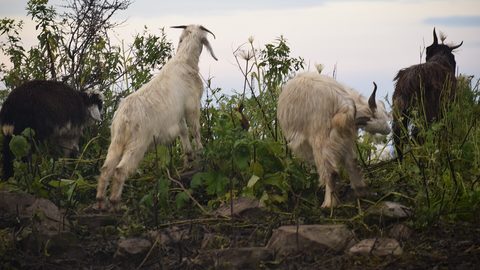 Best Time to Visit Shangri-La for Alpine Flowers and Monastery Festivals
Shangri-La's high plateau only truly opens from June to October—alpine flowers peak in early summer, October skies are crystalline, and winter freezes guesthouses shut.
Best Time to Visit Shangri-La for Alpine Flowers and Monastery Festivals
Shangri-La's high plateau only truly opens from June to October—alpine flowers peak in early summer, October skies are crystalline, and winter freezes guesthouses shut.
-
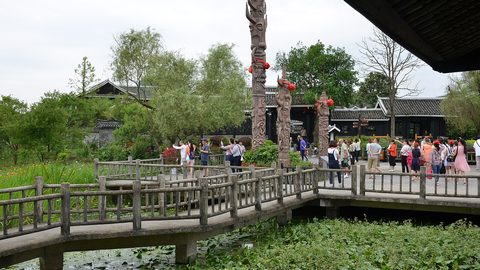 Getting Around Shangri-La and Reaching Tiger Leaping Gorge From the Plateau
Shangri-La has no high-speed rail—Diqing Airport taxis, shared minivans to Tiger Leaping Gorge, and private drivers are how you move across the high plateau at 3,200 metres.
Getting Around Shangri-La and Reaching Tiger Leaping Gorge From the Plateau
Shangri-La has no high-speed rail—Diqing Airport taxis, shared minivans to Tiger Leaping Gorge, and private drivers are how you move across the high plateau at 3,200 metres.
-
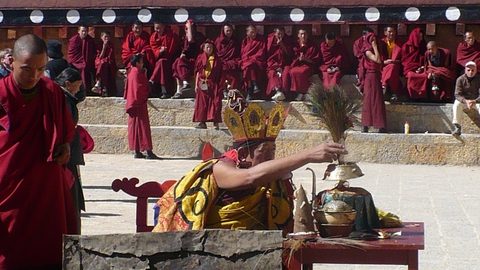 Songzanlin Monastery
 is Shangri-La's Tibetan Buddhist heart, often called the Little Potala Palace. Know the photography rules, opening hours, and how to behave inside.
Songzanlin Monastery
Songzanlin Monastery is Shangri-La's Tibetan Buddhist heart, often called the Little Potala Palace. Know the photography rules, opening hours, and how to behave inside.
-
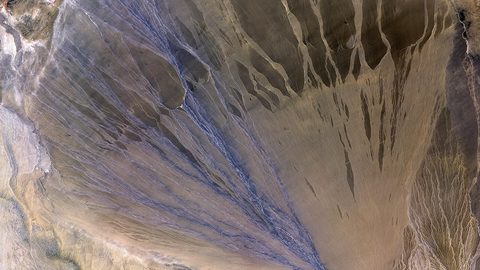 Provincial China Beyond Beijing Shanghai Guangzhou and Xi’an
Provincial China rewards slow travellers with compressed continents of culture, cuisine, and landscape far beyond the standard megacity circuit.
Provincial China Beyond Beijing Shanghai Guangzhou and Xi’an
Provincial China rewards slow travellers with compressed continents of culture, cuisine, and landscape far beyond the standard megacity circuit.
-
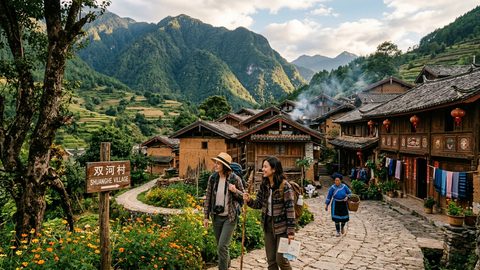 Planning a Slow Travel Route Through Yunnan’s Lesser-Visited Villages
Plan a slower Yunnan journey through Dali, Shaxi, and Nuodeng, with realistic transport allowances, guesthouse advice, and respectful village visits.
Planning a Slow Travel Route Through Yunnan’s Lesser-Visited Villages
Plan a slower Yunnan journey through Dali, Shaxi, and Nuodeng, with realistic transport allowances, guesthouse advice, and respectful village visits.
-
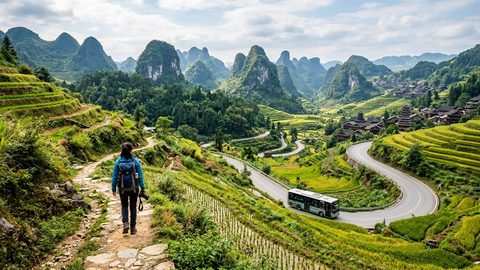 From Guiyang to Congjiang — A Week in Guizhou by Bus and on Foot
Independent travel from Guiyang to Congjiang in Guizhou: buses, minibuses, journey times, seasonal road conditions, and village guesthouses explained.
From Guiyang to Congjiang — A Week in Guizhou by Bus and on Foot
Independent travel from Guiyang to Congjiang in Guizhou: buses, minibuses, journey times, seasonal road conditions, and village guesthouses explained.