Kunming Is Where Your Yunnan Trip Begins. It’s More Than Just a Transit Hub.
Kunming is Yunnan's spring-city gateway. Navigate KMG airport, ride Metro Line 6 into town, see the Green Lake gulls, and launch day trips to the Stone Forest.
- Flag
-

- ISO code
- CN
- Population
- 3,855,346
- Currency
- CNY
- Timezone
- Asia/Shanghai
Kunming is Where Your Yunnan Trip Begins. it is More Than Just a Transit Hub.
Most travellers treat Kunming as a smell-the-coffee-and-find-the-train-station stop. Wrong move. Yes, Kunming is the practical spine of your Yunnan itinerary, the place where your flight lands and the high-speed rail network fans out. But skipping it costs you a proper acclimatisation buffer, a surprisingly good urban base, and one day trip that belongs on any photographer's shortlist. Treat Kunming as a one to two night reset before the mountain roads eat your day.
Start with the airport. Kunming Changshui International Airport (KMG) is your arrival point, no way around it. Do not bother with a taxi for the 26 km into town; Metro Line 6 runs from the airport terminal to the city centre in 25 minutes and costs you 5 to 8 yuan. The line connects to East Coach Station, which is also where buses leave for the Stone Forest and other day trips. If you are arriving late, base yourself in Guandu District, near the railway station and the airport express route. For a full stay of two or three days, move to Wuhua District, specifically around Green Lake Park or the old quarter core streets of Zhengyi Road, Nanping Street, Jingxing Street, and Wenming Street. That is where the city actually breathes.

The Launchpad: Rail, Road and the China Laos Railway
Which Station You Need
Kunming's value as a launchpad comes down to two stations. Kunming railway station, finished in 1966, serves the older conventional lines. Kunming South station, opened in December 2016, is where the high-speed trains depart. If you are heading to Dali, Lijiang, or Shangri-La, you want Kunming South. Book your ticket through the railway's official app or a Chinese travel platform; foreign credit cards fail on most booking sites, so have WeChat Pay or Alipay loaded before you arrive.
The Laos Connection
The other major connection is the Kunming-Vientiane railway, opened on 3 December 2021. This 1,035 km line runs all the way to the Laos capital, with a second class ticket costing 542 yuan in 2024. The journey takes roughly 10 hours 30 minutes including border formalities. If you are extending a Southeast Asia backpacking circuit northward, this is your route.
The Hard Truth About Distances
Here is the hard truth about distances. A 200 km journey on a map routinely takes five to six hours due to mountain switchbacks and speed limits. High-speed rail fixes some of this between Kunming, Dali, and Lijiang, but the last mile into mountain villages like those in Yuanyang or the Dongchuan Red Land requires shared minivans or a private driver. Budget for those transit days. Do not try to cover Kunming, Dali, Lijiang, and Shangri-La in a single week. That is the most common mistake in Yunnan, and it produces four nearly identical old towns seen through a bus window with zero time to acclimatise or explore beyond the souvenir stalls.
What to Do in Kunming: Two Days, Three Moves
Green Lake Park, Early
Your first full day starts at Green Lake Park. The park covers 22 hectares and was established in the 17th century, during the Ming to Qing transition. Visit in winter, from November to March, and you will see thousands of red-billed gulls that migrate here from Siberia. Locals feed them from the bridges, and the birds take bread directly from outstretched hands. Arrive by 08:30 and enter through the north gate near the Yunnan University campus. The light is soft and the crowds are thin until 10:00.
The Old Quarter and Where to Buy Tea
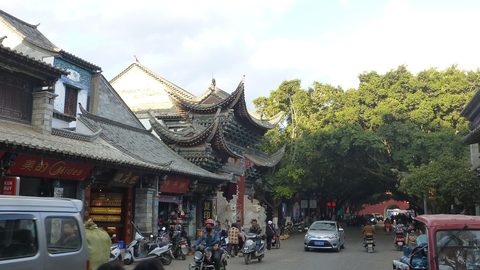
Walk south from the lake into the old quarter. The Flower and Bird Market area on Yongdao Street is not a tourist trap in the Dali sense; it is a working market where locals buy potted orchids, caged songbirds, and freshwater pearls. The surrounding streets, Jingxing and Wenming, hold early 20th century shophouses and quiet tea shops. Skip the overpriced souvenir stands on Zhengyi Road and instead buy pu'er tea from one of the small stores on Wenming Street. Ask for a sheng (raw) pu'er from Xishuangbanna and let the shopkeeper brew it for you before you buy.
Why The Stone Forest Works As A Day Trip
The Stone Forest (Shilin) is 78 km from Kunming, a 90 minute drive by road, or 1.5 hours by high-speed train. It was inscribed as a UNESCO World Heritage site in 2007 as part of the South China Karst series. Critics call it overrun with tour groups and photo studios, and they are not wrong. But the geological formations are genuinely impressive, a limestone maze of vertical pillars that look like a petrified forest. Go on a weekday. Arrive at the main entrance, the Shilin scenic area gate, by 08:30. Book the general admission ticket, not a third-party bundle. Skip the electric cart inside the park and walk the two-hour loop through the greater stone forest section. The crowds arrive around 10:00, and by then you are heading out.
The Dongchuan Red Land: For Photographers Only
This one is a long drive. The Dongchuan Red Land sits about 200 km northeast of Kunming, the iron-rich soil creating stripes of crimson and rust across terraced fields. The colours are most vivid in April, May, September, and October, just after the fields are ploughed and before the crops cover the soil. The road takes three to four hours each way, and there is no high-speed rail option. Hire a private driver through your guesthouse. Bring a polarising filter for your lens and pack a lunch. The villages of Huashitou and Luoxiagou offer the best viewpoints at sunset. If you only have one day in Kunming, skip this in favour of the Stone Forest. If you have two days and a serious camera, the Red Land repays the drive.

What to Eat and How to Move
Cross-Bridge Noodles, Done Right
Cross-bridge rice noodles (guoqiao mixian) are the dish you came for. The ritual is theatrical: a bowl of boiling chicken broth arrives, followed by a plate of raw quail egg, paper-thin meat slices, vegetables, and rice noodles. You slide everything into the broth and the heat cooks it in seconds. The best versions are in Kunming, not in Dali or Lijiang. Go to a dedicated noodle house, not a hotel restaurant. Expect to pay 20 to 40 yuan for a bowl.
Payments, Connectivity, and the Unvarnished Truth
Payment is nearly entirely WeChat Pay or Alipay. Cash works for taxis and street stalls but not for train tickets or most bus bookings. A Chinese SIM card with a local data plan is non-negotiable. Google, WhatsApp, Instagram, and Gmail are blocked without a VPN; install and test one before you leave home. Public toilets in rural areas and bus stations are overwhelmingly squat-style with no soap or paper. Carry your own tissue and hand sanitiser.
Altitude: Use Kunming as Your Buffer
Altitude in Kunming sits at 1,891 m. That is low enough to not cause problems for most people, but if you are heading to Shangri-La (3,200 m) or Jade Dragon Snow Mountain (4,500 m), use Kunming as your acclimatisation buffer. Stay two nights. Drink water. Avoid alcohol your first evening. Do not underestimate the altitude sickness that hits travellers arriving from sea level and immediately heading up.
More destinations in Yunnan
More on Kunming


Common Questions
How do I get from Kunming Changshui Airport to the city centre?
Take Metro Line 6 from the airport terminal to the city centre. It takes 25 minutes and costs 5 to 8 yuan. A taxi costs more and takes about 40 minutes in normal traffic.
Is the Stone Forest worth visiting?
Yes, if you go on a weekday and arrive by 08:30. The karst formations are genuinely impressive. Skip the electric cart inside the park and walk the two-hour loop through the greater stone forest section. Avoid weekends and Chinese public holidays.
How many days should I spend in Kunming?
One to two nights. Use the first day for Green Lake and the old quarter. Use the second for a day trip to the Stone Forest or, if you are a photographer, the Dongchuan Red Land.
Can I use my foreign credit card in Kunming?
No, not reliably. Payment in Yunnan is overwhelmingly WeChat Pay or Alipay. Foreign cards fail on most local transport apps and many restaurants. Get a Chinese SIM card with a data plan and set up WeChat Pay before you arrive.
What is the best month to visit Kunming?
October for clear skies and golden photography light. April for the Dongchuan Red Land. Avoid Chinese National Day (1 to 7 October) and Labour Day (1 to 5 May) when attractions hit capacity and accommodation triples.
How do I get from Kunming to Dali or Lijiang?
High-speed rail from Kunming South station. Trains to Dali take about two hours. Trains to Lijiang take about three hours. Book in advance through the railway app or a Chinese travel platform.
Can I take the train from Kunming to Laos?
Yes, the Kunming-Vientiane railway opened on 3 December 2021. The journey takes roughly 10 hours 30 minutes including border formalities. A second class ticket cost 542 yuan in 2024.
Read next
-
 Yunnan Hotels Chains Courtyards and the Foreigner Registration Rule
Hotels in Yunnan range from international chains to courtyard guesthouses, but the foreigner registration rule determines where you can actually sleep—here is what to book.
Yunnan Hotels Chains Courtyards and the Foreigner Registration Rule
Hotels in Yunnan range from international chains to courtyard guesthouses, but the foreigner registration rule determines where you can actually sleep—here is what to book.
-
 Where to Stay in Yunnan Town by Town Base Guide
Where to stay in Yunnan, from Kunming to Shangri-La: neighbourhood-by-neighbourhood advice on old town courtyards, Erhai lake villages, and altitude-conscious bases.
Where to Stay in Yunnan Town by Town Base Guide
Where to stay in Yunnan, from Kunming to Shangri-La: neighbourhood-by-neighbourhood advice on old town courtyards, Erhai lake villages, and altitude-conscious bases.
-
 Flying Into Yunnan Kunming Lijiang Dali and Shangri-La Airports Compared
Choosing between Kunming, Lijiang, Dali, and Shangri-La airports shapes your entire Yunnan route—here's how each gateway affects transit time, altitude, and cost.
Flying Into Yunnan Kunming Lijiang Dali and Shangri-La Airports Compared
Choosing between Kunming, Lijiang, Dali, and Shangri-La airports shapes your entire Yunnan route—here's how each gateway affects transit time, altitude, and cost.
-
 What Yunnan Is For Mountains Old Towns and Minority Culture
Yunnan is for high-altitude treks, living old towns like Shaxi, minority markets, winter rice terraces at Yuanyang, and going deep on Pu'er tea at the source.
What Yunnan Is For Mountains Old Towns and Minority Culture
Yunnan is for high-altitude treks, living old towns like Shaxi, minority markets, winter rice terraces at Yuanyang, and going deep on Pu'er tea at the source.
-
 Yunnan Weather Seasons and the Best Time to Visit Without the Crowds
Yunnan spans tropical lowlands and Himalayan peaks, so the best time to visit depends entirely on which region you're targeting and whether you can stomach the October crowds.
Yunnan Weather Seasons and the Best Time to Visit Without the Crowds
Yunnan spans tropical lowlands and Himalayan peaks, so the best time to visit depends entirely on which region you're targeting and whether you can stomach the October crowds.
-
 Getting Around Yunnan Rail Bus and the Mountain Road Reality
Getting around Yunnan means high-speed rail between Kunming, Dali, and Lijiang, then long-distance buses and shared minivans into the mountains—and 200 km takes 5 hours.
Getting Around Yunnan Rail Bus and the Mountain Road Reality
Getting around Yunnan means high-speed rail between Kunming, Dali, and Lijiang, then long-distance buses and shared minivans into the mountains—and 200 km takes 5 hours.
-
 Jianshui
 has a Ming dynasty seventeen-arch bridge, one of China's largest Confucian temples, and tofu grilled on street corners—and almost every Yunnan itinerary skips it.
Jianshui
Jianshui has a Ming dynasty seventeen-arch bridge, one of China's largest Confucian temples, and tofu grilled on street corners—and almost every Yunnan itinerary skips it.
-
 Gejiu
The Yuanyang rice terraces only become the mirror-like spectacle of photographs from November to March—here is how to time the water season and hit the right viewpoints at sunrise and sunset.
Gejiu
The Yuanyang rice terraces only become the mirror-like spectacle of photographs from November to March—here is how to time the water season and hit the right viewpoints at sunrise and sunset.
-
 Baoshan
 unlocks Yunnan's wild western edge: the Gaoligong mountains, Tengchong's volcanic hot springs, and the ghosts of the Burma Road. A frontier for second-time visitors.
Baoshan
Baoshan unlocks Yunnan's wild western edge: the Gaoligong mountains, Tengchong's volcanic hot springs, and the ghosts of the Burma Road. A frontier for second-time visitors.