Baoshan Is the Gateway to the Gaoligong Mountains and a Forgotten Corner of the Burma Road
Baoshan unlocks Yunnan's wild western edge: the Gaoligong mountains, Tengchong's volcanic hot springs, and the ghosts of the Burma Road. A frontier for second-time visitors.
- Flag
-

- ISO code
- CN
- Population
- 935,618
- Currency
- CNY
- Timezone
- Asia/Shanghai
Baoshan is the Gateway to the Gaoligong Mountains and a Forgotten Corner of the Burma Road
The bus groans up a switchback above the Nu River gorge, and through the dust-streaked window you catch it: a concrete pillbox, half-swallowed by bamboo, dating from 1944. Then another. Then a mile marker from the old Burma Road, its Chinese characters faint but readable. This is western Yunnan, and this is what Baoshan gives you that Dali and Lijiang cannot. The prefecture-level city of 2.4 million people (2020 census) spreads across 19,637 km² of terrain that jumps from 535 m to 3,780 m above sea level. Almost nobody on the standard Yunnan circuit bothers to stop.
You should. Baoshan is not a destination in itself. It is the transit point that unlocks two deeper stories. One leads southwest to Tengchong, where 97 volcanoes and boiling springs at 88°C to 102°C mark a landscape that last erupted in 1609 CE. The other leads into the Gaoligong Mountains, a UNESCO biosphere reserve since 2000, where 5,726 species of vascular plants and 525 bird species crowd a 4,055 km² corridor of forest running along Myanmar's border. Between them lies a Republican-era history of the Burma Road and the brutal Western Yunnan campaign of 1944-1945. The second-time Yunnan visitor who wants to swap old-town shopping for something harder, older, and more honest will find it here.

What Baoshan Actually is and Why You Stop Here
Baoshan is the prefecture seat, a mid-sized city of 1,664 m elevation with an airport (IATA: BSD) that runs domestic flights to Kunming, Chengdu, Chongqing, Xi'an, Nanjing, and Changsha as of 2026. Since July 2022, the high-speed rail station puts Kunming 3 hours 30 minutes east and Dali 1 hour 10 minutes north. That combination of air and rail makes Baoshan the logistics hub for a region where road travel is brutal: a 200 km journey routinely takes 5 to 6 hours over mountain switchbacks.
Book a day in Baoshan to organise permits and transport. The only reason to linger is the prefecture's 167.78 km border with Myanmar, accessed through the Houqiao port, open to third-country nationals with a valid Myanmar visa and permit. Verify the permit situation with your embassy before departure. Border bureaucracy shifts without notice. Otherwise, treat Longyang District as a base for two excursions: the Tengchong loop and the Gaoligong ridge.
Tengchong: Volcanoes, Hot Springs and a War Cemetery That Demands Silence
Fly or drive southwest from Baoshan to Tengchong, elevation 1,887 m, served by its own airport (IATA: TCZ) with flights from Kunming, Chengdu, Chongqing, Xi'an, Guangzhou, Zhengzhou, and Hangzhou as of 2026. The town sits on a volcanic field of 97 cones. The last eruption, from Dayingshan, occurred in 1609 CE, so the landscape is not extinct, just dormant. Spend your first morning at the Rehai (Hot Sea) Scenic Area, where steam vents and boiling pools cluster at the source temperature range of 88°C to 102°C. Arrive by 08:00 to beat the tour groups. Do not touch the water; one pool registered 97°C on a 2024 visit by a Chinese geological survey team.
That same afternoon, go to the National Memorial Cemetery of the Allied Forces. This is a Republican-era war cemetery dedicated to the Chinese soldiers who died retaking Tengchong between 2 May and 14 September 1944, as part of the Western Yunnan campaign that ended on 20 January 1945. The graves run in neat, numbered rows up a hillside. There is no museum gloss here. Read the names on the stone tablets. The cemetery receives almost no foreign visitors, which is exactly why it matters.
Heshun Old Town: The One That Did Not Sell Out
Six km southwest of Tengchong, Heshun was founded in the Ming dynasty (1368-1644) as a homecoming town for overseas Chinese traders who returned from Burma with wealth and books. Its stone lanes lead to the Heshun Library, founded in 1928, which holds rare texts in a courtyard that still functions as a reading room. Skip the newer souvenir lanes near the entrance. Walk to the western edge of town, past the ancestral halls and the fish ponds, and you hit a dirt path that looks exactly as it did in the 1930s.
The Gaoligong Range: Biodiversity and Burma Road Ghosts
The Gaoligongshan National Nature Reserve covers 4,055 km² of ridgeline that runs north-south along the Myanmar border. Its 5,726 recorded vascular plant species and 205 mammal species make it one of the most biodiverse temperate forests on earth. For birders, this is the Eastern Himalayas Endemic Bird Area. Key species include Mrs. Hume's pheasant, white-eared pheasant, and Sclater's monal. Hire a local guide in Baoshan or Tengchong who holds a reserve entry permit. You cannot enter independently. Budget for a full day in the forest: start at the Baihualing station on the eastern slope, walk the high trail at dawn for bird activity, and descend by noon before the afternoon cloud cover rolls in.
The same mountains hold the physical remnants of the Burma Road. Constructed between 1937 and 1938, the 1,154 km route from Kunming to Lashio (959 km in Yunnan) was a dirt lifeline for supplies to China during the Second Sino-Japanese War. The Battle of Mount Song (Songshan), fought between 4 June and 7 September 1944, left bunkers and foxholes intact on a ridge east of Baoshan. Visit the Songshan battlefield museum first, then walk the trenches on the hilltop. The scale of the kamikaze charges and tunnel warfare is legible in the bomb craters that still pock the ground.
Getting Into the Mountains Without a Tour
Shared minivans leave Baoshan's long-distance bus station for the reserve entrance. The drive to Baihualing takes about 2 hours on a road that narrows to one lane in the last 15 km. Do not attempt it in July or August, when summer rains cause landslides and road closures. October is the safe window: clear skies, stable roads, and golden light for photography. The national holidays of 1-7 October and 1-5 May are a write-off, with tripled accommodation prices and gridlocked traffic.
Who Should Skip This and How Many Days You Need
This region is not for luxury seekers expecting five-star polish. The public toilets in rural areas are squat-style with no soap. English is near zero outside Tengchong's hotels. A Chinese SIM card with a data plan is non-negotiable for Didi rides, maps, and translation. Google, WhatsApp, and Instagram are blocked without a pre-installed VPN. The stone lanes in Heshun are lethal after rain and impossible with wheeled suitcases.
Minimum days: ten. Any less and you burn your trip on internal transit. Fly into Baoshan or Tengchong directly from Kunming rather than transiting through Dali or Lijiang, which adds two days of unnecessary bus travel. Serious hikers and cyclists should pack for high-altitude endurance: the Gaoligong trails climb high. Tea nerds can detour 90 minutes east to the pu'er sourcing villages around Lincang, but that is a separate page. Photographers chasing rice terraces should aim for Yuanyang in winter, not here. The payoff in Baoshan is not a scenic postcard. It is the weight of a landscape that fought back.

| Fact | Value |
|---|---|
| Prefecture population (2020 census) | 2,431,211 |
| Elevation range | 535 m to 3,780 m |
| Gaoligongshan reserve area | 4,055 km² |
| Vascular plant species recorded | 5,726 |
| Bird species recorded | 525 |
| Tengchong volcanoes | 97 |
| Burma Road Yunnan section length | 959 km |
| Border with Myanmar | 167.78 km |
| Baoshan to Kunming by high-speed rail (2022) | approx. 3 hours 30 minutes |
| Baoshan to Dali by high-speed rail (2022) | approx. 1 hour 10 minutes |
Practical Logistics: Getting In, Getting Around, Avoiding the Traps
Fly into Kunming Changshui (KMG), then connect to Baoshan Yunrui or Tengchong Tuofeng. Do not take the bus from Kunming. That is a 7-hour grind. The high-speed rail from Kunming to Baoshan takes about 3 hours 30 minutes and drops you at Baoshan Station, opened in July 2022. From there, shared minivans or private drivers are your only option for the last mile into mountain villages. Payment is overwhelmingly WeChat Pay or Alipay; foreign cards fail on most local transport apps. Carry cash in yuan for rural markets and minivan fares.
The biggest tripwire is time. A 200 km journey on a map takes 5-6 hours because of mountain switchbacks and speed limits. Do not try to combine Baoshan, Tengchong, and the Gaoligong reserve in under 4 days. The minimum viable itinerary is: day 1 travel to Baoshan, day 2 Gaoligong birding, day 3 transfer to Tengchong and Rehai, day 4 Heshun and the war cemetery. Add two more days for the Songshan battlefield and you are at 6. That is still tight.
More destinations in Yunnan
More on Baoshan

.jpg)

Common Questions
Do I need a special permit to enter the Gaoligongshan Nature Reserve?
Yes. Independent entry is not allowed. You must hire a local guide who holds a reserve entry permit. Arrange this through a guesthouse in Baoshan or Tengchong at least 48 hours in advance.
Can I cross the border into Myanmar at Houqiao?
Houqiao is open to third-country nationals with a valid Myanmar visa and a separate entry permit. Verify both requirements with your embassy before departure. Border regulations change without notice.
When is the best month to visit Baoshan and the Gaoligong range?
October. Clear skies, stable temperatures, and golden light. Avoid July and August, when summer rains bring landslides and road closures. Avoid the national holiday windows of 1-7 October and 1-5 May entirely.
Is the Tengchong war cemetery accessible without a tour?
Yes. It is a public site with free entry, located on the edge of Tengchong town. Take a taxi from the city center for about 15 yuan. Arrive by 09:00 to avoid the midday heat.
Can I use a foreign credit card in Baoshan and Tengchong?
Almost never. Payment is overwhelmingly WeChat Pay and Alipay. Foreign cards fail on most local transport apps and at small shops. Get a Chinese SIM card with a data plan, link it to WeChat Pay, and carry cash in yuan for rural markets.
Read next
-
 Yunnan Hotels Chains Courtyards and the Foreigner Registration Rule
Hotels in Yunnan range from international chains to courtyard guesthouses, but the foreigner registration rule determines where you can actually sleep—here is what to book.
Yunnan Hotels Chains Courtyards and the Foreigner Registration Rule
Hotels in Yunnan range from international chains to courtyard guesthouses, but the foreigner registration rule determines where you can actually sleep—here is what to book.
-
 Where to Stay in Yunnan Town by Town Base Guide
Where to stay in Yunnan, from Kunming to Shangri-La: neighbourhood-by-neighbourhood advice on old town courtyards, Erhai lake villages, and altitude-conscious bases.
Where to Stay in Yunnan Town by Town Base Guide
Where to stay in Yunnan, from Kunming to Shangri-La: neighbourhood-by-neighbourhood advice on old town courtyards, Erhai lake villages, and altitude-conscious bases.
-
 Flying Into Yunnan Kunming Lijiang Dali and Shangri-La Airports Compared
Choosing between Kunming, Lijiang, Dali, and Shangri-La airports shapes your entire Yunnan route—here's how each gateway affects transit time, altitude, and cost.
Flying Into Yunnan Kunming Lijiang Dali and Shangri-La Airports Compared
Choosing between Kunming, Lijiang, Dali, and Shangri-La airports shapes your entire Yunnan route—here's how each gateway affects transit time, altitude, and cost.
-
 What Yunnan Is For Mountains Old Towns and Minority Culture
Yunnan is for high-altitude treks, living old towns like Shaxi, minority markets, winter rice terraces at Yuanyang, and going deep on Pu'er tea at the source.
What Yunnan Is For Mountains Old Towns and Minority Culture
Yunnan is for high-altitude treks, living old towns like Shaxi, minority markets, winter rice terraces at Yuanyang, and going deep on Pu'er tea at the source.
-
 Yunnan Weather Seasons and the Best Time to Visit Without the Crowds
Yunnan spans tropical lowlands and Himalayan peaks, so the best time to visit depends entirely on which region you're targeting and whether you can stomach the October crowds.
Yunnan Weather Seasons and the Best Time to Visit Without the Crowds
Yunnan spans tropical lowlands and Himalayan peaks, so the best time to visit depends entirely on which region you're targeting and whether you can stomach the October crowds.
-
 Getting Around Yunnan Rail Bus and the Mountain Road Reality
Getting around Yunnan means high-speed rail between Kunming, Dali, and Lijiang, then long-distance buses and shared minivans into the mountains—and 200 km takes 5 hours.
Getting Around Yunnan Rail Bus and the Mountain Road Reality
Getting around Yunnan means high-speed rail between Kunming, Dali, and Lijiang, then long-distance buses and shared minivans into the mountains—and 200 km takes 5 hours.
-
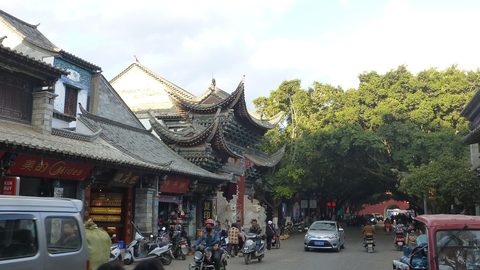 Jianshui
 has a Ming dynasty seventeen-arch bridge, one of China's largest Confucian temples, and tofu grilled on street corners—and almost every Yunnan itinerary skips it.
Jianshui
Jianshui has a Ming dynasty seventeen-arch bridge, one of China's largest Confucian temples, and tofu grilled on street corners—and almost every Yunnan itinerary skips it.
-
 Gejiu
The Yuanyang rice terraces only become the mirror-like spectacle of photographs from November to March—here is how to time the water season and hit the right viewpoints at sunrise and sunset.
Gejiu
The Yuanyang rice terraces only become the mirror-like spectacle of photographs from November to March—here is how to time the water season and hit the right viewpoints at sunrise and sunset.
-
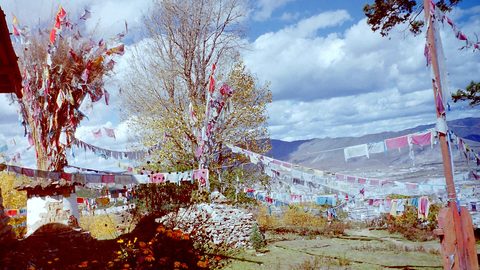 Shangri-La
 sits at 3,200 metres on the Tibetan plateau, and the altitude is the first thing you'll feel. Plan around acclimatisation, monasteries, and alpine walks.
Shangri-La
Shangri-La sits at 3,200 metres on the Tibetan plateau, and the altitude is the first thing you'll feel. Plan around acclimatisation, monasteries, and alpine walks.