Chengdu or Chongqing Which Southwest China Base Fits Your Trip
A practical guide to Chengdu or Chongqing Which Southwest China Base Fits Your Trip.
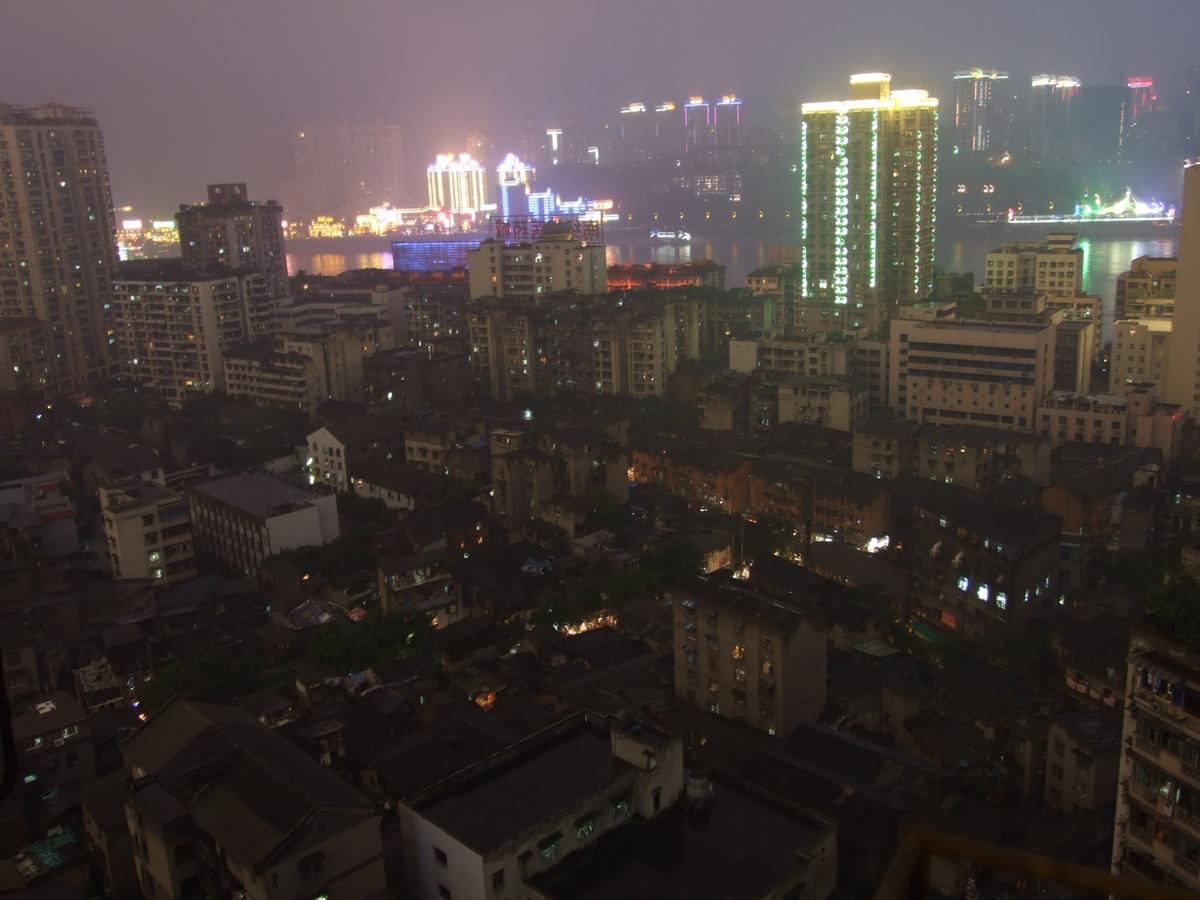

Two Southwest Giants, Two Different Rhythms
Chengdu and Chongqing sit barely 300 kilometres apart, linked by a high-speed rail line that makes them neighbours in travel time. Yet the experience of spending a few days in each city diverges sharply. One spreads across a fertile plain with a tempo that invites long tea breaks and leisurely park strolls. The other climbs steep hills above the confluence of two major rivers, its streets stacked vertically and its skyline best understood from a cable car gliding above the Yangtze. Choosing between them is less about which is better and more about which rhythm matches the trip you want.
Chengdu is the capital of Sichuan Province, situated on a plain in the western part of the Sichuan Basin, with a cultural history spanning over 3,000 years. Chongqing is a municipality on the upper reaches of the Yangtze River, spanning a total area of 82,400 square kilometres. The scale and geography alone hint at the different travel experiences ahead. One city feels expansive and grounded, the other dense and vertical. Understanding what each place offers helps you decide where to base yourself, or whether the short rail connection makes combining both a realistic plan.
The Panda Factor and Urban Nature
For many travellers, the decision starts with a single species. The Chengdu Research Base of Giant Panda Breeding sits at 1375 Panda Avenue in the Chenghua District. It operates under a real-name reservation system, and all visitors must present the original valid identification used during booking upon entry. The base enforces a maximum daily visitor capacity of 85,000 people. Official opening hours and ticket prices change seasonally, so you need to check the current schedule directly with the base before visiting. The official contact number is 86-28-83510033, and the base publishes updated hours on its website.
Chongqing does not offer a comparable giant panda experience within the city. Its natural draws lean toward dramatic karst landscapes and river scenery. The Wulong Karst Tourism Area, Wansheng Black Valley Scenic Area, and Nanchuan Jinfo Mountain Scenic Area are all classified as 5A-level tourist attractions by the Chongqing Municipal Government. If your trip prioritises seeing giant pandas in a dedicated conservation and research setting, Chengdu is the clear choice. If you prefer hiking through limestone formations and mountain terrain, Chongqing's 5A-level sites point you in that direction.
Historic Sites and Cultural Depth
Both cities hold deep cultural credentials, but they express them through different eras and mediums. Chengdu draws on more than three millennia of continuous history on the Sichuan plain. The city's cultural sites tend to be woven into its urban fabric, from temple complexes to traditional teahouses that still function as social hubs rather than museum pieces.
Chongqing's most significant cultural landmark lies outside the urban core. The Dazu Rock Carvings, inscribed on the UNESCO World Heritage List on 1 December 1999 under criteria (i), (ii) and (iii), comprise 75 officially recognised protected carved sites containing more than 50,000 individual statues. The carvings represent a monumental achievement of Chinese religious art, and visiting them requires a dedicated trip from central Chongqing. Within the city itself, Hongyadong, a 4A-level scenic area at 88 Jiabin Road in Yuzhong District, offers a multi-storey stilt-house complex open from 11:00 to 23:00. It is a reconstructed landmark rather than an ancient relic, and it functions as a dining and viewing destination overlooking the Jialing River.
Moving Through the City
How you navigate each city shapes the daily travel experience. Chongqing's topography demands creative infrastructure. The Chongqing Yangtze River Cableway, a 4A-level scenic area at 151 Xinhua Road in Yuzhong District, operates from 7:30 to 22:00. It was built as a commuter crossing, but for visitors it doubles as a viewpoint that reveals the city's layered geography. The municipality's 5A-level attractions also include the Wushan Lesser Three Gorges and Mini Three Gorges, and the Youyang Peach Blossom Spring Scenic Area, which means several of Chongqing's highest-rated sites require river or road journeys beyond the city centre.
Chengdu's layout on a plain makes surface-level exploration more straightforward. The city's metro system and walkable central districts reduce reliance on specialised transport for sightseeing. Neither city is inherently easier to navigate, but the type of movement differs. Chongqing rewards those who enjoy funiculars, cable cars, and steep staircases as part of the urban adventure. Chengdu suits travellers who prefer flat, predictable walking routes and a metro grid that mirrors the city's spread.
Connecting the Two Cities
The Chengdu-Chongqing high-speed railway is a 300-kilometre line from Chengdu East to Shapingba, built for 350 km/h, which opened in 2015. The existence of this line means you do not have to choose permanently. You can base yourself in one city and visit the other as a day trip or overnight excursion. Journey times and fares vary by date and train. To plan this connection, verify current schedules and fares directly with China Railway through its official booking platform. The frequency of service makes the corridor practical, but you should confirm the specific departure that fits your itinerary rather than assuming a fixed timetable.
If you plan to visit both cities, consider the direction that matches your energy. Starting in Chengdu gives you a gentler introduction to the region before tackling Chongqing's intensity. Starting in Chongqing plunges you into its vertical streets and riverfront spectacle immediately, then lets you decompress in Chengdu's teahouses and parks. Either order works logistically because the rail line runs in both directions with regular service.
Visa-Free Transit and Entry Planning
International travellers using China's 240-hour visa-free transit policy face different geographic restrictions depending on their port of entry. Under this policy, Sichuan's designated ports of entry are Chengdu Tianfu International Airport and Chengdu Shuangliu International Airport, with permitted travel limited to 11 cities: Chengdu, Zigong, Luzhou, Deyang, Suining, Neijiang, Leshan, Yibin, Ya'an, Meishan, and Ziyang. Chongqing's designated port of entry is Chongqing Jiangbei International Airport, with permitted travel limited to Chongqing Municipality.
This means if you enter through Chengdu under the visa-free transit policy, you cannot legally travel to Chongqing on the same entry permit. If you enter through Chongqing, you cannot visit Chengdu or any Sichuan city. The policy applies to nationals of 55 countries at 60 open ports in 24 provinces, autonomous regions and municipalities as of June 2025. The list of eligible countries and covered ports is subject to change, so confirm the current list with the National Immigration Administration before booking flights. If seeing both cities is essential to your trip, you need either a full Chinese visa or an itinerary that exits and re-enters China through the appropriate port for each destination.
Deciding Where to Base Yourself
The choice between Chengdu and Chongqing comes down to a few practical questions. Do you need to see giant pandas in a dedicated breeding and research facility? Chengdu is your answer. Do you want to visit a UNESCO World Heritage site of monumental religious sculpture? The Dazu Rock Carvings give Chongqing a strong claim on your time. Are you travelling under the 240-hour visa-free transit policy? Your port of entry determines your permitted travel zone, and the two cities are in separate zones. Do you prefer flat, teahouse-filled neighbourhoods or vertiginous riverfront cityscapes? That temperamental difference may matter more than any checklist of attractions.
If your trip allows time for both, the high-speed rail corridor makes the connection straightforward. Check China Railway for current schedules and fares, and factor in the entry restrictions if you are relying on visa-free transit. Both cities reward slow, observant travel. Chengdu reveals itself in afternoon tea and quiet temple courtyards. Chongqing reveals itself in nighttime views from a cable car and the sound of river traffic echoing between steep banks. The right base is the one that matches the kind of days you want to wake up to.
Sources and verification
- china-tourism.de — Research source checked for this guide
- english.cq.gov.cn — Research source checked for this guide
- atlasofchina.com — Research source checked for this guide
- panda.org.cn — Research source checked for this guide
- panda.org.cn — Research source checked for this guide
- whc.unesco.org — Research source checked for this guide
Read next
-

 Yunnan
 demands at least 10 days and a ruthless edit of your wishlist. This guide explains how to route a trip through China's most varied province without burning your holiday on mountain switchbacks.
-
 China High Speed Rail With Large Luggage What Actually Works
A practical guide to China High Speed Rail With Large Luggage What Actually Works.
-
 Yunnan in Winter A Route Built Around Clear Weather and Altitude
A practical guide to Yunnan in Winter A Route Built Around Clear Weather and Altitude.
-
 Guizhou Village Travel by Public Transport A Practical Loop
A practical guide to Guizhou Village Travel by Public Transport A Practical Loop.
-
 Domestic Flights to Guizhou, Xinjiang and Other Remote Chinese Provinces
How to book and fly domestic routes to Guizhou, Xinjiang and other remote Chinese provinces as an independent traveler — hubs, aircraft, and airport logistics.
-
 Planning a Slow Travel Route Through Yunnan’s Lesser-Visited Villages
Plan a slower Yunnan journey through Dali, Shaxi, and Nuodeng, with realistic transport allowances, guesthouse advice, and respectful village visits.
-
 From Guiyang to Congjiang — A Week in Guizhou by Bus and on Foot
Independent travel from Guiyang to Congjiang in Guizhou: buses, minibuses, journey times, seasonal road conditions, and village guesthouses explained.