Dali Food Worth Seeking Out Beyond the Backpacker Cafe Menus
Skip the banana pancakes—Dali's streets are lined with rushan vendors frying goat milk fans and er kuai stalls grilling chewy rice cakes, plus Bai minority restaurants hiding in plain sight.
Rushan and Er Kuai: Dali’s Street-Cart Essentials
You watch a vendor peel a thin white sheet of goat milk curd from a bamboo stick, drop it into hot oil, and a second later hand you a crispy, golden fan dripping with rose sugar syrup. That is rushan. It costs 8 to 12 CNY at any street cart on Renmin Road, and it is the first thing you should eat in Dali. The second is er kuai, a chewy rice cake that locals grill until blistered and then smear with sweet bean paste or stir fry with green vegetables and chili. Skip the banana pancake. Renmin Road and the lanes branching off it hold the best rushan and er kuai stalls, then lead past the backpacker coffee toward Bai minority dishes and Muslim quarter stalls that do not appear on English menus.
Rushan and Er Kuai: the Two Snacks You Cannot Skip
Rushan: The Crispy Milk Fan
Rushan is also called milk fan (乳扇, rǔ shàn). Thin sheets of cow's milk curd are stretched, dried on bamboo racks, then either deep fried or grilled. The street version comes folded on a stick, drizzled with rose sugar. You find it on every block of Renmin Road after sunset.
Er Kuai: Charcoal-Grilled Rice Cake
A grilled er kuai is a different matter. Vendors press a flat rice dough disk onto a wire mesh over charcoal, flip it when bubbles appear, then spread a mix of sweet bean paste, crushed peanut, and rose sugar on top. Roll it up and eat it walking. Both cost 5 to 10 CNY. The failure case: if the Renmin Road stalls are closed by 11 pm, walk two blocks north to the intersection of Renmin and Fuxing Road where a night market cart sells er kuai until 2 am.


The Renmin Road Evening Strips: Tourist Trap or Food Find?
What To Eat After Dark
Renmin Road is Dali Old Town's main backpacker corridor, lined with cafes serving 25 to 60 CNY Western breakfasts and 15 to 35 CNY coffees (2024 rates). At dusk the pedestrian strip transforms into a food market. Yes, it is touristy. The hawkers call out in English. You dodge photo studios and souvenir shops. But the food here is real. Vendors grill skewers of chicken hearts, lamb, and tofu for 2 to 5 CNY each.
Xizhou Baba Before It Sells Out
A woman near the south end of Renmin Road makes Xizhou baba every morning from 7 am until she sells out, usually by 10 am. This flatbread from Xizhou town uses wheat flour and lard, baked on a charcoal heated iron pan and finished in a charcoal oven beneath it. Savory filling is minced pork, scallions, and Sichuan pepper. Sweet filling is red bean paste and rose sugar. If you miss her window, the best backup is the Muslim quarter.
Bai Minority Restaurants and the Muslim Quarter
The Muslim Quarter: Halal Hui Cuisine
Huguo Road, called Foreigner Street locally, is where backpackers park for English menus and shared taxi boards. Walk two minutes south to the area around Dali Nancheng Mosque instead. This is the Muslim quarter, Hui Muslim cuisine, entirely halal. The signature dish here is braised beef with mint (薄荷牛肉, bòhe niúròu), a cold plate of tender beef slices and fresh mint leaves dressed in chili oil and vinegar. Price: 28 to 38 CNY. Hand pulled noodles with beef broth cost 12 to 18 CNY. The stall called Ma Ji near the mosque entrance serves both.
Bai Food Outside the Old Town
For Bai minority food, you need to leave the old town. Head to a restaurant on the road toward Erhai Lake, 10 minutes by taxi (15 to 20 CNY). Order two dishes. The first is Dali raw pork (大理生皮, dàlǐ shēng pí): pork skin and meat flash singed over a straw fire, sliced thin, served with a vinegar chili garlic dip. It sounds extreme. Locals have eaten it for centuries. The second is sour and spicy fish (酸辣鱼, suān là yú), made with carp from Erhai Lake and flavored with pickled papaya or vinegar, dried chili, ginger, and green onion. A full meal costs 60 CNY for two people.


Cheese and Street Sweets
Dali has a second cheese beyond rushan. Rubing (乳饼, rǔ bǐng), or milk cake, is a firm fresh goat's milk cheese that vendors pan fry until golden and serve with salt and pepper or sugar. You find it at street stalls near the south gate of Dali Old Town, 5 to 8 CNY per skewer. The texture is squeaky, like halloumi. Do not confuse it with rushan. Rubing is dense and salty, rushan is brittle and sweet.
Common Questions
What is the best time of day to eat street food on Renmin Road?
6 pm to 9 pm. Stalls open around sunset and close by 11 pm on weeknights. Friday and Saturday nights run until midnight. Arrive early for rushan before the grilled skewers sell out.
Can I find rushan and er kuai outside Dali Old Town?
Yes. Xizhou town, 40 minutes north by minibus (10 CNY), has the best Xizhou baba. The morning market in Zhoucheng, 30 minutes by minibus, sells fresh er kuai. Rushan is harder to find outside Dali itself.
Is the raw pork salad safe to eat?
Bai restaurants have served it for generations. The skin is flash singed over a straw fire at high temperature, which kills surface bacteria. If you have a compromised immune system, skip it. Otherwise it is a safe local staple.
What do I do if I cannot read a Chinese menu?
Point at what other tables are eating. Or use a translation app with the Chinese names given here: 乳扇 for rushan, 饵块 for er kuai, 酸辣鱼 for sour fish. Most street vendors accept hand gestures and smiling.
Read next
-

 Where to Stay in Dali Old Town Erhai West Bank or Shuanglang
Dali Old Town offers courtyard stays near cafes. Erhai west bank villages like Caicun put you on the cycling lane. Shuanglang faces sunset over water.
Where to Stay in Dali Old Town Erhai West Bank or Shuanglang
Dali Old Town offers courtyard stays near cafes. Erhai west bank villages like Caicun put you on the cycling lane. Shuanglang faces sunset over water.
-
 What to Do in Dali Beyond the Old Town Tourist Streets
Dali rewards travellers who use the old town as a launchpad, not a destination—cycle the Erhai west bank, hike Cangshan trails, and day-trip to Weishan's unpolished Ming-Qing lanes.
What to Do in Dali Beyond the Old Town Tourist Streets
Dali rewards travellers who use the old town as a launchpad, not a destination—cycle the Erhai west bank, hike Cangshan trails, and day-trip to Weishan's unpolished Ming-Qing lanes.
-
 Best Time to Visit Dali for Erhai Cycling and Cangshan Clarity
October delivers clear Cangshan views and golden Erhai light, March brings the Bai Third Month Fair, and summer rains make cycling lanes slick—here is Dali by season.
Best Time to Visit Dali for Erhai Cycling and Cangshan Clarity
October delivers clear Cangshan views and golden Erhai light, March brings the Bai Third Month Fair, and summer rains make cycling lanes slick—here is Dali by season.
-
 Getting Around Dali and Reaching the Erhai Villages Without a Tour Bus
Dali's old town punishes wheeled suitcases on cobblestones, and the Erhai villages require shared minivans or bicycles—here is how to move between them without a tour bus.
Getting Around Dali and Reaching the Erhai Villages Without a Tour Bus
Dali's old town punishes wheeled suitcases on cobblestones, and the Erhai villages require shared minivans or bicycles—here is how to move between them without a tour bus.
-
 Erhai Lake
The Erhai Lake west bank cycling route threads through quiet villages and new bike lanes, reshaped by the environmental clean-up that removed waterfront buildings.
Erhai Lake
The Erhai Lake west bank cycling route threads through quiet villages and new bike lanes, reshaped by the environmental clean-up that removed waterfront buildings.
-
 Provincial China Beyond Beijing Shanghai Guangzhou and Xi’an
Provincial China rewards slow travellers with compressed continents of culture, cuisine, and landscape far beyond the standard megacity circuit.
Provincial China Beyond Beijing Shanghai Guangzhou and Xi’an
Provincial China rewards slow travellers with compressed continents of culture, cuisine, and landscape far beyond the standard megacity circuit.
-
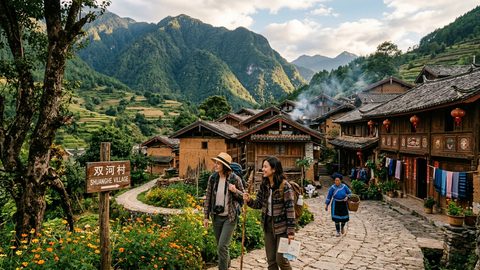 Planning a Slow Travel Route Through Yunnan’s Lesser-Visited Villages
Plan a slower Yunnan journey through Dali, Shaxi, and Nuodeng, with realistic transport allowances, guesthouse advice, and respectful village visits.
Planning a Slow Travel Route Through Yunnan’s Lesser-Visited Villages
Plan a slower Yunnan journey through Dali, Shaxi, and Nuodeng, with realistic transport allowances, guesthouse advice, and respectful village visits.
-
 From Guiyang to Congjiang — A Week in Guizhou by Bus and on Foot
Independent travel from Guiyang to Congjiang in Guizhou: buses, minibuses, journey times, seasonal road conditions, and village guesthouses explained.
From Guiyang to Congjiang — A Week in Guizhou by Bus and on Foot
Independent travel from Guiyang to Congjiang in Guizhou: buses, minibuses, journey times, seasonal road conditions, and village guesthouses explained.