Dali Experiences That Go Beyond the Souvenir Stalls
Dali rewards travellers who use the old town as a launchpad, not a destination—cycle the Erhai west bank, hike Cangshan trails, and day-trip to Weishan's unpolished Ming-Qing lanes.
The Old Town Square is Empty by 09:00
At seven in the morning the only sound on Fuxing Road is a shopkeeper hosing the stone. By nine the first busloads arrive. This is the moment you leave. Dali Old Town is a square of crisscross lanes, its South Gate dating to 1382, but the thing the souvenir stalls hide is that the town works best as a breakfast stop and a bed. The real Dali sits above it on the mountain and around the lake. The old town is your base, not the main event. Use it for a morning coffee and a shower, then go.
Cangshan Trails Beat Every Temple in Town
The Cangshan range runs 50 km north to south behind the old town. Its highest peak, Malong Peak, hits 4,122 m. You do not need to summit it. The Jade Belt Path, an 18 km walking trail at roughly 2,600 m, runs between Gantong Temple and Zhonghe Temple. It takes four to five hours and gives you a constant view of Erhai Lake below. No souvenir stalls. No photo studio touts. Just the trail and the pines.
Three Cable Car Routes, One Correct Choice
Book the Ximatan cable car. It reaches 3,920 m at its upper station, the highest point accessible without climbing. Round trip in 2025 cost ¥300. The Gantong route and the Zhonghe route are shorter and lower, and they deposit you onto sections of the Jade Belt Path. If you only have one day on the mountain, take Ximatan up early, walk the high ridge for an hour, then come down. Arrive at the cable car base by 08:30. After 10:00 the queue hits 90 minutes.
The Altitude Is Real
The Ximatan upper station sits at 3,920 m. Above 3,000 m, altitude sickness hits travellers who arrived from sea level the day before. Headache, nausea, shortness of breath. The fix is slow ascent. Spend your first night in Dali at 1,972 m, then take the cable car on day two. Skip the mountain entirely if you have fewer than three days in the region.
If the Cable Car Is Closed
Wind closes the Ximatan line regularly in winter and during summer thunderstorms. The fallback is the Jade Belt Path accessed from the Gantong or Zhonghe cable cars, which operate in wind up to 18 m/s. Gantong and Zhonghe stations sit at roughly 2,600 m, so the exposure is shorter and the line cheaper. No refunds from Ximatan tickets when weather shuts the system. Check the Dali tourism bureau WeChat account before you set out.


The Erhai West Bank Cycling Circuit
Erhai Lake measures 116 km around its perimeter. The west bank cycle lane from Dali Old Town to Xizhou covers roughly 18 km of flat, dedicated path. It is the best half day activity in the region. An e-bike rents for ¥40 to ¥80 per day in 2025 depending on the season and the shop. Start from the Erhai Gate at the east side of the old town. Follow the lane north. The road stays between the water and the fields. No trucks. No tour buses.
Xizhou for Baba and Bai Courtyards
Xizhou sits 18 km north of Dali Old Town. Pay the entry fee for the Yan Family Compound, built between 1907 and 1919, a Bai courtyard showing carved wood and painted panels. Then eat. This town is the place for Xizhou baba, the layered flatbread. In 2025 a plain one cost ¥5, a filled one up to ¥15. Monday is Shaping market day just north of Xizhou. Go for the produce stalls, not the tourist goods.
Boat Cruise: Skip It
The Erhai sightseeing bus full circuit cost ¥98 in 2025. The boat cruise departs from Dali Port in Xiaguan. Both are crowded and the lake view is better from the shore. If you want to be on the water, rent a kayak from a village beach on the west bank, not a ticket from a booth.
| Market | Day | Distance From Dali | What It Delivers |
|---|---|---|---|
| Dali Monday Market | Monday | West edge of old town | Local produce, live poultry, hardware. Zero crafts. Take ¥50 in small notes. |
| Shaping Market | Monday | ~20 km north (near Xizhou) | Bai textiles, farm tools, street food. Arrive by 08:00, done by 12:00. |
| Shaxi Friday Market | Friday | ~120 km (90 min drive) | Livestock trading, dried mushrooms, horse gear. Combine with Sideng Square. |
Day Trips That Demand a Full Day
Zhoucheng Tie-Dye Village
Take a minibus 40 minutes from Dali Old Town to Zhoucheng. The village specialises in batik, the blue and white tie dye method. Workshops let you dip a cloth and pull it out patterned. Pay roughly ¥50 to ¥80 for a small scarf with instruction. The village is touristed but honest: you watch the dye vats bubble, you pay for what you make, you leave with a thing you made. Monday is the Dali street market west of the old town, not Zhoucheng's market day. Go any afternoon.
Weishan Old Town
Weishan sits roughly 60 km south of Dali. It is a Ming and Qing town that did not get the full renovation treatment. The main street has fewer than five shops selling the same printed scarf. The Xinggong Temple and the old city gate are unrestored. No entry fee. No cable car. Take a shared minivan from Dali bus station, 90 minutes, ¥30 per person. Return before dark. Minivans thin out after 17:00.
Shaxi: Worth the 90-Minute Drive
Shaxi is 120 km from Dali Old Town, about 90 minutes via the G5611 expressway. The Sideng Market Square, part of the Ancient Tea Horse Road, still functions as a Friday livestock market. Xingjiao Temple, built in 1415, sits at the square's edge. The town is quieter than Dali, the accommodation is cheaper, and the Friday market delivers genuine animal trading, not a performance of it. Stay one night. The guesthouses near the square cost ¥150 to ¥250 in 2025.


The One Thing That Goes Wrong
You arrive in Dali on a Saturday, spend Sunday wandering the old town, and Monday you rent an e-bike and head for Xizhou. It rains. The cycle lane floods in two sections. The baba stall is closed. The minibus back to Dali takes 45 minutes because a truck overturned on the lakeside road. This is a normal day here. The weather turns fast, the roads are narrow, and the infrastructure expects you to have patience and a local SIM card. Your Chinese data plan handles the maps and the translation. Your backup day covers the rain. Pack a waterproof jacket, load your phone with WeChat Pay, and expect things to close when the weather says so. The people who fail in Dali are the ones who planned every hour. The ones who succeed leave room for the mountain to close, the market to shift, and the rain to fall.
Common Questions
How many days do I need in Dali to see beyond the old town?
At least three full days. Day 1: Cangshan cable car and Jade Belt Path. Day 2: Erhai west bank cycle to Xizhou. Day 3: day trip to Zhoucheng or Weishan. Two days works if you drop the mountain, but you will miss the best thing.
Is the Three Pagodas ticket worth ¥75?
Only from the outside. The Qianxun Pagoda stands 69.13 m tall, built 823 to 840, and is best photographed from the path north of the ticket gate. The Chongsheng Temple reconstruction is concrete. Skip the interior.
Can I rent a bicycle and do the full Erhai circuit in one day?
The full 116 km perimeter is 6 to 8 hours on an e-bike. The east bank has no dedicated lane and shares the road with trucks. Stick to the west bank from Dali to Xizhou and back. 36 km round trip. Four hours at a slow pace.
What is the biggest mistake first-time visitors make in Dali?
Spending two days only in the old town, eating at the same backpacker street, and leaving without seeing Cangshan or Erhai. The old town is a corridor to the mountain and the lake, not the destination itself.
Read next
-

 Where to Stay in Dali Old Town Erhai West Bank or Shuanglang
Dali Old Town offers courtyard stays near cafes. Erhai west bank villages like Caicun put you on the cycling lane. Shuanglang faces sunset over water.
Where to Stay in Dali Old Town Erhai West Bank or Shuanglang
Dali Old Town offers courtyard stays near cafes. Erhai west bank villages like Caicun put you on the cycling lane. Shuanglang faces sunset over water.
-
 Best Time to Visit Dali for Erhai Cycling and Cangshan Clarity
October delivers clear Cangshan views and golden Erhai light, March brings the Bai Third Month Fair, and summer rains make cycling lanes slick—here is Dali by season.
Best Time to Visit Dali for Erhai Cycling and Cangshan Clarity
October delivers clear Cangshan views and golden Erhai light, March brings the Bai Third Month Fair, and summer rains make cycling lanes slick—here is Dali by season.
-
 Getting Around Dali and Reaching the Erhai Villages Without a Tour Bus
Dali's old town punishes wheeled suitcases on cobblestones, and the Erhai villages require shared minivans or bicycles—here is how to move between them without a tour bus.
Getting Around Dali and Reaching the Erhai Villages Without a Tour Bus
Dali's old town punishes wheeled suitcases on cobblestones, and the Erhai villages require shared minivans or bicycles—here is how to move between them without a tour bus.
-
 Eating in Dali From Renmin Road Stalls to Rushan Street Vendors
Skip the banana pancakes—Dali's streets are lined with rushan vendors frying goat milk fans and er kuai stalls grilling chewy rice cakes, plus Bai minority restaurants hiding in plain sight.
Eating in Dali From Renmin Road Stalls to Rushan Street Vendors
Skip the banana pancakes—Dali's streets are lined with rushan vendors frying goat milk fans and er kuai stalls grilling chewy rice cakes, plus Bai minority restaurants hiding in plain sight.
-
 Erhai Lake
The Erhai Lake west bank cycling route threads through quiet villages and new bike lanes, reshaped by the environmental clean-up that removed waterfront buildings.
Erhai Lake
The Erhai Lake west bank cycling route threads through quiet villages and new bike lanes, reshaped by the environmental clean-up that removed waterfront buildings.
-
 Provincial China Beyond Beijing Shanghai Guangzhou and Xi’an
Provincial China rewards slow travellers with compressed continents of culture, cuisine, and landscape far beyond the standard megacity circuit.
Provincial China Beyond Beijing Shanghai Guangzhou and Xi’an
Provincial China rewards slow travellers with compressed continents of culture, cuisine, and landscape far beyond the standard megacity circuit.
-
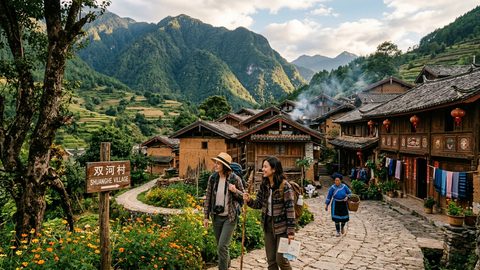 Planning a Slow Travel Route Through Yunnan’s Lesser-Visited Villages
Plan a slower Yunnan journey through Dali, Shaxi, and Nuodeng, with realistic transport allowances, guesthouse advice, and respectful village visits.
Planning a Slow Travel Route Through Yunnan’s Lesser-Visited Villages
Plan a slower Yunnan journey through Dali, Shaxi, and Nuodeng, with realistic transport allowances, guesthouse advice, and respectful village visits.
-
 From Guiyang to Congjiang — A Week in Guizhou by Bus and on Foot
Independent travel from Guiyang to Congjiang in Guizhou: buses, minibuses, journey times, seasonal road conditions, and village guesthouses explained.
From Guiyang to Congjiang — A Week in Guizhou by Bus and on Foot
Independent travel from Guiyang to Congjiang in Guizhou: buses, minibuses, journey times, seasonal road conditions, and village guesthouses explained.