A Taste of Jianshui Through Its Charcoal Tofu and Ancient Wells
Jianshui's tofu owes its subtle sweetness to the water drawn from the Daban Well, grilled over charcoal on the sidewalks of Lin'an Road every evening.
Why Does Jianshui Tofu Taste Different?
Jianshui tofu tastes different because every batch is made with water from the Daban Well. This Ming Dynasty well produces water with a high mineral content, a slight sweetness, and almost no iron. That well water, combined with a charcoal grilling method that turns a 2, 3 cm cube of tofu into a puffed, golden piece with a custardy interior, creates a flavour and texture you cannot find anywhere else in China. The local name is shao doufu. You eat it sitting on a low stool at a wire mesh brazier while the grill master turns each cube by hand.
How it Works: the Corn Kernel Payment System
How You Pay
At any tofu stall on Lin'an Road at dusk, or the cluster of vendors near West Gate (Qingyuan Gate) on Hanlin Street, the system is the same. You do not order by the plate. You sit down and eat. The grill master places a small pile of dried corn kernels on your side of the brazier. Every time you take a piece of tofu, you move one kernel into your personal pile. At the end of the meal, the master counts your kernels and multiplies by the price per piece. The rate at Banbanjing Shao Doufu, the stall closest to the Daban Well, was 0.5 yuan per piece in 2024. Verify the price before you sit down. The rate can change and some stalls near the East Gate (Chaoyang Gate) charge tourists more.
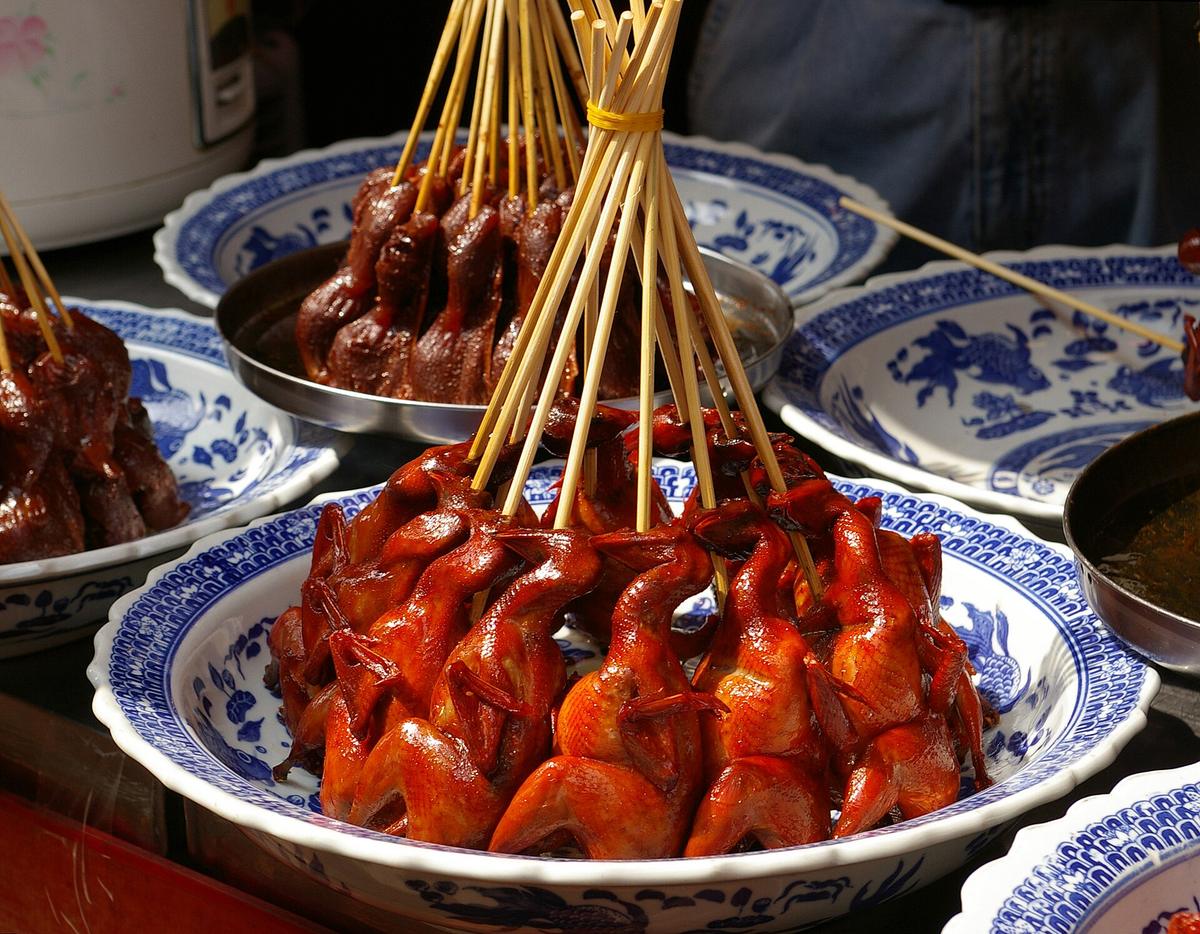

Which Sauce and Where to Eat
Two Sauces, One Choice
You get two dipping sauce options. The dry version is chili powder, ground cumin, salt, and sesame seeds. The wet version is soy sauce, vinegar, chili oil, minced garlic, and cilantro. Both rely on the same base of ground dried chili, Sichuan pepper, salt, and MSG. Take the dry version for grilled tofu. It sticks better to the puffed skin.
Best Tofu Stalls
Banbanjing Shao Doufu, near Daban Well on the west side of old town, is the safest choice. It sits right next to the well, turnover is high, and the cubes never sit out long. If Banbanjing is closed or it is late, head to Zitao Street (purple pottery street), which operates from about 18:00 to 23:00 every evening. That area draws more tourists, so prices can drift upward. To avoid the markup, walk south on Hanlin Street, west of Daban Well, where locals eat.
Steam Pot Chicken: The Other Well Water Dish
The same Daban Well water makes Jianshui steam pot chicken, called qiguo ji, distinct. A Jianshui purple pottery (zitao) pot with a hollow central chimney sits on a steaming pot for 3, 4 hours. The steam circulates inside the sealed vessel, pulling flavour from sanqi (Panax notoginseng), goji berries, ginger, and cordyceps flower into the chicken and broth. Lin'an Restaurant at 48 Lin'an Road serves it for 68, 98 yuan per pot. Xiangmanlou, near Zhu Family Garden, charges 88, 128 yuan per pot.
Morning Noodles and Lunch Options
For breakfast, walk across from the East Gate to Huayuan Xiaochi, which serves cross bridge rice noodles (guoqiao mixian) for 12, 25 yuan. The broth here also uses well water, though the well source varies by stall. For lunch, skip the restaurants on Lin'an Road themselves. Walk into the alleys off Beizheng Street, north of the old town center, where prices are lower and the water source is local.
The Single Thing That Most Often Goes Wrong Here
Tourists pay double. They sit down at a stall near Chaoyang Gate or on Zitao Street without verifying the per piece price first, then get a bill of 40 yuan for what should cost 20 yuan. The dried corn kernel system looks confusing, so they do not count their own piles. Always check the price per piece before you eat, and count your own kernels as you go. If the stall has no dried corn, walk away. That stall is not using the local system and is probably pricing per plate, which means you will pay more for less tofu.
This page suits the traveller who wants to eat like a local, not the traveller who wants a sit down meal with table service. It does not suit anyone in a hurry: charcoal grilling takes time, and the corn kernel system requires patience. If you want to check a box and leave, order from the wet sauce stalls on Zitao Street where you pay by the plate and move on.
Common Questions
How many ancient wells does Jianshui Old Town have?
Over 120 wells, but only two matter for eating: Daban Well (3 meters wide, built in the Ming Dynasty Hongwu period, free entry) and Xiaojie Well (also called Two Eye Well, near the East Gate). Most tofu stalls source from these two.
Can I visit Daban Well and eat at Banbanjing Shao Doufu on the same trip?
Yes. Banbanjing Shao Doufu is steps from the well. Visit the well for free at any hour, then walk to the stall. Expect a short wait between 18:00 and 20:00 on weekends.
What if it is 1 AM and I want grilled tofu?
Your only option is Zitao Street, which runs until 23:00. If it is after that, no tofu will be available. Plan to eat earlier or stock up before 23:00.
Is Jianshui tofu more expensive near the tourist spots?
Yes. Tofu near Chaoyang Gate (East Gate) and along Zitao Street can cost 0.8 to 1 yuan per piece, nearly double the 0.5 yuan rate at stalls on Hanlin Street near Daban Well. Avoid the East Gate cluster.
Is the cross bridge rice noodles at Huayuan Xiaochi made with well water?
The broth likely uses well water, but the restaurant does not specify which well. For guaranteed Daban Well water in your noodles, order from a stall on Hanlin Street near the well itself.
Read next
-

 Provincial China Beyond Beijing Shanghai Guangzhou and Xi’an
Provincial China rewards slow travellers with compressed continents of culture, cuisine, and landscape far beyond the standard megacity circuit.
Provincial China Beyond Beijing Shanghai Guangzhou and Xi’an
Provincial China rewards slow travellers with compressed continents of culture, cuisine, and landscape far beyond the standard megacity circuit.
-
 Planning a Slow Travel Route Through Yunnan’s Lesser-Visited Villages
Plan a slower Yunnan journey through Dali, Shaxi, and Nuodeng, with realistic transport allowances, guesthouse advice, and respectful village visits.
Planning a Slow Travel Route Through Yunnan’s Lesser-Visited Villages
Plan a slower Yunnan journey through Dali, Shaxi, and Nuodeng, with realistic transport allowances, guesthouse advice, and respectful village visits.
-
 From Guiyang to Congjiang — A Week in Guizhou by Bus and on Foot
Independent travel from Guiyang to Congjiang in Guizhou: buses, minibuses, journey times, seasonal road conditions, and village guesthouses explained.
From Guiyang to Congjiang — A Week in Guizhou by Bus and on Foot
Independent travel from Guiyang to Congjiang in Guizhou: buses, minibuses, journey times, seasonal road conditions, and village guesthouses explained.