Eating in Lijiang From Sifang Street Snacks to Naxi Hot Pot
Beyond baba flatbreads on Sifang Street, Lijiang offers Naxi yak meat hot pots, grilled Lashihai Lake fish, and foraged mountain vegetables.
Eat Lijiang Food, Not Tourist Traps
Sifang Street vendors sell Naxi baba for 8 to 15 CNY a piece. Two blocks south, outside the old town, the same flatbread costs 3 to 5 CNY. That ratio applies to almost every dish in Lijiang. The tourist core marks up convenience ruthlessly. Your job is to walk past the baba stalls and eat where locals do.
Baba is the entry point. The sweet version uses wheat flour, lard, brown sugar, and sesame, pan fried to a disc 1 to 2 cm thick. The savoury version swaps in minced pork and spring onion. Both are cooked in a shallow wok with rapeseed oil. Eat one on Sifang Street for the ritual, then never buy another one there.


Where Lijiang Food Gets Real: Naxi Hotpot and Lake Fish
Naxi Hotpot And The Pork You Must Order
Naxi hotpot makes sense at altitude after a cold day. The base options are free range chicken with matsutake mushroom, Naxi cured pork rib with white radish, or a wild mushroom medley that changes with the season. Inside the old town, expect to pay 68 to 128 CNY per person. On Minzhu Road or Fuhui Road, the same pot runs 35 to 60 CNY. Same ingredients, same cooking method, different rent.
The pork in that hotpot is Lijiang larou. It is dry salted with Sichuan pepper and baijiu, then air dried or cold smoked over pine or cypress branches. It keeps six to twelve months in a cool spot. Restaurants stir fry it with dried chili and garlic shoots for 28 to 48 CNY a plate. Order it.
What To Know About Yak Meat
Yak meat appears on most hotpot menus, but the fine print matters. Fresh yak sold in Lijiang markets is mostly from yak cattle hybrids, not purebred animals. Purebred yak comes from above 3,500 metres in Shangri La or Deqin and rarely reaches Lijiang fresh. The yak jerky sold in old town tourist shops is often beef or pork with flavouring. Yak meat hotpot in the old town runs 88 to 168 CNY per person. Yak skewers from street vendors are 10 to 20 CNY per skewer. The meat is real enough. Just know the source.
Grilled Fish From Lashihai Lake
Grilled fish from Lashihai Lake is the seafood move. Family run restaurants in the quieter lanes south of Mu Mansion and in Shuhe backstreets serve it whole, charred, with local herbs. No English menu. Point at the fish, use a photo translation app, and eat.
Chickpea Jelly, Morning Markets, and the Price Gap
Jidou Liangfen: Eat It Cold Or Hot
Jidou liangfen is chickpea jelly made from Lijiang grown chickpeas. Served cold, it is sliced into strips with vinegar, soy sauce, chili oil, crushed garlic, Sichuan pepper, and coriander. Served hot, it is pan fried until crisp on the outside, then dressed the same way. In the old town, a portion costs 10 to 18 CNY. At Zhongyi Market, the same portion costs 5 to 8 CNY.
Hit Zhongyi Market Before 08:00
Zhongyi Market on Changshui Road in Gucheng District is your breakfast target. Food vendors operate from 07:00 to 11:00 daily, with the peak between 08:00 and 09:30. Breakfast items include jidou liangfen, Naxi baba, erkuai (grilled rice cake), rice noodles with pickled vegetables, soy milk with youtiao, and steamed buns with yak butter. Every item costs 3 to 12 CNY. Arrive by 08:00 to see what a real Lijiang market looks like before the tour groups arrive.
The Price Gap That Matters
The price gap between old town and everywhere else is the single most important number for eating in Lijiang. A meal for one with one dish and rice on the main tourist streets (Sifangjie, Wuyi Street, Qiyi Street) runs 35 to 60 CNY. The equivalent meal on Minzhu Road or Fuhui Road costs 12 to 22 CNY. That is a 2.5 to 3 times markup for the same food. The old town photo menus are near universal on those streets, which means the tourist restaurants expect you to order from a screen. Outside the old town, there are no photo menus. You need a translation app.
English menus are rare everywhere outside high end hotels. A Chinese SIM card with a data plan is non negotiable for Didi, maps, and translation. Google, WhatsApp, Instagram, and Gmail are blocked without a VPN. Install and test one before you leave home. Wi Fi in guesthouses is slow and unreliable in mountain areas.
Foraged Vegetables and the Shuhe Alternative
Order What The Cook Picked That Morning
Mountain vegetables appear on family run menus in the lanes south of Mu Mansion and in Shuhe's backstreets. These are seasonal foraged greens, stir fried with garlic or dried chili. No standard menu item. No English name. The dish changes with what the cook picked that morning. Point at what the next table ordered. That is your best bet.
Shuhe: The Compromise That Works
Shuhe is the quieter Lijiang alternative, still commercialised but with a fraction of the Dayan crowd. The backstreets here hold small restaurants where the old town price gap is less extreme. A meal on a Shuhe backstreet runs closer to 25 to 40 CNY for a dish and rice, still above the 12 to 22 CNY of Minzhu Road but below the 35 to 60 CNY of Sifangjie. The trade off is you save the bus ride from Baisha Village (which has faded Ming frescoes and relaxed cafes) or the road trip to Shaxi for the Friday market and ancient theatre. But if you are staying in Lijiang proper, Shuhe backstreets are the compromise that works.


What to Do Now
Walk out of the old town. Cross Changshui Road and find Zhongyi Market for breakfast. For lunch or dinner, skip Sifangjie and head to Minzhu Road or Fuhui Road. If you want to stay within walking distance of your hotel, try Shuhe's backstreets south of the main square.
The single thing that most often goes wrong: travellers eat three meals a day in the old town, pay three times the price, and leave thinking Lijiang food is just baba and tourist hotpot. Do not be that traveller.
Common Questions
What is the single best dish to try in Lijiang beyond baba?
Naxi hotpot, specifically the Naxi cured pork rib base with white radish. It costs 35 to 60 CNY per person outside the old town and shows the local curing technique better than any single dish.
How do I order food in Lijiang if I do not speak Chinese?
Use a photo translation app. Point at menu photos where they exist, which is near universal on Sifangjie, Wuyi Street, and Qiyi Street. Outside those streets, point at what other tables are eating. A Chinese SIM with data is non negotiable.
Is the yak meat in Lijiang actually yak?
Most fresh yak in Lijiang markets is from yak cattle hybrids. Purebred yak comes from above 3,500 metres in Shangri La and rarely reaches Lijiang fresh. Tourist shop yak jerky is often beef or pork with flavouring. The meat in hotpots is real enough, just not purebred.
Where should I eat breakfast in Lijiang?
Zhongyi Market on Changshui Road. Food vendors operate 07:00 to 11:00, peak 08:00 to 09:30. Items cost 3 to 12 CNY each. You get chickpea jelly, rice noodles, steamed buns with yak butter, and grilled rice cakes. Skip old town breakfast entirely.
How much more expensive is food inside Lijiang old town?
Restaurant meals inside the old town cost 2.5 to 3 times more than equivalent meals outside. A one dish meal with rice runs 35 to 60 CNY in the old town and 12 to 22 CNY on Minzhu Road or Fuhui Road.
Read next
-

 Where to Stay in Lijiang Dayan Shuhe and Baisha Compared
Dayan puts you inside the UNESCO maze. Shuhe offers a slower pace with wider streets. Baisha Village gives Jade Dragon Snow Mountain views and quiet.
Where to Stay in Lijiang Dayan Shuhe and Baisha Compared
Dayan puts you inside the UNESCO maze. Shuhe offers a slower pace with wider streets. Baisha Village gives Jade Dragon Snow Mountain views and quiet.
-
 Lijiang Beyond the Old Town What Actually Deserves Your Time
Beyond Dayan Old Town, Lijiang offers Black Dragon Pool reflections, Mu Mansion Naxi history, Baisha Ming frescoes, and Dongba pictograph workshops.
Lijiang Beyond the Old Town What Actually Deserves Your Time
Beyond Dayan Old Town, Lijiang offers Black Dragon Pool reflections, Mu Mansion Naxi history, Baisha Ming frescoes, and Dongba pictograph workshops.
-
 Lijiang Best Time to Visit Month by Month Weather and Crowds
October brings clear skies and golden light to Lijiang. Avoid Chinese New Year crowds, National Day gridlock, and summer rain that hides the mountains.
Lijiang Best Time to Visit Month by Month Weather and Crowds
October brings clear skies and golden light to Lijiang. Avoid Chinese New Year crowds, National Day gridlock, and summer rain that hides the mountains.
-
 Getting Around Lijiang Buses Minivans and the Suitcase Problem
Lijiang Sanyi Airport bus reaches Dayan in 40 minutes. Stone-paved old town streets destroy wheeled suitcases. Buses connect Shuhe and Baisha.
Getting Around Lijiang Buses Minivans and the Suitcase Problem
Lijiang Sanyi Airport bus reaches Dayan in 40 minutes. Stone-paved old town streets destroy wheeled suitcases. Buses connect Shuhe and Baisha.
-
 Tiger Leaping Gorge
The Tiger Leaping Gorge high trail is a two-day walk above sheer canyon walls. Plan your guesthouse stops, check trail conditions, and time your hike right.
Tiger Leaping Gorge
The Tiger Leaping Gorge high trail is a two-day walk above sheer canyon walls. Plan your guesthouse stops, check trail conditions, and time your hike right.
-
 Provincial China Beyond Beijing Shanghai Guangzhou and Xi’an
Provincial China rewards slow travellers with compressed continents of culture, cuisine, and landscape far beyond the standard megacity circuit.
Provincial China Beyond Beijing Shanghai Guangzhou and Xi’an
Provincial China rewards slow travellers with compressed continents of culture, cuisine, and landscape far beyond the standard megacity circuit.
-
 Lijiang or Dali Old Town How to Decide Without Regret
Lijiang Dayan is a dense UNESCO maze best at dawn. Dali Old Town spreads out under Cangshan with a backpacker cafe scene and the Erhai cycling circuit.
Lijiang or Dali Old Town How to Decide Without Regret
Lijiang Dayan is a dense UNESCO maze best at dawn. Dali Old Town spreads out under Cangshan with a backpacker cafe scene and the Erhai cycling circuit.
-
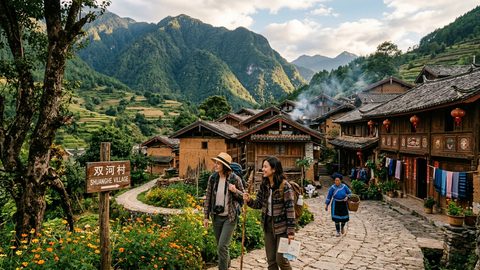 Planning a Slow Travel Route Through Yunnan’s Lesser-Visited Villages
Plan a slower Yunnan journey through Dali, Shaxi, and Nuodeng, with realistic transport allowances, guesthouse advice, and respectful village visits.
Planning a Slow Travel Route Through Yunnan’s Lesser-Visited Villages
Plan a slower Yunnan journey through Dali, Shaxi, and Nuodeng, with realistic transport allowances, guesthouse advice, and respectful village visits.
-
 From Guiyang to Congjiang — A Week in Guizhou by Bus and on Foot
Independent travel from Guiyang to Congjiang in Guizhou: buses, minibuses, journey times, seasonal road conditions, and village guesthouses explained.
From Guiyang to Congjiang — A Week in Guizhou by Bus and on Foot
Independent travel from Guiyang to Congjiang in Guizhou: buses, minibuses, journey times, seasonal road conditions, and village guesthouses explained.