Shangri-La by Season, When the High Plateau Opens Up and When It Freezes
Shangri-La's high plateau only truly opens from June to October—alpine flowers peak in early summer, October skies are crystalline, and winter freezes guesthouses shut.
When to Go: June, July or October
Shangri-La is not a year-round destination. At 3,300 metres, the oxygen level is about 67% of sea level. Winter temperatures drop to -10°C and many guesthouses close. You have two viable windows. June and July deliver alpine flowers and open trekking routes. October brings clear skies and golden light. Outside those months, ask yourself whether you are willing to spend your trip indoors with a space heater.
Altitude and Temperature Rule Everything
Thin Air And Cold Nights
The decisive factor here is elevation, not latitude. Shangri-La County sits at 3,160 m; the city centre is at 3,300 m; the Diqing Tibetan Autonomous Prefecture averages 3,380 m. That thin air means summer highs only reach 18 to 20°C, and even in June the overnight low drops to 8°C. Come October, the daily high falls to 13°C. By November it is 8°C with lows of -6°C. You pack for cold nights even in the advertised warm months.
The Monsoon Window
The monsoon runs June to September. July is the peak rainfall month, with 160 to 180 mm of rain. Roughly 60% of annual precipitation falls in those four months. That does not mean you should avoid summer entirely. It means the alpine meadows on the Napahai and Xiaozhongdian grasslands peak with wildflowers from late June into mid-July, and the Tiger Leaping Gorge high trail stays open year-round. Watch for ice on north-facing sections above 2,600 m in winter. The trade-off is wet days versus a landscape that is green and blooming.
Autumn Light And Winter Brutality
Autumn is drier and colder. Mid-October into late November is the best window for visibility at Meili Snow Mountain (6,740 m main peak, viewed from the Feilaisi platform at 3,400 m). Skies are clear and the light is golden, but the daily low drops to 0°C. By November you are at -6°C overnight. Photographers accept the cold for the lighting. Everyone else should budget for thermal layers and a hotel with reliable heating.
Winter, December to February, is brutal. Average daily highs sit at 4 to 6°C; lows hit -8 to -10°C. The recorded extreme minimum is -27.4°C. Haba Snow Mountain base camp closes December to March. Bitahai Lake and Shudu Lake freeze solid December to February. The Diqing Airport (DIG, 3,280 m) faces low-visibility and high-wind disruptions every winter. A handful of guesthouses remain open, but the town empties. Only attempt this if you are on a specific winter photography project or you genuinely prefer empty streets to functioning businesses.
Spring, March to May, is mud season. The snow melts, the ground thaws, and temperatures are lukewarm. March highs are 8°C with lows of -3°C. By May the high reaches 16°C and lows sit at 4°C. The rhododendrons begin blooming in late April, hitting their peak in May and early June on the Napahai hills, the Bitahai Lake trail, and near Abujee. But the mountain roads are slushy, the skies are grey, and the window before the monsoon is short. Aim for late May if you must go in spring.


What to Book and What to Skip
Summer Hiking And Landslide Planning
June and July is your primary window for hiking. The Tiger Leaping Gorge high trail is open and free of ice. The G214 road between Shangri-La and Deqin carries landslide risk from July to August, with closures lasting from hours to two days, so plan a buffer day between destinations. Enter the gorge from Qiaotou village and exit at Walnut Garden; the full two-day traverse covers roughly 22 km of switchback climbing. Book a guesthouse at the halfway point a week ahead in July.
October And The National Day Bottleneck
October delivers the clearest skies but also the national holiday gridlock. Chinese National Day (1 to 7 October) means attractions hit capacity, accommodation triples in price, and the G214 becomes a parking lot. Book your trip for the second week of the month, after the holiday wave passes. The golden light on Songzanlin Monastery (the Little Potala Palace) in late October justifies the cold, but arrive by 08:30 to beat the tour buses.
The Abujee Alternative
If you only have time for one high-altitude walk, skip the bitumen paths around Pudacuo National Park. Instead, take a private driver to the Abujee alpine meadow. The road is closed November to April by snow. The hike is on genuine grassland at high elevation and you will see no tour groups. Negotiate the return trip with your driver before you depart Shangri-La city.
The failure case in summer: a landslide closes the G214 near Deqin and you are stuck in Shangri-La for an extra day. Plan for it. Carry an offline map (Maps.me with China offline tiles), a VPN installed and tested, and a Chinese SIM card with data. Without those three, you are reliant on a hotel receptionist who may not speak English.
The Winter Reality Check
If you arrive in January expecting a functioning tourist town, you will be disappointed. Napa Lake is dry from November to May; it is a grassy plain, not a body of water. Bitahai Lake is frozen and park access is limited. The Baima Snow Mountain pass (4,292 m) closes intermittently December to March. The airport may ground flights for low visibility and high winds, a problem every winter. Your backup plan: book a flexible ticket to Lijiang (LJG, 40 to 60 minutes by airport bus), then take a high-speed train south to Kunming if Shangri-La is grounded.
For those who still want snow peaks: aim for mid-December, when the first heavy snow has fallen on Meili Snow Mountain and the tourist count is near zero. Stay at Feilaisi village (3,400 m) in a guesthouse with electric blankets and bottled water. Do not expect restaurants to be open past 19:00. Bring a sleeping bag liner rated to -10°C. The reward is a sunrise view over Kawagebo peak with no other person in sight.


The 10-Day Minimum
Why A Week Fails
Do not try to cover Kunming, Dali, Lijiang, and Shangri-La in a single week. That is the most common mistake travellers make, and it yields four near-identical old towns seen through a bus window. Shangri-La requires at least three nights for altitude acclimatisation alone.
A Sensible Itinerary
Fly into Kunming (Changshui Airport, KMG, Metro Line 6 to the city centre in 25 minutes for ¥5 to 8). Take the high-speed train to Lijiang (3 hours, ¥200). Spend two nights in Lijiang to adjust to 2,400 m. Then drive 4 hours to Shangri-La on the G214. Stay four nights. Drive back to Lijiang and fly out from DIG or take the bus south.
If you skip acclimatisation, altitude sickness hits hard at 3,300 m. Symptoms include headache, nausea, and insomnia. The effective treatment is descent, not medication. Acetazolamide can help, but you need a prescription from a doctor before departure. Do not ascend from Lijiang directly to Shangri-La in one day without sleeping a night at 2,400 m first.
Common Questions
Is Shangri-La worth visiting in August?
Only if you accept daily rain and the chance of road closures. August is peak monsoon month, with 160 to 180 mm of rain. The Napahai grassland floods July to October, turning into a seasonal lake. The wildflowers are gone by late July. Trekkers should go in June or early July instead.
Can I see Meili Snow Mountain in summer?
Not reliably. The best visibility window is mid-October to late November. Summer clouds and monsoon moisture obscure the peak 80% of the time from the Feilaisi viewing platform (3,400 m). Plan your trip around October if the mountain is your priority.
Do I need a tour to visit Songzanlin Monastery?
No. The monastery is 5 km north of Shangri-La city. Take a taxi for ¥20 to 30 or walk if you are acclimatised. Arrive at 08:30 before the tour groups. Allow 2 hours to walk the circuit of the main hall and the side chapels. Admission was 90 yuan in 2025.
What happens if I get altitude sickness in Shangri-La?
Descend immediately. The nearest lower-altitude town is Lijiang at 2,400 m, 4 hours by car. If symptoms are severe (vomiting, confusion, shortness of breath at rest), go to the Diqing People's Hospital on Changzheng Road. A taxi from the old town costs ¥15. Do not wait, do not try to 'tough it out'.
Can I visit Tiger Leaping Gorge in winter?
Yes, the high trail is open year-round. However, north-facing sections above 2,600 m can be icy from December to February. Bring microspikes for your boots and start the hike by 08:30 to finish before dark at 18:00. The road below the gorge carries landslide risk in July and August, not in winter.
Read next
-

 Where to Stay in Shangri-La at 3200 Metres Without Ruining Your Acclimatisation
Shangri-La accommodation is a choice between Dukezong old town atmosphere at full altitude and the newer county town with lower elevation and oxygen-equipped rooms—your lungs will have a preference.
Where to Stay in Shangri-La at 3200 Metres Without Ruining Your Acclimatisation
Shangri-La accommodation is a choice between Dukezong old town atmosphere at full altitude and the newer county town with lower elevation and oxygen-equipped rooms—your lungs will have a preference.
-
 Things to Do in Shangri-La From Songzanlin Monastery to Pudacuo Alpine Lakes
Songzanlin Monastery's gilded halls, Pudacuo's alpine lakes at 3,500 metres, and Dukezong's rebuilt lanes with a giant prayer wheel—Shangri-La rewards those who acclimatise before exploring.
Things to Do in Shangri-La From Songzanlin Monastery to Pudacuo Alpine Lakes
Songzanlin Monastery's gilded halls, Pudacuo's alpine lakes at 3,500 metres, and Dukezong's rebuilt lanes with a giant prayer wheel—Shangri-La rewards those who acclimatise before exploring.
-
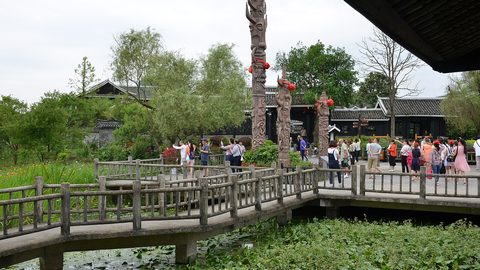 Getting Around Shangri-La and Reaching Tiger Leaping Gorge From the Plateau
Shangri-La has no high-speed rail—Diqing Airport taxis, shared minivans to Tiger Leaping Gorge, and private drivers are how you move across the high plateau at 3,200 metres.
Getting Around Shangri-La and Reaching Tiger Leaping Gorge From the Plateau
Shangri-La has no high-speed rail—Diqing Airport taxis, shared minivans to Tiger Leaping Gorge, and private drivers are how you move across the high plateau at 3,200 metres.
-
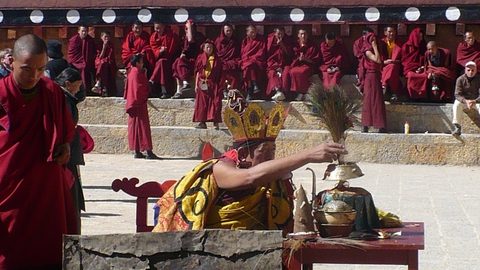 Songzanlin Monastery
 is Shangri-La's Tibetan Buddhist heart, often called the Little Potala Palace. Know the photography rules, opening hours, and how to behave inside.
Songzanlin Monastery
Songzanlin Monastery is Shangri-La's Tibetan Buddhist heart, often called the Little Potala Palace. Know the photography rules, opening hours, and how to behave inside.
-
 Provincial China Beyond Beijing Shanghai Guangzhou and Xi’an
Provincial China rewards slow travellers with compressed continents of culture, cuisine, and landscape far beyond the standard megacity circuit.
Provincial China Beyond Beijing Shanghai Guangzhou and Xi’an
Provincial China rewards slow travellers with compressed continents of culture, cuisine, and landscape far beyond the standard megacity circuit.
-
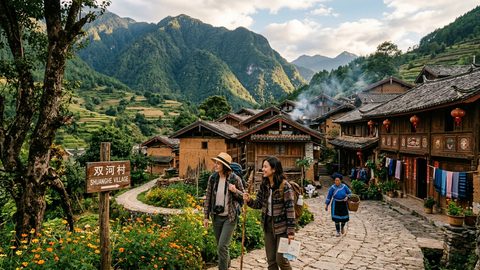 Planning a Slow Travel Route Through Yunnan’s Lesser-Visited Villages
Plan a slower Yunnan journey through Dali, Shaxi, and Nuodeng, with realistic transport allowances, guesthouse advice, and respectful village visits.
Planning a Slow Travel Route Through Yunnan’s Lesser-Visited Villages
Plan a slower Yunnan journey through Dali, Shaxi, and Nuodeng, with realistic transport allowances, guesthouse advice, and respectful village visits.
-
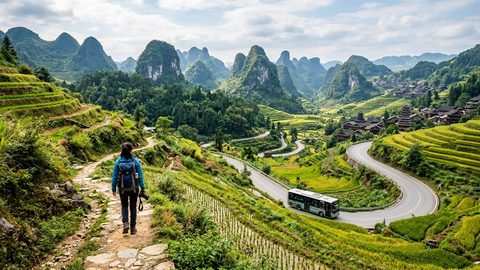 From Guiyang to Congjiang — A Week in Guizhou by Bus and on Foot
Independent travel from Guiyang to Congjiang in Guizhou: buses, minibuses, journey times, seasonal road conditions, and village guesthouses explained.
From Guiyang to Congjiang — A Week in Guizhou by Bus and on Foot
Independent travel from Guiyang to Congjiang in Guizhou: buses, minibuses, journey times, seasonal road conditions, and village guesthouses explained.