Shangri-La Accommodation Choices From Dukezong Old Town to Quiet Tibetan Guesthouses
Shangri-La accommodation is a choice between Dukezong old town atmosphere at full altitude and the newer county town with lower elevation and oxygen-equipped rooms—your lungs will have a preference.
The Trade-Off You Miss If You Only Look at Photos
Most travellers assume sleeping inside Dukezong Old Town is the only real option in Shangri-La. The photos show lantern-lit Tibetan roofs, the giant prayer wheel glowing at dusk, cobbled lanes leading to song-filled courtyards. What those photos do not show: the old town sits at 3,200 metres. Two thirds of its core burned down in the 2014 fire. The rebuilt version swaps authentic timber for fire-safe construction that can still leave you shivering in November. The real choice is not between atmosphere and boredom. It is between altitude and acclimatisation, between a good night's sleep and waking up with a headache, between proximity to Songzanlin Monastery and feeling human the next morning. Decide which matters more on the night after you arrive.
Altitude sickness at 3,200 metres is not a theoretical risk. With rapid ascent from sea level, Acute Mountain Sickness hits 25 to 40 percent of arrivals. That means one in three or four visitors ends up with a headache, nausea, or worse within 6 to 12 hours of stepping off the plane. The Wilderness Medical Society recommends spending one night at an intermediate altitude between 2,500 and 2,800 metres before sleeping above 3,000. That intermediate night is Lijiang, at 2,400 metres. If you drive the roughly 800 metres of elevation gain from Lijiang to Shangri-La in a single day and go straight to bed, you are rolling the dice. Staged ascent cuts AMS incidence by roughly half. Let that single fact govern where you sleep on your first night in Shangri-La. It may send you to the newer part of town.

.jpg)
Dukezong Old Town: Atmosphere at an Altitude Cost
What the Old Town Actually Delivers
Dukezong is where you want to be for the morning prayer wheel walk, the red-walled monastery views from your window, and the ability to stumble from your door into the night market. It is also where the altitude feels sharpest. The old town climbs the hill toward the giant prayer wheel, so some lodgings sit measurably higher than the city centre benchmark of 3,200 metres. The 2014 fire destroyed approximately 242 buildings, roughly two thirds of the core. Reconstruction finished in 2016 using new timber frame construction in Tibetan style, some compressed earth and stone. The only original structures that survived are Bai Ji Si (White Rooster Temple, dating to the Ming dynasty), sections of the old city walls, and a handful of peripheral residential lanes. You are not sleeping in a thousand year old building. You are sleeping in a 2016 rebuild that looks like one.
The Cold and the Oxygen Gap
The warmth reality is the downside most online listings obscure. In the old town, expect electric underfloor warmth or electric radiators. Central systems are rare outside four star hotels and above. Wood stoves exist only in higher end boutique properties. Budget hostels and homestays often have no climate control at all. At 3,200 metres, night temperatures drop below freezing for much of the year. An electric radiator in a single glazed room is not enough. Before you book a room in Dukezong, call ahead. Ask what the warmth system is, whether it runs all night, and whether the room has an independent thermostat. If the answer is vague, assume inadequate. In room oxygen is also uneven. Diffused oxygen systems are found in some four star and five star hotels. Portable oxygen canisters are sold at most front desks for CNY 20 to 50 per canister in 2025. Buy one before you go to bed, not after the headache starts.
Jiantang New Town: Lower Risk, Better Sleep
Infrastructure Built for the Altitude
Jiantang, also called Shangri La New Town or Jiantang Town, sits south and east of Dukezong, contiguous with the old town. Its altitude range is the same 3,200 to 3,280 metres, so you do not escape the elevation entirely. What you gain is infrastructure built with the altitude in mind. New town hotels are more likely to have central climate control, piped oxygen systems, and rooms designed for cold nights. Chain properties such as the Shangri La Resort, Hilton Garden Inn, Holiday Inn Express and the Songtsam boutique chain operate here. These properties understand that a guest arriving from Lijiang same day needs a warm room with reliable oxygen, not a decorative facade with a space heater.
The Distance You Accept
The trade off is distance. You are a fifteen to twenty minute walk or a short taxi ride from Dukezong's old town core and the giant prayer wheel. You lose the ability to wander out at dusk and be in the middle of it in two minutes. You gain the ability to sleep through the night without waking up gasping or shivering. If you are arriving directly from Kunming or from sea level without an intermediate stop in Lijiang, the new town is the safer choice for at least the first two nights. After you acclimatise, move into the old town for the cultural immersion. That two stage approach is how you manage altitude without sacrificing the experience.
Tibetan Family Guesthouses: Immersion with a Warning
Staying in a Tibetan family home on the periphery of Dukezong or in the surrounding farming valleys is the option that delivers cultural texture. You eat breakfast with the family, you see how rooms are warmed with a wood stove or a kang bed, and you get a genuine sense of domestic Tibetan life rather than the tourist performance of the old town. The downside is unreliable warmth. Budget homestays and family run lodgings are the most likely category to have no central system and to rely on a single electric radiator or a stove that goes out overnight. The same applies to bathroom temperature. You may be showering in a room that is close to freezing.
Ask specific questions before booking. What is the warmth source? Does it run continuously through the night? Is there hot water in the morning? Is the bathroom inside the room or down the hall? The altitude compounds the risk because cold rooms increase physical stress, which increases the likelihood of AMS symptoms. A cold, uncomfortable night at 3,200 metres is not a character building travel story. It is a night that ruins the next day and raises the odds of a headache that descends into vomiting. If you choose a family home, arrive with a portable oxygen canister, a warm sleeping bag liner, and a plan to move to a hotel in Jiantang if the room does not meet the standard you were promised.


Your First Night Decides Your First Three Days
Book two separate accommodations. Reserve a Jiantang New Town hotel with confirmed central climate control and piped oxygen for your first two nights. Then move into a Dukezong old town room or a Tibetan family home once you have passed the 12 to 24 hour AMS onset window and know how your body handles the altitude. That two stage approach costs you a minor hotel transfer and a small amount of time. It saves you from the one mistake that ruins a Shangri-La trip: spending the first two days in bed with a splitting headache while the monasteries wait outside your unheated window.
Common Questions
Should I spend my first night in Lijiang before going to Shangri-La?
Yes. The Wilderness Medical Society recommends one night at an intermediate altitude of 2,500 to 2,800 metres before sleeping above 3,000. Lijiang sits at 2,400 metres. Staging there for one night cuts your risk of Acute Mountain Sickness by roughly half compared to a direct ascent from sea level or from Kunming.
Is it safe to fly directly into Diqing Shangri-La Airport from sea level?
It is not unsafe but it is high risk. The airport sits at 3,280 metres. You go from sea level to that altitude in a few hours. AMS incidence for rapid ascent to 3,200 metres is 25 to 40 percent. If you fly direct, plan to spend your first day doing almost nothing, drink extra water, avoid alcohol, and have portable oxygen canisters ready. The new town hotels with piped oxygen are your best bet for the first night.
How much does a portable oxygen canister cost in Shangri-La?
Portable oxygen canisters are sold at most front desks. The 2025 price range is CNY 20 to 50 per canister. Buy one before you go to sleep on your first night, not after symptoms start.
Can I walk from Jiantang New Town to Dukezong Old Town?
Yes. The two areas are contiguous. The walk from a new town hotel to the old town core is 15 to 20 minutes on foot, or a short taxi ride. The distance means you lose the immediate doorstep access to the giant prayer wheel, but you gain better climate control and oxygen infrastructure.
What if my room has no climate control?
At 3,200 metres, night temperatures drop below freezing for much of the year. A room with no warmth is dangerous not just for comfort but for acclimatisation. Cold stress increases the physical load on your body and raises AMS risk. If your budget lodging confirms no climate system, do not book it. Move to a property in Jiantang New Town that has central warmth or electric underfloor warmth confirmed.
Read next
-

 Things to Do in Shangri-La From Songzanlin Monastery to Pudacuo Alpine Lakes
Songzanlin Monastery's gilded halls, Pudacuo's alpine lakes at 3,500 metres, and Dukezong's rebuilt lanes with a giant prayer wheel—Shangri-La rewards those who acclimatise before exploring.
Things to Do in Shangri-La From Songzanlin Monastery to Pudacuo Alpine Lakes
Songzanlin Monastery's gilded halls, Pudacuo's alpine lakes at 3,500 metres, and Dukezong's rebuilt lanes with a giant prayer wheel—Shangri-La rewards those who acclimatise before exploring.
-
 Best Time to Visit Shangri-La for Alpine Flowers and Monastery Festivals
Shangri-La's high plateau only truly opens from June to October—alpine flowers peak in early summer, October skies are crystalline, and winter freezes guesthouses shut.
Best Time to Visit Shangri-La for Alpine Flowers and Monastery Festivals
Shangri-La's high plateau only truly opens from June to October—alpine flowers peak in early summer, October skies are crystalline, and winter freezes guesthouses shut.
-
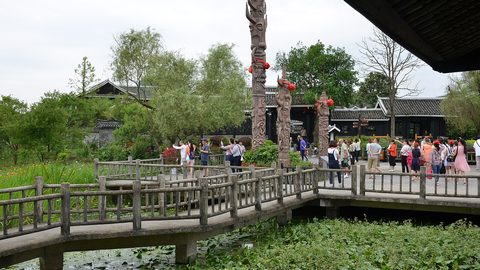 Getting Around Shangri-La and Reaching Tiger Leaping Gorge From the Plateau
Shangri-La has no high-speed rail—Diqing Airport taxis, shared minivans to Tiger Leaping Gorge, and private drivers are how you move across the high plateau at 3,200 metres.
Getting Around Shangri-La and Reaching Tiger Leaping Gorge From the Plateau
Shangri-La has no high-speed rail—Diqing Airport taxis, shared minivans to Tiger Leaping Gorge, and private drivers are how you move across the high plateau at 3,200 metres.
-
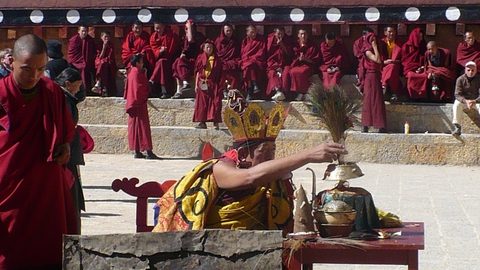 Songzanlin Monastery
 is Shangri-La's Tibetan Buddhist heart, often called the Little Potala Palace. Know the photography rules, opening hours, and how to behave inside.
Songzanlin Monastery
Songzanlin Monastery is Shangri-La's Tibetan Buddhist heart, often called the Little Potala Palace. Know the photography rules, opening hours, and how to behave inside.
-
 Provincial China Beyond Beijing Shanghai Guangzhou and Xi’an
Provincial China rewards slow travellers with compressed continents of culture, cuisine, and landscape far beyond the standard megacity circuit.
Provincial China Beyond Beijing Shanghai Guangzhou and Xi’an
Provincial China rewards slow travellers with compressed continents of culture, cuisine, and landscape far beyond the standard megacity circuit.
-
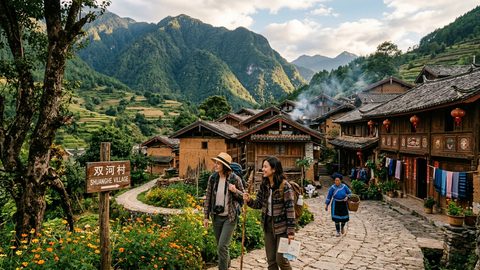 Planning a Slow Travel Route Through Yunnan’s Lesser-Visited Villages
Plan a slower Yunnan journey through Dali, Shaxi, and Nuodeng, with realistic transport allowances, guesthouse advice, and respectful village visits.
Planning a Slow Travel Route Through Yunnan’s Lesser-Visited Villages
Plan a slower Yunnan journey through Dali, Shaxi, and Nuodeng, with realistic transport allowances, guesthouse advice, and respectful village visits.
-
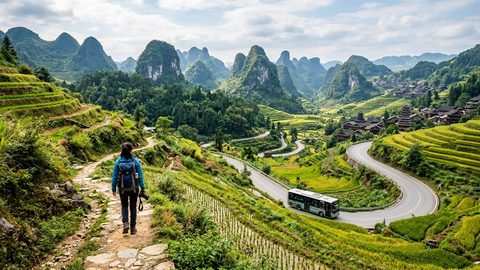 From Guiyang to Congjiang — A Week in Guizhou by Bus and on Foot
Independent travel from Guiyang to Congjiang in Guizhou: buses, minibuses, journey times, seasonal road conditions, and village guesthouses explained.
From Guiyang to Congjiang — A Week in Guizhou by Bus and on Foot
Independent travel from Guiyang to Congjiang in Guizhou: buses, minibuses, journey times, seasonal road conditions, and village guesthouses explained.