Hotels in Yunnan: What to Book and the Registration Rule
Hotels in Yunnan range from international chains to courtyard guesthouses, but the foreigner registration rule determines where you can actually sleep—here is what to book.
The Rule That Changes Everything About Booking
Not every hotel in Yunnan can legally accept you. That is the single most important fact to understand before you book. Chinese law requires hotels to hold a Foreigner Accommodation Registration Licence. An estimated 60 to 80 percent of small guesthouses in Yunnan's old towns do not have one. The penalty for arriving without a confirmed booking that can process your passport is not a fine. It is a midnight knock from local police and an involuntary relocation.
The fix is simple. Book through Trip.com's English version and use the foreigner filter. Or contact the property directly and ask the question: Can you handle foreign passports? If they say no, move on. If they say yes, they will also lodge your passport details with the local Public Security Bureau within 24 hours of check in. That filing is your legal proof of stay. Keep the paper slip they give you.


International Chains and Domestic Budget Hotels: Your Safe Bet
International Brands
International brands are the safest option because every one of them holds the required licence. In Kunming you can book InterContinental, Crowne Plaza, Holiday Inn, Sofitel, Sheraton, Wyndham Grand, or Howard Johnson. Lijiang has InterContinental, Indigo, Pullman, Banyan Tree, and Aman. Dali has a Hilton. Shangri La has a Shangri La Resort. Xishuangbanna has InterContinental and Anantara. These hotels run between CNY 400 and 800 per night off peak, sometimes more.
The downside is location. Most of them sit outside the old town cores, so you trade a ten minute walk to your room for a twenty minute taxi to the nearest cobblestone lane.
Domestic Chains
Domestic chains cover the whole province and cost less. Home Inn and 7 Days Inn are the budget options at CNY 100 to 200 per night off peak. Jinjiang Inn and Hanting sit at the mid range, CNY 200 to 400 per night. Atour is upscale, CNY 400 to 700 per night, and present in Kunming, Dali, and Lijiang. Every one of these chains holds the correct licence in every location.
The friction: the rooms are indistinguishable from a chain hotel anywhere in China. The value is reliability. You know the bed is clean, the shower works, and the front desk can process your passport. If you are transiting through Kunming or need a base for a single night before heading into the mountains, this is what you book.
Boutique Courtyard Guesthouses and the Registration Gamble
The courtyard guesthouse is the reason many travellers come to Yunnan. Restored Naxi or Bai merchant homes with carved wooden doors, central courtyards with koi ponds, and roof terraces overlooking grey tiled roofs. They concentrate in Lijiang's Dayan Old Town, Dali Old Town, and Shuhe Old Town. Off peak you pay CNY 300 to 800 per night. The upside is atmosphere. The downside is that a significant number of these guesthouses do not hold the licence to host overseas visitors. The owner may simply never have applied, or the building is in a legal grey area on heritage conversion.
You cannot assume. You must check. Use Booking.com and read the Policies or Fine Print section where they list guest acceptance. Or message the property directly. If they confirm they can process your passport, you are fine. If they are vague, book elsewhere.
Even a licenced courtyard guesthouse can create friction. Many of them want a WeChat Pay or Alipay deposit, often half the room rate, refunded at checkout. Cards issued abroad do not work for this. You need a Chinese payment account loaded with funds, or a Chinese friend to transfer the deposit for you. If you do not have either, budget hotels and international chains are simpler.
| Category | Off-Peak Price (CNY/night) | Foreigner Licence | Best For |
|---|---|---|---|
| International brand chains | 400–800 | Guaranteed | Zero-stress booking, reliable English |
| Domestic budget chains (Home Inn, 7 Days Inn) | 100–200 | Guaranteed | Budget transit, short stays |
| Domestic mid-range chains (Jinjiang Inn, Hanting) | 200–400 | Guaranteed | Reliable base in any city |
| Boutique courtyard guesthouse | 300–800 | Verify before booking | Atmosphere, cultural experience |
| Family-run village guesthouse | 50–150 | Rarely held | Adventurous travellers only |


Simple Guesthouses in Shaxi, Yuanyang, and the Mountain Villages
Village Guesthouses and the Licence Shortfall
Outside the main cities, the hotel options change shape. In Shaxi, the restored horse caravan town, most guesthouses are converted courtyard homes. A minority hold the required permit. The safest move is to book only those listed on Trip.com with the foreigner filter active. In Yuanyang, where travellers come for the Hani rice terraces, the same applies. A handful of hotels near the Duoyishu sunrise viewpoint can process your documents. The rest cannot. Book ahead and confirm.
In the mountain villages where you might stay to hike Tiger Leaping Gorge or explore the area around Lugu Lake, the hotel may be a family run Naxi or Bai courtyard with three rooms and no English. These places almost never hold the permit. If you arrive and they cannot handle your check in, the local police station will deal with it. You walk to the station, hand over your passport, and they issue the registration slip. This is uncommon but legal. The hassle is that the station may be a 40 minute walk or a shared minivan ride away, and no one at the police station speaks English. Do not rely on this as a plan B. It is a plan C for when the first two fail.
What You Pay and How You Pay
WeChat Pay and Alipay dominate. Cards from outside China fail on most local transport apps, many booking platforms, and virtually every minivan or street vendor. If you are booking a domestic chain or a courtyard guesthouse, expect to pay a deposit via one of these apps. Cash can work for the balance at checkout but not for the deposit. Budget for a Chinese data plan and a payment account before you arrive. Without them, a room can become an unpayable problem at check in.
Booking Windows and Peak Pricing
Chinese New Year 2026 runs 17 to 23 February. Prices in Lijiang and Dali multiply by 2 to 5 times off peak rates. Book 60 to 90 days ahead. Golden Week 1 to 7 October sees a 2 to 4 times multiplier. Book 30 to 60 days ahead. Summer holiday July to August is 1.5 to 2.5 times off peak. Avoid National Day and Labour Day entirely unless you enjoy gridlock and tripled prices.
Common Questions
Can any hotel in Yunnan refuse to accept foreign guests?
Yes. Only hotels with a Foreigner Accommodation Registration Licence can legally host overseas nationals. An estimated 60 to 80 percent of small guesthouses in old towns do not hold this licence.
How do I check if a hotel can register foreigners before I book?
Use Trip.com's English version and select the foreigner accepted filter. On Booking.com review the Policies section. Or message the property directly and ask: Can you handle foreign passports? The Chinese phrase is 可以登记外宾吗.
What happens if I book a guesthouse that cannot register me?
The guesthouse must refuse you at check in. You then need to find a licenced hotel the same night on your own. In remote villages, the local police station may register you directly, but expect a language barrier and a long walk.
Is WeChat Pay or Alipay required for hotel deposits?
Many boutique guesthouses and domestic chains ask for a deposit via WeChat Pay or Alipay, refundable at checkout. Foreign credit cards do not work for this. Cash may be accepted for the balance but not the deposit.
Read next
-

 Where to Stay in Yunnan Town by Town Base Guide
Where to stay in Yunnan, from Kunming to Shangri-La: neighbourhood-by-neighbourhood advice on old town courtyards, Erhai lake villages, and altitude-conscious bases.
Where to Stay in Yunnan Town by Town Base Guide
Where to stay in Yunnan, from Kunming to Shangri-La: neighbourhood-by-neighbourhood advice on old town courtyards, Erhai lake villages, and altitude-conscious bases.
-
 Flying Into Yunnan Kunming Lijiang Dali and Shangri-La Airports Compared
Choosing between Kunming, Lijiang, Dali, and Shangri-La airports shapes your entire Yunnan route—here's how each gateway affects transit time, altitude, and cost.
Flying Into Yunnan Kunming Lijiang Dali and Shangri-La Airports Compared
Choosing between Kunming, Lijiang, Dali, and Shangri-La airports shapes your entire Yunnan route—here's how each gateway affects transit time, altitude, and cost.
-
 What Yunnan Is For Mountains Old Towns and Minority Culture
Yunnan is for high-altitude treks, living old towns like Shaxi, minority markets, winter rice terraces at Yuanyang, and going deep on Pu'er tea at the source.
What Yunnan Is For Mountains Old Towns and Minority Culture
Yunnan is for high-altitude treks, living old towns like Shaxi, minority markets, winter rice terraces at Yuanyang, and going deep on Pu'er tea at the source.
-
 Yunnan Weather Seasons and the Best Time to Visit Without the Crowds
Yunnan spans tropical lowlands and Himalayan peaks, so the best time to visit depends entirely on which region you're targeting and whether you can stomach the October crowds.
Yunnan Weather Seasons and the Best Time to Visit Without the Crowds
Yunnan spans tropical lowlands and Himalayan peaks, so the best time to visit depends entirely on which region you're targeting and whether you can stomach the October crowds.
-
 Getting Around Yunnan Rail Bus and the Mountain Road Reality
Getting around Yunnan means high-speed rail between Kunming, Dali, and Lijiang, then long-distance buses and shared minivans into the mountains—and 200 km takes 5 hours.
Getting Around Yunnan Rail Bus and the Mountain Road Reality
Getting around Yunnan means high-speed rail between Kunming, Dali, and Lijiang, then long-distance buses and shared minivans into the mountains—and 200 km takes 5 hours.
-
 Yunnan Itinerary for 10 Days and Two Weeks Without the Transit Burnout
A realistic Yunnan itinerary treats 200-kilometre mountain transfers as half-day events and picks two regions maximum—here are paced 10-day and two-week routes that work.
Yunnan Itinerary for 10 Days and Two Weeks Without the Transit Burnout
A realistic Yunnan itinerary treats 200-kilometre mountain transfers as half-day events and picks two regions maximum—here are paced 10-day and two-week routes that work.
-
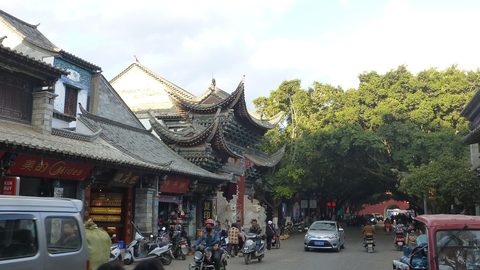 Jianshui
 has a Ming dynasty seventeen-arch bridge, one of China's largest Confucian temples, and tofu grilled on street corners—and almost every Yunnan itinerary skips it.
Jianshui
Jianshui has a Ming dynasty seventeen-arch bridge, one of China's largest Confucian temples, and tofu grilled on street corners—and almost every Yunnan itinerary skips it.
-
 Gejiu
The Yuanyang rice terraces only become the mirror-like spectacle of photographs from November to March—here is how to time the water season and hit the right viewpoints at sunrise and sunset.
Gejiu
The Yuanyang rice terraces only become the mirror-like spectacle of photographs from November to March—here is how to time the water season and hit the right viewpoints at sunrise and sunset.
-
 Baoshan
 unlocks Yunnan's wild western edge: the Gaoligong mountains, Tengchong's volcanic hot springs, and the ghosts of the Burma Road. A frontier for second-time visitors.
Baoshan
Baoshan unlocks Yunnan's wild western edge: the Gaoligong mountains, Tengchong's volcanic hot springs, and the ghosts of the Burma Road. A frontier for second-time visitors.