Yunnan Versus Guizhou for Travelers Who Can Only Pick One
Yunnan delivers Himalayan peaks and Tibetan culture on a busy backpacker trail. Guizhou offers misty karst cones and Miao villages with fewer crowds.


Shangri-La Altitude or Guizhou Mist: Two Travel Experiences Compared
At 3,200 metres in Shangri-La, the air thins and your lungs start working for real. The Tibetan monastery of Songzanlin glows gold in the late afternoon light, and somewhere far below, the Mekong River begins its bend through the gorges. That is the Yunnan experience. Altitude, space, and a traveller infrastructure that has been absorbing backpackers since the 1980s.
The Guizhou experience is something else entirely. It happens at 1,100 metres, inside a mist so persistent the province sees only 1,150 hours of sun a year. Instead of Himalayan peaks you get karst cones rising from rice paddies like green knuckles. The minority villages here host fewer foreign travellers in a decade than Lijiang sees in a week. You have to pick one. The choice comes down to what kind of journey you are after.
The decision does not turn on which province is better. It turns on a single question: do you want to feel small under a snow peak and drink pu'er tea in a town that remembers the Tea Horse Road, or do you want to walk through Miao silver workshops and hear Dong Grand Song sung in a village with no entrance gate? That is the axis.
The Landscape Decision: Altitude Versus Karst
Yunnan: Extreme Elevation And Scale
Yunnan is a geography of extremes. Its elevation range runs from 76 metres at the Red River valley in Hekou to 6,740 metres at Kawagebo peak. More than 100 peaks rise above 5,000 metres. The province covers 394,000 square kilometres, and travelling across it feels like crossing a small country. You can sweat in the tropical heat of Xishuangbanna one day and shiver under a Tibetan sky the next. Tiger Leaping Gorge, at a depth of 3,790 metres from peak to river, rewrites your sense of scale.
Guizhou: A Flooded Limestone Forest
Guizhou is a fraction of that size at 176,000 square kilometres, and its highest peak, Jiucaiping, reaches just 2,900 metres. But height is not the point. The province is 73 percent karst landscape. The Maling River Gorge cuts only 200 to 400 metres deep, but its vertical walls are so sheer and so numerous that the whole province feels like a flooded limestone forest. Where Yunnan gives you one giant, Guizhou gives you a thousand small wonders repeated in every direction.
The traveller who picks Yunnan for landscape wants scale, altitude, and the drama of snow peaks. The traveller who picks Guizhou wants intimacy, mist, and karst shapes that change with the light. Both deliver. The question is which kind of beauty rewards your patience.
Infrastructure and Getting Around
The practical difference between these provinces shows up on the transit map.
Yunnan has a mature high-speed rail spine. The Kunming Dali Lijiang line gets you between those three hubs in about two hours each. The extension to Shangri-La takes 4.5 hours from Kunming. Four international airports serve Kunming, Lijiang, Dali, and Xishuangbanna. The expressway network reached 10,466 kilometres in 2023. You can move through Yunnan fast, but the last mile into mountain villages still requires shared minivans or private drivers, and a 200-kilometre journey on secondary roads takes five to six hours.
Guizhou has high-speed rail too. The Guiyang Kaili segment takes 38 minutes. Guiyang to Tongren for Fanjingshan takes 1.5 hours. But the province has only one international airport, at Guiyang, and the bus network into the minority villages of Congjiang, Rongjiang, and Zhaoxing is fragmented and slow. The expressway total is 8,784 kilometres. Guizhou relies more on local minivans and the patience of its drivers. The gap is real: Yunnan lets you cover ground, Guizhou forces you to stay still.
For a traveller on a tight schedule, that matters. Yunnan rewards a loop: Kunming, Dali, Lijiang, Shangri-La, back. Guizhou rewards a base. Pick one valley, spend four days in its villages, and accept that getting anywhere else costs half a day.
Who Should Pick Yunnan
Altitude, Tea, And The Backpacker Circuit
Choose Yunnan if your idea of a good trip involves altitude, tea, and a well worn backpacker circuit that still delivers genuine depth if you step off the main drag.
Yunnan has Himalayan grade altitude. Shangri-La sits at 3,200 metres. Jade Dragon Snow Mountain hits 4,500 metres. The high trail at Tiger Leaping Gorge is a two day endurance test with sheer canyon walls and no safety rail. That is a specific kind of travel, and only Yunnan in southwest China offers it.
Tea culture runs deep here. The pu'er sourcing networks around Pu'er city and the ancient tea forests of Xishuangbanna are not theme parks; they are working supply chains. Go willing to taste and buy, and you will find producers, not performers. Cross bridge rice noodles at a Kunming canteen, Dai style lemongrass grilled fish wrapped in banana leaf in Jinghong, and Dali's fried goat milk fan called rushan are regional foods with real distinctiveness.
The Downsides And How To Navigate Them
The ancient towns of Dali and Lijiang have a thick layer of tourist shops and photo studios. Lijiang's UNESCO listed Old Town charges no entry fee since 2019, but you pay for it in crowd density during Chinese National Day and Labour Day. The common mistake is trying to cover Kunming, Dali, Lijiang, and Shangri-La in one week. That produces four nearly identical old towns seen through a bus window. Budget 10 days minimum.
The peak season is October for clear skies and golden light on the Hani rice terraces at Yuanyang. Avoid Chinese National Day and Labour Day entirely. Accommodation triples and roads become parking lots.
You need a Chinese SIM card with a data plan for Didi, maps, and translation. A VPN must be installed and tested before arrival because Google, WhatsApp, and Instagram do not work without one. Altitude sickness hits hard in Shangri-La and at Jade Dragon Snow Mountain. Travellers arriving from sea level underestimate it. English is near zero outside high end hotels. Stone paved old town streets are lethal in rain and impossible for wheeled suitcases.
Yunnan is for serious hikers, tea buyers, photographers chasing rice terraces and minority markets, and slow travellers who value cultural texture over ticking off sights. It is not for luxury resort seekers who expect five star polish, or anyone with a tight schedule who cannot absorb multi hour mountain transfers.
Who Should Pick Guizhou
Villages Without The Crowds
Choose Guizhou if you want minority villages with less commercial overlay, karst landscapes you can walk into, and a province that has not yet become a standard stop on the foreign backpacker circuit. Tourist arrivals hit 1,280 million in 2023, but almost all of those are domestic Chinese travellers. You will hear fewer European languages in a week here than you hear in an hour at Dali's backpacker cafes.
The Miao and Dong villages of southeast Guizhou are the draw. Xijiang Qianhu Miao Village organises 1,400 households around a hillside, entry costs 90 CNY in 2025, and it is the most developed of the lot. Skip Xijiang for the quieter villages: Zhaoxing Dong Village, Rongjiang, and the scattered hamlets around Congjiang where Dong Grand Song, a UNESCO Intangible Cultural Heritage since 2009, is still a living practice and not a show for tourists. The Miao New Year dates vary by village between October and November on the lunar calendar. Time it right and you walk into a festival that does not care about your camera.
Costs, Weather, And Transit Reality
Guizhou is cheaper. The average daily budget for a mid range traveller was 250 to 500 CNY in 2025, compared to 400 to 700 CNY in Yunnan. The weather is wetter: Guiyang sees about 180 days of precipitation per year against Kunming's 104 days, so pack for drizzle. That same moisture feeds the karst valleys and keeps the rice terraces full. The Jiabang terraces are unlisted by UNESCO, which means no entrance fee and no busloads of tour groups.
The transit friction is higher. You land at Guiyang Longdongbao, the only international airport. High speed rail gets you to Kaili in 38 minutes and to Tongren for Fanjingshan in 1.5 hours, but beyond those corridors the bus network fragments. Bullet train travel between provincial capitals is excellent: the Shanghai Kunming line runs through both provinces. Getting from one village valley to another takes half a day on mountain roads.
Guizhou is for travellers who want to stay still. Pick a valley. Spend four days. Walk the rice terrace paths, sit through a Dong choir practice, buy silver jewellery from the person who made it. Skip the province if you want snow peaks, if you need high speed transit for every leg, or if your idea of a good trip requires English speakers and reliable Wi Fi.


Worth it if
- Himalayan grade altitude with peaks above 6,700 metres and more than 100 summits over 5,000 metres
- Mature high speed rail spine connecting Kunming, Dali, Lijiang, and Shangri-La
- Four international airports for flexible routing
- Deep tea culture with working pu'er sourcing networks
- Three Parallel Rivers UNESCO site and Tiger Leaping Gorge for serious hiking
Skip it if
- Ancient towns in Dali and Lijiang buried under tourist shops and identical facades
- Altitude sickness risk at Shangri-La (3,200 m) and Jade Dragon Snow Mountain (4,500 m)
- 200 km on a map takes 5 to 6 hours on mountain roads
- Peak months October and May holidays bring crowds that triple accommodation prices
- Mid range daily budget of 400 to 700 CNY is higher than Guizhou
Worth it if
- Minority villages with far fewer foreign tourists and less commercial overlay
- 73 percent karst landscape for intimate, misty scenery
- Lower daily budget of 250 to 500 CNY for a mid range traveller
- Dong Grand Song as a living UNESCO Intangible Heritage practice, not a performance
- No UNESCO listing on the Jiabang rice terraces means no entrance fee and no tour groups
Skip it if
- Only one international airport at Guiyang limits flexible arrival and departure
- Bus network into minority villages is fragmented and slow
- About 180 days of precipitation per year requires constant rain gear
- Highest peak reaches only 2,900 metres, no alpine or snow landscapes
- English near zero even in tourist villages, translation app dependency is absolute
Read next
-

 Yunnan Hotels Chains Courtyards and the Foreigner Registration Rule
Hotels in Yunnan range from international chains to courtyard guesthouses, but the foreigner registration rule determines where you can actually sleep—here is what to book.
Yunnan Hotels Chains Courtyards and the Foreigner Registration Rule
Hotels in Yunnan range from international chains to courtyard guesthouses, but the foreigner registration rule determines where you can actually sleep—here is what to book.
-
 Where to Stay in Yunnan Town by Town Base Guide
Where to stay in Yunnan, from Kunming to Shangri-La: neighbourhood-by-neighbourhood advice on old town courtyards, Erhai lake villages, and altitude-conscious bases.
Where to Stay in Yunnan Town by Town Base Guide
Where to stay in Yunnan, from Kunming to Shangri-La: neighbourhood-by-neighbourhood advice on old town courtyards, Erhai lake villages, and altitude-conscious bases.
-
 Flying Into Yunnan Kunming Lijiang Dali and Shangri-La Airports Compared
Choosing between Kunming, Lijiang, Dali, and Shangri-La airports shapes your entire Yunnan route—here's how each gateway affects transit time, altitude, and cost.
Flying Into Yunnan Kunming Lijiang Dali and Shangri-La Airports Compared
Choosing between Kunming, Lijiang, Dali, and Shangri-La airports shapes your entire Yunnan route—here's how each gateway affects transit time, altitude, and cost.
-
 What Yunnan Is For Mountains Old Towns and Minority Culture
Yunnan is for high-altitude treks, living old towns like Shaxi, minority markets, winter rice terraces at Yuanyang, and going deep on Pu'er tea at the source.
What Yunnan Is For Mountains Old Towns and Minority Culture
Yunnan is for high-altitude treks, living old towns like Shaxi, minority markets, winter rice terraces at Yuanyang, and going deep on Pu'er tea at the source.
-
 Yunnan Weather Seasons and the Best Time to Visit Without the Crowds
Yunnan spans tropical lowlands and Himalayan peaks, so the best time to visit depends entirely on which region you're targeting and whether you can stomach the October crowds.
Yunnan Weather Seasons and the Best Time to Visit Without the Crowds
Yunnan spans tropical lowlands and Himalayan peaks, so the best time to visit depends entirely on which region you're targeting and whether you can stomach the October crowds.
-
 Getting Around Yunnan Rail Bus and the Mountain Road Reality
Getting around Yunnan means high-speed rail between Kunming, Dali, and Lijiang, then long-distance buses and shared minivans into the mountains—and 200 km takes 5 hours.
Getting Around Yunnan Rail Bus and the Mountain Road Reality
Getting around Yunnan means high-speed rail between Kunming, Dali, and Lijiang, then long-distance buses and shared minivans into the mountains—and 200 km takes 5 hours.
-
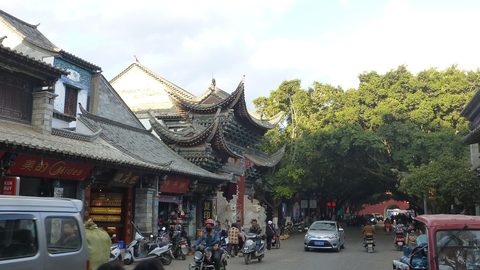 Jianshui
 has a Ming dynasty seventeen-arch bridge, one of China's largest Confucian temples, and tofu grilled on street corners—and almost every Yunnan itinerary skips it.
Jianshui
Jianshui has a Ming dynasty seventeen-arch bridge, one of China's largest Confucian temples, and tofu grilled on street corners—and almost every Yunnan itinerary skips it.
-
 Gejiu
The Yuanyang rice terraces only become the mirror-like spectacle of photographs from November to March—here is how to time the water season and hit the right viewpoints at sunrise and sunset.
Gejiu
The Yuanyang rice terraces only become the mirror-like spectacle of photographs from November to March—here is how to time the water season and hit the right viewpoints at sunrise and sunset.
-
 Baoshan
 unlocks Yunnan's wild western edge: the Gaoligong mountains, Tengchong's volcanic hot springs, and the ghosts of the Burma Road. A frontier for second-time visitors.
Baoshan
Baoshan unlocks Yunnan's wild western edge: the Gaoligong mountains, Tengchong's volcanic hot springs, and the ghosts of the Burma Road. A frontier for second-time visitors.