What Yunnan Is Actually For: Mountains, Old Towns, and Minority Markets
Yunnan is for high-altitude treks, living old towns like Shaxi, minority markets, winter rice terraces at Yuanyang, and going deep on Pu'er tea at the source.
What Yunnan is Actually For: Mountains, Old Towns, and Minority Markets
At 08:00 on a Friday morning in Shaxi, the market square fills with Bai women sorting fresh mint and chilies under a Ming dynasty stage. Nobody is taking photos. The old town is not a museum; it is still a place where people trade, eat, and argue over prices in a language you will not understand. This is the Yunnan that makes the brutal road time worth it. It is the one most travellers miss by rushing from one UNESCO ticket gate to the next.
Yunnan is 394,000 km² of compressed continent, dropping from 6,740 m at unclimbed Kawagebo peak down to 76.4 m where the Red River leaves China. That range buys you Himalayan snowmelt, tropical Dai villages, and Hani terraces cut into mountainsides. Twenty-five officially recognized ethnic minority groups still hold weekly markets instead of daily photo lines. The problem is the distances. A 200 km drive takes five or six hours because mountain switchbacks and speed limits do not care about your itinerary. You need 10 days minimum to see one region properly. Less than that, and you spend your trip on a bus.


High-Altitude Trekking: Tiger Leaping Gorge, Cangshan, and Pudacuo
Tiger Leaping Gorge: Two Days on the High Trail
Tiger Leaping Gorge is the best bang for your effort in China. The high trail runs 22 km through a canyon 3,790 m deep, from river to peak, at an elevation of 2,400 to 2,700 m. It takes two days. Sleep at the Halfway Guesthouse, start early, and carry water. The guesthouses sell bottles at a markup but the taps are untreated. The trail is not technical. The drop is real and the wind at the cliff edge can knock you sideways. October gives you clear skies. July and August bring landslides that close sections; call ahead or check at your Lijiang guesthouse before you bus to Qiaotou.
Cangshan: Ridgeline Walking Above Dali
Cangshan in Dali offers a different kind of hike: 19 peaks above 3,500 m, connected by a ridgeline walking path that runs about 18 km. Take the cable car up from the Dali Old Town side to Zhonghe Temple at 2,600 m, walk north to the Xima Pool, and descend via the second cable car. The path is paved but the altitude hits fast. Budget five or six hours, including the cable car wait, which in October can hit 40 minutes. Skip the Three Pagodas ticket unless you want the entry photo; the best view is from the road below.
Pudacuo and Haba: Altitude and Ambition
Pudacuo National Park near Shangri-La is a gentler high-altitude walk. A boardwalk loops around Shudu Lake in two to three hours; a shuttle bus covers the park road. The issue is altitude sickness. Shangri-La sits at 3,200 m. Many visitors arrive from Dali at 1,970 m feeling fine, then wake up nauseous at 03:00. The fix is one acclimatization night in Dali or a slow day in Shangri-La before you hike. Diamox is available at Chinese pharmacies, but you need the Chinese name (乙酰唑胺) on your phone. For serious climbers, Haba Snow Mountain summit (5,396 m) requires two to three days from base camp at 4,100 m, a guide, and a fitness level most trekkers do not have. Do not attempt it solo. The rescue situation is thin and English is zero above base camp.
Living Old Towns: Shaxi and Weishan Over Lijiang Dayan
Lijiang Dayan is a UNESCO site and a mess. The cobblestone maze is real and the Naxi architecture is genuine, but the ground floor of every historic building now sells fried milk or photo-rental costumes. See it once, then leave. Arrive by 08:30 and walk the canals before the tour buses unload at 10:00. Shuhe, 20 minutes north by bus, is quieter but still commercialized.
Shaxi: The Market Town That Still Works
The real alternative is Shaxi, two hours by road from Lijiang, at 2,100 m. Its Sideng Square has an original Ming market stage, a weekly Friday market continuous since the Ming dynasty, and zero chain shops. Stay two nights. The bus from Lijiang costs ¥30 to ¥40 and drops you at the village entrance. Guesthouses run ¥150 to ¥300 for a double in October; book a week ahead.
Weishan and Jianshui: Unpolished and Empty
Weishan, 90 minutes south of Dali, is even less polished. The Ming-Qing streets are unpainted, the tofu stalls serve Jianshui-style grilled tofu for ¥1 per piece, and the crowds are local. It is the old town you want when you realize you do not want an old town at all. Jianshui, founded around 810 CE during the Nanzhao kingdom period, has a proper ancient city wall and Chaoyang Tower, which predates the better-known Tiananmen. The bacon-tower silhouette is identical, but the plaza is empty of tourists. Stay at a courtyard guesthouse inside the wall; doubles run ¥200 to ¥400 in peak season. Walk the east gate to the west gate in 15 minutes, eat at the tofu street near Chaoyang Tower, and skip the Confucian temple unless you have two hours to kill. The real reason to be in Jianshui is the Double Dragon Bridge, a 17-span stone arch bridge best seen at 17:30 in the winter golden hour.
| Town | Atmosphere | Crowd Level | Best For | Minimum Stay |
|---|---|---|---|---|
| Lijiang Dayan | Theme park | Extreme | First-time visitors, nightlife | Half day |
| Shaxi | Living market town | Low | Slow travel, market days | 2 nights |
| Weishan | Unrestored | Very low | Photographers, solitude | 1 night |
| Jianshui | Ming city walls | Moderate | Architecture, tofu | 2 nights |
| Dali Old Town | Backpacker hub | High | Cangshan access, cafes | 2 nights |


Minority Markets, Rice Terraces, and Tea
The Friday Market in Shaxi
The Friday market in Shaxi is the single best reason to come. Bai and Yi traders set up by 07:00 around Sideng Square, selling live poultry, freshly milled rice, handmade knives, and herbs you cannot identify. It is not a tourist show; it is where locals do their weekly grocery run. Bring small bills because vendors cannot break ¥100. No English. Point at what you want, hold up fingers for quantity, and accept the price they say. The market runs until late afternoon, but the food section is picked clean by noon. If you cannot make Friday, the nearest alternative is the Saturday market in nearby Dali county, but it is smaller and closer to the backpacker strip.
Xishuangbanna: Dai Country on the Mekong
Xishuangbanna in the far south is the Dai minority homeland and feels more like Laos than China. Jinghong, the capital, is hot, sticky, and built around the Mekong River. The Dai markets here run daily, but the best is the evening market on Manting Road, where lemongrass-grilled fish wrapped in banana leaf costs ¥15 and sticky rice comes in bamboo tubes. Visit between November and February for the dry season. July and August bring landslides on the road from Kunming and enough humidity to make hiking miserable. The Tropical Botanical Garden in Menglun is a full-day trip; it closes at 5:30 pm, ¥80 admission.
Yuanyang Rice Terraces: Winter Mirrors
Yuanyang rice terraces are a winter-only pursuit. The Hani terraces fill with water from November to March, turning the mountainsides into mirrors at sunrise. The peak photographic window is late January to early March. Stay in Xinjie town. Wake at 05:30, take a local van to the Duoyishu viewpoint, and arrive before 06:15 for the sunrise colour. The valley is wide enough that you need a telephoto lens or a phone with a 5x zoom to isolate the S-curves. The terraces are a UNESCO site, but the infrastructure is village-level: squat toilets, no English, and roads that wash out in summer. Book two nights minimum; one is a gamble on cloud cover.
Pu'er Tea Without The Tour Bus
Pu'er tea comes from Pu'er prefecture and from the ancient tea forests of Lincang and Xishuangbanna. The definition of "ancient tree" is any tea tree older than 100 years. The oldest known cultivated tree, in Fengqing county, Lincang, is estimated at 3,200 years. You can walk into those forests, but you need a guide. English-speaking tea guides charge ¥500 to ¥1,000 per day including transport from Jinghong or Pu'er city. They will take you to villages where families still press tea bricks by hand and will let you buy direct at ¥50 to ¥200 per brick, depending on tree age. This is cheaper than Kunming's tea market, where the same brick can sell for ¥400 with a fake story. The two forms are sheng and shou. Drink sheng for complexity, shou for easy drinking. If you only have one day, skip the factory tours and drive 90 minutes from Jinghong to Nannuoshan village, where the road ends and the 800-year-old trees start.
Frequently Asked Questions
How many days do I need for Yunnan?
10 days minimum. Any less and the internal transit burns your trip. A realistic 10-day route covers Dali, Shaxi, Lijiang, and Shangri-La with zero time for Yuanyang or Xishuangbanna.
Is the Tiger Leaping Gorge high trail safe in the rainy season?
No. July and August bring landslides and rockfall. The trail closes in sections without notice. October is safe. If you must go in summer, check with the Qiaotou visitor centre the morning of your attempt and be ready to turn around.
What is the best month for photography?
October for clear mountain views and golden light. Late January to early March for the Yuanyang rice terraces when the water mirrors are full.
How do I get to Shaxi from Lijiang?
A shared minibus from Lijiang bus station. ¥30 to ¥40 per person, 2 hours. The last bus returns at 16:00. Do not use Didi; drivers cancel when they realize the road is winding and unpaved in sections.
Do I need a tour guide for Pu'er tea sourcing?
Yes, if you want to see ancient trees in the forest. English-speaking guides cost ¥500 to ¥1,000 per day including transport. Without one, you end up at roadside shops selling factory tea at triple price.
What altitude sickness prevention actually works?
Acclimatization. Spend one night in Dali (1,970 m) before Shangri-La (3,200 m). Diamox helps, but you need to buy it at a Chinese pharmacy with the name 乙酰唑胺 on your phone. Do not fly directly to Shangri-La from sea level.
Can I use my phone in Yunnan?
Only with a Chinese SIM card and a working VPN. Google Maps, WhatsApp, Instagram, and Gmail are blocked. Set up your VPN before you land. Data is cheap: ¥30 to ¥50 for 30 GB from China Telecom or China Mobile. Your foreign SIM will roam but will not access blocked services.
Read next
-

 Yunnan Hotels Chains Courtyards and the Foreigner Registration Rule
Hotels in Yunnan range from international chains to courtyard guesthouses, but the foreigner registration rule determines where you can actually sleep—here is what to book.
Yunnan Hotels Chains Courtyards and the Foreigner Registration Rule
Hotels in Yunnan range from international chains to courtyard guesthouses, but the foreigner registration rule determines where you can actually sleep—here is what to book.
-
 Where to Stay in Yunnan Town by Town Base Guide
Where to stay in Yunnan, from Kunming to Shangri-La: neighbourhood-by-neighbourhood advice on old town courtyards, Erhai lake villages, and altitude-conscious bases.
Where to Stay in Yunnan Town by Town Base Guide
Where to stay in Yunnan, from Kunming to Shangri-La: neighbourhood-by-neighbourhood advice on old town courtyards, Erhai lake villages, and altitude-conscious bases.
-
 Flying Into Yunnan Kunming Lijiang Dali and Shangri-La Airports Compared
Choosing between Kunming, Lijiang, Dali, and Shangri-La airports shapes your entire Yunnan route—here's how each gateway affects transit time, altitude, and cost.
Flying Into Yunnan Kunming Lijiang Dali and Shangri-La Airports Compared
Choosing between Kunming, Lijiang, Dali, and Shangri-La airports shapes your entire Yunnan route—here's how each gateway affects transit time, altitude, and cost.
-
 Yunnan Weather Seasons and the Best Time to Visit Without the Crowds
Yunnan spans tropical lowlands and Himalayan peaks, so the best time to visit depends entirely on which region you're targeting and whether you can stomach the October crowds.
Yunnan Weather Seasons and the Best Time to Visit Without the Crowds
Yunnan spans tropical lowlands and Himalayan peaks, so the best time to visit depends entirely on which region you're targeting and whether you can stomach the October crowds.
-
 Getting Around Yunnan Rail Bus and the Mountain Road Reality
Getting around Yunnan means high-speed rail between Kunming, Dali, and Lijiang, then long-distance buses and shared minivans into the mountains—and 200 km takes 5 hours.
Getting Around Yunnan Rail Bus and the Mountain Road Reality
Getting around Yunnan means high-speed rail between Kunming, Dali, and Lijiang, then long-distance buses and shared minivans into the mountains—and 200 km takes 5 hours.
-
 Yunnan Itinerary for 10 Days and Two Weeks Without the Transit Burnout
A realistic Yunnan itinerary treats 200-kilometre mountain transfers as half-day events and picks two regions maximum—here are paced 10-day and two-week routes that work.
Yunnan Itinerary for 10 Days and Two Weeks Without the Transit Burnout
A realistic Yunnan itinerary treats 200-kilometre mountain transfers as half-day events and picks two regions maximum—here are paced 10-day and two-week routes that work.
-
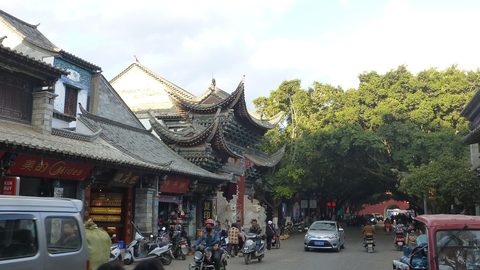 Jianshui
 has a Ming dynasty seventeen-arch bridge, one of China's largest Confucian temples, and tofu grilled on street corners—and almost every Yunnan itinerary skips it.
Jianshui
Jianshui has a Ming dynasty seventeen-arch bridge, one of China's largest Confucian temples, and tofu grilled on street corners—and almost every Yunnan itinerary skips it.
-
 Gejiu
The Yuanyang rice terraces only become the mirror-like spectacle of photographs from November to March—here is how to time the water season and hit the right viewpoints at sunrise and sunset.
Gejiu
The Yuanyang rice terraces only become the mirror-like spectacle of photographs from November to March—here is how to time the water season and hit the right viewpoints at sunrise and sunset.
-
 Baoshan
 unlocks Yunnan's wild western edge: the Gaoligong mountains, Tengchong's volcanic hot springs, and the ghosts of the Burma Road. A frontier for second-time visitors.
Baoshan
Baoshan unlocks Yunnan's wild western edge: the Gaoligong mountains, Tengchong's volcanic hot springs, and the ghosts of the Burma Road. A frontier for second-time visitors.