When to Plan Your Trip to Yunnan Around Rain, Altitude and National Holidays
Yunnan spans tropical lowlands and Himalayan peaks, so the best time to visit depends entirely on which region you're targeting and whether you can stomach the October crowds.
Yunnan Weather Seasons and the Best Time to Visit Without the Crowds
Get the Month Right, or Get the Crowd
Sunrise at Duoyishu in late November. The Hani rice terraces hold the first light like liquid mirrors, each flooded step reflecting a different band of orange and pink, and you share the viewing platform with a dozen other photographers holding tripods. Get the month wrong, or the week, and that same platform is shoulder-to-shoulder, the mountain road below is a parking lot, and your hotel bill is double.
Yunnan does not have one best month. It has four parallel climate calendars: tropical Xishuangbanna in the south, the alpine Tibetan plateau around Shangri-La, the central plateau where Kunming sits in perpetual spring, and the photograph-dependent rice terraces of Yuanyang that peak in a narrow winter window. The question is not "when should I go" but "which Yunnan am I visiting and which holiday am I dodging."


Four Yunnans, Four Calendars
Kunming at 1,891 m elevation averages 15°C in January and 24°C in July. It is genuinely the City of Eternal Spring and the only zone where the standard question "is it rainy season right now" has a mild answer. The rest of the province demands a more specific timeline.
Tropical South: Xishuangbanna (Jinghong)
Average high hits 25°C in January and 34°C in April. The rainy season runs June into September with sticky heat and afternoon downpours that can flood minor roads. Book your trip for the dry, comfortable window from November into February. Avoid April if you cannot handle the pre-monsoon furnace. Avoid the first week of May for Labour Day gridlock. December and January deliver low humidity, clear skies, and the coolest temperatures for hiking the Botanical Garden at Menglun.
Alpine Northwest: Shangri-La (Zhongdian) and Beyond
At 3,160 m elevation, January lows average -10°C and highs reach only 6°C. July highs hit 19°C. The high-altitude meadows of Pudacuo National Park are accessible from July into October, but the roads to the park can close under snow as early as November. The trade-off is sharp. Visit Shangri-La from June into September for hiking and open passes, but accept afternoon rain. Visit in October for golden larch forests and clear photography light, but book accommodation two months ahead for Golden Week. Visit from December into February only if you specifically want a frozen Tibetan monastery experience and can handle -10°C nights and altitude sickness at a quiet Songzanlin Monastery with almost no tourists. Altitude sickness hits hard here, often underestimated by travelers arriving from sea level within the same day.
Central Plateau: Dali, Lijiang, Shaxi, Weishan
This band runs 1,900 m to 2,400 m elevation. Spring (March to May) brings warming temperatures and occasional dust from the dry season. Summer (June to September) brings the monsoon. The season for photography and hiking is autumn, October into November, when the sky clears and Erhai Lake turns a deep cobalt under Cangshan Mountain. But October is also the peak season for domestic tourism, and the first seven days are Golden Week. Avoid it. Attractions hit capacity, accommodation triples in price, and road travel becomes a parking lot. November is the better bet: the light is still golden, the crowds thin out, and Lijiang Dayan is merely busy rather than shoulder-to-shoulder.
Photography-Specific: Yuanyang Rice Terraces
This is the narrowest window in the province. The Hani terraces at Yuanyang only hold water and reflect the sky from November into April, the dry season. The best photographic light arrives at sunrise over Duoyishu and sunset from the higher viewpoints, from November into March, when the cloud seas settle in the valleys below the tiers. Book for December or January for the quietest experience: minimal tourists, consistent morning fog, and temperatures cool enough for long hikes without overheating. The failure case for Yuanyang is visiting in July or August, when the terraces are drained and brown for harvest, and the mountain roads are at their highest risk for summer landslides. The research is explicit about this: summer rainy season, July into August in the south, brings landslides and road closures.
The Holiday Trap: Why National Holidays Are Worse Than Rain
Rain can be managed. You buy a rain jacket, you wait out the shower under a canopy. Chinese national holidays cannot be managed. They are a trip-ruiner more than rain ever could be, because they affect every aspect of your travel day.
The Two Big Ones to Avoid Completely
The two big traps are Chinese National Day (Golden Week, October 1 to 7) and Labour Day (May 1 to 5). During these windows, flights into Kunming triple in price, high-speed rail tickets sell out within minutes of release, the ancient towns of Dali, Lijiang Dayan, and Shuhe become pedestrian gridlock, and any journey that normally takes five or six hours on mountain switchbacks stretches toward eight because the road is full of Chinese tour buses. The research warns that attractions hit capacity, accommodation triples, and road travel becomes a parking lot. Do not plan your trip around these dates.
Spring Festival and Shorter Holidays
Chinese Spring Festival (February 17 to 23 in 2026, February 6 to 12 in 2027) is a domestic peak but less travel-focused than Golden Week, because many Chinese visit family rather than tourist sites. Prices still spike in Lijiang and Dali. The sweet spot for mid-winter travel is late January before the festival, when the Yuanyang terraces are full, the morning air is crisp, and hotels charge a fraction of the holiday rate.
Mid-Autumn Festival (September 25 in 2026, September 15 in 2027) and Dragon Boat Festival (June 19 in 2026, June 9 in 2027) are shorter holidays that cause regional spikes but not the full provincial gridlock of Golden Week or Labour Day. If you must travel during one, choose the specific dates carefully and book accommodation three months ahead. The State Council of China publishes the holiday schedule annually in November or December of the preceding year. Check it before you book anything.
| Month | Best For | Avoid For | Key Hazard |
|---|---|---|---|
| January | Yuanyang terraces (peak reflections, few tourists); Xishuangbanna (dry, 25°C days); Kunming (15°C, red-billed gulls at Green Lake Park) | Shangri-La (-10°C lows, snow closures at Pudacuo); high-altitude hiking anywhere north of Lijiang | Spring Festival crowds (late Jan/Feb, check dates); altitude sickness in Shangri-La |
| February | Yuanyang continues strong; Xishuangbanna still dry | Spring Festival travel chaos (dates vary); Shangri-La remains frozen | Spring Festival accommodation price spike in Dali and Lijiang |
| March | Spring bloom in Dali and Lijiang; Shaxi Friday market; warming temperatures in Kunming (18-22°C) | Yuanyang terraces start draining for planting; Xishuangbanna getting hot (30°C+) | Qingming Festival (April 5) can cause a regional spike |
| April | Kunming in full spring; Dali cycling on Erhai Lake west bank | Xishuangbanna hits 34°C and sticky; Labour Day (May 1-5) travel mayhem | Labour Day holiday: book everything by January or skip |
| May | Higher altitude hiking opens (Tiger Leaping Gorge); Dali and Lijiang pleasant (20-25°C) | First 5 days are Labour Day gridlock; start of rain in central plateau | Rain season ramps up in the south; landslides possible in June |
| June | Shangri-La accessible; high-altitude meadows green at Pudacuo; longest daylight | Heavy rain in Xishuangbanna and south; Yuanyang drained and brown | Landslides on roads to Yuanyang and Tiger Leaping Gorge; Dragon Boat Festival spike |
| July | Shangri-La hiking (19°C highs); Erhai Lake swimming-warm; Lugu Lake accessible | Rainy season peak everywhere; Xishuangbanna hot and wet; summer break crowds | Landslide season; roads to mountain villages may close for hours |
| August | Same as July; Dongchuan Red Land most vivid after rain | Heavy rain continues; low visibility for photography (cloud, mist, landslides) | Same as July |
| September | Mid-Autumn Festival means clear nights but crowds; early autumn light improves | Monsoon still strong until mid-month; Yuanyang still brown | Mid-Autumn travel surge; check annual holiday dates |
| October | Best photography light in central plateau; golden larch forests near Shangri-La; terraces begin refilling around mid-month | Golden Week (Oct 1-7): capacity crowds, triple prices, road parking lots | Golden Week is the worst week of the year to visit Yunnan |
| November | Yuanyang at peak reflections; crisp, clear days in Dali and Lijiang; comfortable for cycling Erhai; Xishuangbanna perfect (25-28°C) | Shangri-La starts freezing (snow by late month); some mountain passes close | Book Yuanyang accommodation months ahead if visiting late Nov |
| December | Yuanyang quiet and photogenic; Xishuangbanna dry and pleasant; Kunming Chinese New Year preparations | Shangri-La frozen; high-altitude hiking impossible; Jade Dragon Snow Mountain queues are still long because it's accessible | Altitude sickness in Shangri-La; book Lijiang hotels early for New Year's Eve |

.jpg)
Practical Reality: What a Trip Actually Takes
How Many Days You Need
The research is direct about this. The single most common mistake is trying to cover Kunming, Dali, Lijiang, and Shangri-La in a single week. The result is four near-identical old towns seen through a bus window and zero time at altitude to acclimatize or explore beyond the souvenir stalls. The minimum is 10 days. Any less and you burn the trip on internal transit without experiencing a single region properly.
Distances are brutal. A journey of 200 km on the map routinely takes five to six hours due to mountain switchbacks and speed limits. The trip from Lijiang to Shangri-La takes four hours. From Kunming to Yuanyang takes six hours. Plan one full day for each major transfer. Do not add a new destination every day.
Arrival and Getting Around
Book Kunming Changshui Airport (KMG) as your arrival. Metro Line 6 to the city center takes 25 minutes and costs 5 to 8 yuan. For regional connections, Lijiang Sanyi (LJG) and Dali (DLU) have flights from Chinese hubs; airport buses to old towns take 40 to 60 minutes and cost 20 to 30 yuan. Shangri-La Diqing (DIG) is high altitude; taxi only, 20 minutes to town, fixed 40 to 50 yuan. Do not land in Shangri-La on the first day of the trip. Spend two nights in Kunming or Dali first to let your body adjust before heading above 3,000 m.
Money, Connectivity, and What to Pack
Payment is overwhelmingly WeChat Pay or Alipay. Foreign cards fail on most local transport apps. Bring cash in yuan for rural bus fares, market purchases, and entry fees to villages. A Chinese SIM card with a local data plan is non-negotiable for Didi, maps, and translation. Google, WhatsApp, Instagram, and Gmail are blocked without a VPN. Install and test one before arrival. Wi-Fi in guesthouses is often slow and unreliable in mountain areas.
Public toilets in rural areas and bus stations are overwhelmingly squat-style with no soap or paper. Carry your own. Stone-paved old town streets in Lijiang Dayan, Dali, and Shaxi are lethal on a rainy day and impossible for wheeled suitcases. Pack a backpack or a duffel bag. Do not bring a rolling hard case.
Common Questions
What is the single worst week to visit Yunnan?
The first week of October (October 1-7) for Chinese National Day Golden Week. Attractions hit capacity, accommodation triples in price, road travel becomes a parking lot. The second worst is the first five days of May for Labour Day. Do not visit during either window.
Can I visit Yuanyang rice terraces in summer?
No. The terraces are drained for harvest from June into September. They only hold water and reflect the sky from November into April. Summer also brings the rainy season, which causes landslides on mountain roads to the viewpoints.
What is the best month for photography in Yunnan?
November offers the best combination. Yuanyang terraces are in full reflection, the central plateau has clear golden light, Xishuangbanna is dry and comfortable, and the national holiday crowds have receded. October has golden light but carries Golden Week chaos.
Is Shangri-La worth visiting in winter?
Only if you are prepared for January lows of -10°C, potential snow closing Pudacuo National Park roads, and altitude sickness at 3,160 m above sea level. The upside is a quiet Songzanlin Monastery with almost no tourists. The failure case is arriving from sea level and spending two days bedridden with headache and nausea.
How many days do I need for a decent Yunnan trip?
Minimum 10 days. With fewer than 10, you burn the trip on internal transit. A typical 10-day route covers Kunming (2 nights), Dali (2 nights), Lijiang (2 nights), and either Shangri-La (3 nights) or Yuanyang (3 nights), with one full transit day between each.
Read next
-

 Yunnan Hotels Chains Courtyards and the Foreigner Registration Rule
Hotels in Yunnan range from international chains to courtyard guesthouses, but the foreigner registration rule determines where you can actually sleep—here is what to book.
Yunnan Hotels Chains Courtyards and the Foreigner Registration Rule
Hotels in Yunnan range from international chains to courtyard guesthouses, but the foreigner registration rule determines where you can actually sleep—here is what to book.
-
 Where to Stay in Yunnan Town by Town Base Guide
Where to stay in Yunnan, from Kunming to Shangri-La: neighbourhood-by-neighbourhood advice on old town courtyards, Erhai lake villages, and altitude-conscious bases.
Where to Stay in Yunnan Town by Town Base Guide
Where to stay in Yunnan, from Kunming to Shangri-La: neighbourhood-by-neighbourhood advice on old town courtyards, Erhai lake villages, and altitude-conscious bases.
-
 Flying Into Yunnan Kunming Lijiang Dali and Shangri-La Airports Compared
Choosing between Kunming, Lijiang, Dali, and Shangri-La airports shapes your entire Yunnan route—here's how each gateway affects transit time, altitude, and cost.
Flying Into Yunnan Kunming Lijiang Dali and Shangri-La Airports Compared
Choosing between Kunming, Lijiang, Dali, and Shangri-La airports shapes your entire Yunnan route—here's how each gateway affects transit time, altitude, and cost.
-
 What Yunnan Is For Mountains Old Towns and Minority Culture
Yunnan is for high-altitude treks, living old towns like Shaxi, minority markets, winter rice terraces at Yuanyang, and going deep on Pu'er tea at the source.
What Yunnan Is For Mountains Old Towns and Minority Culture
Yunnan is for high-altitude treks, living old towns like Shaxi, minority markets, winter rice terraces at Yuanyang, and going deep on Pu'er tea at the source.
-
 Getting Around Yunnan Rail Bus and the Mountain Road Reality
Getting around Yunnan means high-speed rail between Kunming, Dali, and Lijiang, then long-distance buses and shared minivans into the mountains—and 200 km takes 5 hours.
Getting Around Yunnan Rail Bus and the Mountain Road Reality
Getting around Yunnan means high-speed rail between Kunming, Dali, and Lijiang, then long-distance buses and shared minivans into the mountains—and 200 km takes 5 hours.
-
 Yunnan Itinerary for 10 Days and Two Weeks Without the Transit Burnout
A realistic Yunnan itinerary treats 200-kilometre mountain transfers as half-day events and picks two regions maximum—here are paced 10-day and two-week routes that work.
Yunnan Itinerary for 10 Days and Two Weeks Without the Transit Burnout
A realistic Yunnan itinerary treats 200-kilometre mountain transfers as half-day events and picks two regions maximum—here are paced 10-day and two-week routes that work.
-
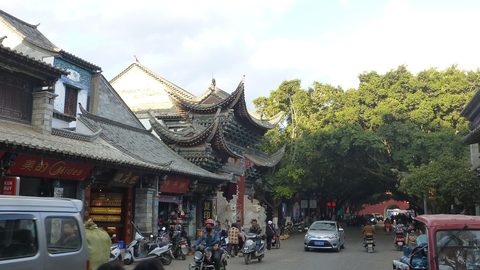 Jianshui
 has a Ming dynasty seventeen-arch bridge, one of China's largest Confucian temples, and tofu grilled on street corners—and almost every Yunnan itinerary skips it.
Jianshui
Jianshui has a Ming dynasty seventeen-arch bridge, one of China's largest Confucian temples, and tofu grilled on street corners—and almost every Yunnan itinerary skips it.
-
 Gejiu
The Yuanyang rice terraces only become the mirror-like spectacle of photographs from November to March—here is how to time the water season and hit the right viewpoints at sunrise and sunset.
Gejiu
The Yuanyang rice terraces only become the mirror-like spectacle of photographs from November to March—here is how to time the water season and hit the right viewpoints at sunrise and sunset.
-
 Baoshan
 unlocks Yunnan's wild western edge: the Gaoligong mountains, Tengchong's volcanic hot springs, and the ghosts of the Burma Road. A frontier for second-time visitors.
Baoshan
Baoshan unlocks Yunnan's wild western edge: the Gaoligong mountains, Tengchong's volcanic hot springs, and the ghosts of the Burma Road. A frontier for second-time visitors.