Where to Base Yourself in Yunnan, Town by Town
Where to stay in Yunnan, from Kunming to Shangri-La: neighbourhood-by-neighbourhood advice on old town courtyards, Erhai lake villages, and altitude-conscious bases.
Your Yunnan Trip Needs a Plan, Not a Dream
You are trying to figure out which neighbourhood to sleep in across six or seven towns, and every blog post tells you every option is lovely. It is not. The wrong base adds two hours of cobblestone suitcase dragging per move and a night of altitude sickness you did not budget for. Here is the direct answer for each major stop: Kunming, Dali, Lijiang, Shangri-La, Shaxi, Yuanyang, and Jinghong. Each recommendation comes with a trade-off. If there is only one sentence you remember, let it be this: book your transit night in Kunming near the train station, not Green Lake, unless you have a full day free. Green Lake is pretty. The station saves your trip.
Kunming: One Night, Two Choices
Kunming is a transit hub. For 80 to 90 percent of foreign travellers entering Yunnan through Kunming Changshui Airport, the city is a single overnight stop before the real trip starts. The Green Lake area gives you a pleasant evening walk past winter red billed gulls and street chess players. It also puts you 40 minutes from the high speed rail station in the morning. You lose time and energy on a departure day when you need both.
Book a hotel in the Guandu District near the airport or the Dongfeng Square area if you are catching an early train. The metro from Changshui takes 25 minutes and costs 5 to 8 yuan. A taxi to the city centre runs 35 to 50 minutes. If you land after 17:00 and leave before 10:00, Green Lake is the wrong choice. The downside of the station area is that you see nothing of the provincial capital. That is fine. You are not here to see it.


Dali: Old Town Versus the Lake Villages
What The Old Town Delivers
Dali offers two completely different experiences and they are not interchangeable. Dali Old Town concentrates backpacker cafes, Bai style stone and wood courtyard guesthouses, and rooftop terraces facing Cangshan Mountain. It is loud after midnight. The soundproofing in older guesthouses is poor. About 3,000 registered guesthouses exist across Dali Ancient Town and the lakeside villages combined as of 2024 data, and most of the old town stock lacks central heating. Some properties installed underfloor heating, but the rate sits at 10 to 20 percent of mid range and upper range guesthouses. If you want a bar on every corner and a crowd, stay in the old town.
Why Pick The West Bank Instead
The Erhai west bank villages, Caicun, Longkan, and Shuanglang, offer something quieter. Many lakeside properties were rebuilt between 2018 and 2020 after a demolition campaign cleared illegal construction, so the architecture is newer and often better insulated. You get bicycle lanes, whitewashed fishing villages, and sunset over the lake. You also get a 40 minute minivan ride to dinner options. The trade off is clear: convenience versus calm. Choose the lake if you want mornings on the water. Choose the old town if you want to walk to food.
Lijiang: Dayan vs Shuhe and the Suitcase Problem
Lijiang is where the wheeled suitcase problem becomes a real expense. Dayan Old Town contains over 2,000 registered guesthouses as of 2025 data, most inside pedestrian only zones. You will carry your luggage from the nearest vehicle drop point, or pay for an electric cart porter. The streets are stone cobbles, lethal on a rainy day and impossible for rollers. The guesthouses themselves are converted Naxi courtyard houses, wood frame construction with 6 to 15 rooms, minimal soundproofing, and electric blankets instead of heating. Bathrooms are en suite but earlier stock has glass walled bathrooms open to the bedroom.
Shuhe, 10 minutes north, is quieter and still commercialised but the streets are marginally wider and the electric carts run more reliably. The downside of Shuhe is that you give up the UNESCO maze atmosphere and the concentration of restaurants. If you can handle the cobbles, Dayan wins for spectacle. If you value your spine and your sleep, stay in Shuhe.
Shangri-La: Altitude Decides Your Base
Night One Is Not For Atmosphere
Shangri-La sits at 3,200 metres. The airport is at 3,280 metres. Flying from sea level and sleeping at this altitude on the same day produces acute mountain sickness in 25 to 40 percent of unacclimatised arrivals, based on the figures available. Most flights from Kunming land between 18:00 and 20:00. There are no flights after 21:00 on the 2025 schedule.
Do not stay in the old town on night one. The old town looks authentic, with Tibetan style buildings and Songzanlin Monastery nearby. It also sits at full altitude with limited medical access. Book a new town hotel for your first night. New town accommodation is lower density, has wider roads for oxygenated ambulance access, and several mid range and high end properties provide in room oxygen concentrators. Portable canisters cost 20 to 40 yuan and are sold in hotels and shops.
When To Move Into The Old Town
After two or three nights of acclimatisation, move to an old town guesthouse if you want the Tibetan atmosphere. The downside of the new town is that it is ugly. That is the point. You are not here for the architecture on night one. You are here to breathe.
Shaxi, Yuanyang and Jinghong: the Three Exceptions
Shaxi: One Choice, No Shortcuts
Shaxi has one choice. The preserved horse caravan town on the old Tea Horse Road centres on Sideng Square with its ancient market stage and cobbled lanes. There is no new town alternative worth discussing. Every guesthouse is a converted courtyard. The Friday market is the draw. Accept the cobblestones and the limited dining options. You stay in Shaxi because you want the texture, not the convenience.
Yuanyang: Functional Base Or Farm Stay
Yuanyang Xinjie is the practical base for the Hani rice terraces. The town itself is scruffy, a transit settlement with basic hotels and local van access to the viewpoints. The sunrise viewpoint at Duoyishu is 30 minutes by local van. The trade off is simple: stay in Xinjie for proximity to the terraces and accept that your room will be functional, not pretty. The alternative is a farm stay directly on the terraces, which means limited plumbing and a long walk to dinner.
Jinghong: Resorts Over Guesthouses
Jinghong, the capital of Xishuangbanna, operates on a different model entirely. The tropical monsoon climate produces average annual temperatures of 21 degrees Celsius. Guesthouse culture is less developed here than in Lijiang or Dali. Over 60 percent of the mid range and high end hotels cluster in the Gaozhuang Xishuangjing area, including international brands such as InterContinental, DoubleTree by Hilton, Pullman, and Sheraton as of 2025. Book a resort style hotel in that zone if you want a pool, air conditioning that works, and a Dai style villa compound. The downside is that Gaozhuang is a tourist development, not an authentic Dai village. You trade authenticity for functioning infrastructure in the tropical heat.


The Booking Reality You Cannot Ignore
Which Platform Actually Works
Your booking platform choice matters more than any specific hotel name. Trip.com offers an English interface, accepts foreign credit cards, and does not require a Chinese phone number. Booking.com and Agoda work but their inventory in Yunnan is reduced. Hostelworld lists roughly 15 to 25 hostels across the province according to 2025 data. Meituan Hotel and Fliggy require Chinese ID verification or an Alipay account linked to a Chinese ID. You cannot use them.
The Foreigner Acceptance Filter
The critical filter is the foreigner acceptance flag. Only properties with a Public Security Bureau registration terminal can legally accommodate foreign guests. Family run guesthouses with fewer than 10 rooms often lack this terminal. On Trip.com, use the filter that says "Welcomes foreign guests." On Booking.com and Agoda, only properties that have self declared foreigner acceptance appear. Some small guesthouses will escort you to the nearest police station for manual registration, adding 20 to 40 minutes to check in. That is a time cost you want to avoid after a six hour bus ride.
When to Skip Each Base Entirely
The Short Trip Rule
Kunming is not for you if you have fewer than 10 days total. The common mistake is covering Kunming, Dali, Lijiang, and Shangri-La in one week. The result is four identical old towns seen through a bus window and zero time at altitude. Skip Kunming altogether if your flight arrives early enough to transfer directly to Dali via high speed rail.
Who Should Avoid What
Dali old town is not for you if you cannot tolerate late night noise from backpacker bars. Erhai lake villages are not for you if you need a restaurant open past 21:00. Lijiang Dayan is not for you if you have a wheeled suitcase, a knee injury, or a low tolerance for crowds in pedestrian corridors. Shangri-La is not for you on night one if you flew in from sea level or if you cannot source a new town hotel with an oxygen concentrator. Shaxi is not for you if you expect nightlife or Western food. Yuanyang Xinjie is not for you if you need a hotel room worth photographing. Jinghong Gaozhuang is not for you if you came for anthropological Dai village authenticity rather than a resort pool.
One Last Thing Before You Go
Install a VPN before you leave home. Google, WhatsApp, Instagram, and Gmail are blocked without one. Guesthouse Wi-Fi in mountain areas is slow. Buy a Chinese SIM card with a data plan at the airport. WeChat Pay and Alipay are how everything works. Foreign cards fail on most local transport apps. Choosing a base is only half the equation. The infrastructure that gets you there is the thing that will break your trip first.
Common Questions
Should I Stay In Dali Old Town Or On The Lake If I Have Only Two Nights?
Stay in the old town for one night and the lake for one night. You lose one hour moving between them. You gain two completely different experiences. If you cannot move, choose the old town. You can rent a bicycle and ride the lake circuit in a day from there.
Is Lijiang Dayan Old Town Worth The Suitcase Struggle?
Yes, if you want the maze of canals and the UNESCO atmosphere and you travel with a backpack. No, if you have a wheeled suitcase or you need to sleep before midnight. In that case, pick Shuhe.
What Happens If I Stay In Shangri-La Old Town On Night One?
You risk acute mountain sickness. The incidence rate for unacclimatised arrivals sleeping at 3,200 metres same day is 25 to 40 percent. You will spend your second day with a headache, nausea, and no ability to walk the monastery steps.
Can I Book A Guesthouse In Shaxi Without A Chinese Phone Number?
Yes, if you use Trip.com and filter for foreigner friendly properties. Call the guesthouse before you book and confirm they have a PSB registration terminal. Without it, they cannot legally accept you.
Which Booking Platform Works For Foreigners In Yunnan?
Trip.com is the single reliable option. It accepts foreign credit cards, has an English interface, and lets you filter by foreigner acceptance. Booking.com and Agoda have reduced inventory. Meituan and Fliggy require Chinese ID verification and are unusable for most foreign travellers.
Read next
-

 Yunnan Hotels Chains Courtyards and the Foreigner Registration Rule
Hotels in Yunnan range from international chains to courtyard guesthouses, but the foreigner registration rule determines where you can actually sleep—here is what to book.
Yunnan Hotels Chains Courtyards and the Foreigner Registration Rule
Hotels in Yunnan range from international chains to courtyard guesthouses, but the foreigner registration rule determines where you can actually sleep—here is what to book.
-
 Flying Into Yunnan Kunming Lijiang Dali and Shangri-La Airports Compared
Choosing between Kunming, Lijiang, Dali, and Shangri-La airports shapes your entire Yunnan route—here's how each gateway affects transit time, altitude, and cost.
Flying Into Yunnan Kunming Lijiang Dali and Shangri-La Airports Compared
Choosing between Kunming, Lijiang, Dali, and Shangri-La airports shapes your entire Yunnan route—here's how each gateway affects transit time, altitude, and cost.
-
 What Yunnan Is For Mountains Old Towns and Minority Culture
Yunnan is for high-altitude treks, living old towns like Shaxi, minority markets, winter rice terraces at Yuanyang, and going deep on Pu'er tea at the source.
What Yunnan Is For Mountains Old Towns and Minority Culture
Yunnan is for high-altitude treks, living old towns like Shaxi, minority markets, winter rice terraces at Yuanyang, and going deep on Pu'er tea at the source.
-
 Yunnan Weather Seasons and the Best Time to Visit Without the Crowds
Yunnan spans tropical lowlands and Himalayan peaks, so the best time to visit depends entirely on which region you're targeting and whether you can stomach the October crowds.
Yunnan Weather Seasons and the Best Time to Visit Without the Crowds
Yunnan spans tropical lowlands and Himalayan peaks, so the best time to visit depends entirely on which region you're targeting and whether you can stomach the October crowds.
-
 Getting Around Yunnan Rail Bus and the Mountain Road Reality
Getting around Yunnan means high-speed rail between Kunming, Dali, and Lijiang, then long-distance buses and shared minivans into the mountains—and 200 km takes 5 hours.
Getting Around Yunnan Rail Bus and the Mountain Road Reality
Getting around Yunnan means high-speed rail between Kunming, Dali, and Lijiang, then long-distance buses and shared minivans into the mountains—and 200 km takes 5 hours.
-
 Yunnan Itinerary for 10 Days and Two Weeks Without the Transit Burnout
A realistic Yunnan itinerary treats 200-kilometre mountain transfers as half-day events and picks two regions maximum—here are paced 10-day and two-week routes that work.
Yunnan Itinerary for 10 Days and Two Weeks Without the Transit Burnout
A realistic Yunnan itinerary treats 200-kilometre mountain transfers as half-day events and picks two regions maximum—here are paced 10-day and two-week routes that work.
-
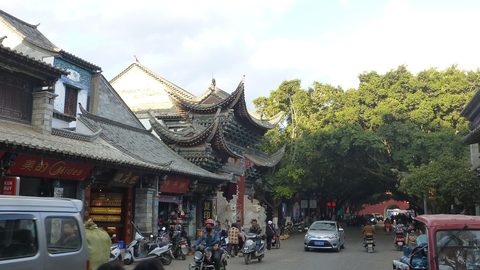 Jianshui
 has a Ming dynasty seventeen-arch bridge, one of China's largest Confucian temples, and tofu grilled on street corners—and almost every Yunnan itinerary skips it.
Jianshui
Jianshui has a Ming dynasty seventeen-arch bridge, one of China's largest Confucian temples, and tofu grilled on street corners—and almost every Yunnan itinerary skips it.
-
 Gejiu
The Yuanyang rice terraces only become the mirror-like spectacle of photographs from November to March—here is how to time the water season and hit the right viewpoints at sunrise and sunset.
Gejiu
The Yuanyang rice terraces only become the mirror-like spectacle of photographs from November to March—here is how to time the water season and hit the right viewpoints at sunrise and sunset.
-
 Baoshan
 unlocks Yunnan's wild western edge: the Gaoligong mountains, Tengchong's volcanic hot springs, and the ghosts of the Burma Road. A frontier for second-time visitors.
Baoshan
Baoshan unlocks Yunnan's wild western edge: the Gaoligong mountains, Tengchong's volcanic hot springs, and the ghosts of the Burma Road. A frontier for second-time visitors.