Bai, Naxi, Dai and Hani Communities: Etiquette for Yunnan Minority Travel
Visiting Yunnan's Bai, Naxi, Dai and Hani communities requires photography consent, festival awareness, and respect for ceremonies that are not tourist shows.

The Friday Morning Test
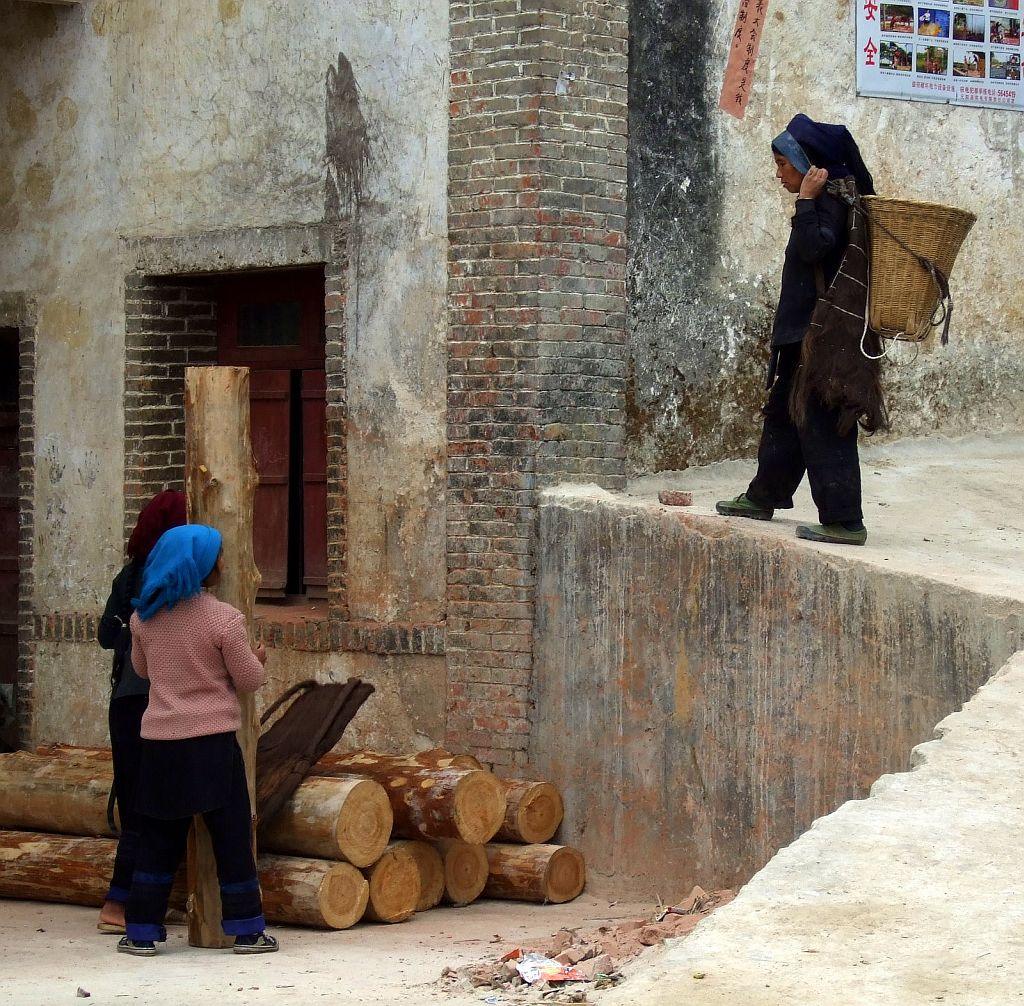
You are standing at the edge of Shaxi's Sideng market square at 7 a.m. on a Friday. A Bai woman in her seventies, wearing a blue indigo headwrap and a handwoven apron, squats beside a basket of mushrooms she carried down from the mountain on her back. You raise your camera. She does not look at you. This is the moment that defines Yunnan minority travel: do you take the photograph without asking, or do you do something else?
The question matters because these markets are not performances. Shaxi's Friday livestock market has operated continuously for centuries on this same square. The Dai Water Splashing Festival on 13-15 April is the actual Dai New Year, not a show staged for tourists. The Hani rice terraces around Yuanyang are working agricultural systems that the Duoyishu villagers rely on for survival. When tourism alters these places, the line between respectful travel and exploitation runs through every transaction, every photograph, every interaction.
Photography: Ask First, Pay Fairly, Accept No
The single most common failure in Yunnan's minority communities is treating people as photo props. The 2019 Yunnan Province Ethnic Culture Protection and Development Regulations impose fines of CNY 2,000 to 10,000 for staging a minority wedding ceremony using non consenting participants for tourist photography. That law exists because the problem is widespread.
Photographing elders at Shaxi Friday market or in Xizhou's morning market requires asking first. A nod and a smile work when there is no common language. In Xizhou, residents charge CNY 10 to 30 for posing in traditional dress. That is a fair transaction. Pay it. Do not take the photo and walk away.
Inside Songzanlin Monastery, photography is prohibited in the main assembly hall. Fines of CNY 100 to 500 are enforced by monastery security. The courtyards are fine. That distinction matters: religious spaces are not backdrops. At least six signs in English and Chinese state this rule inside the prayer halls. Read them.
Commercial photography stations for Tibetan mastiffs were banned by the Yunnan provincial government in 2018 after years of animal welfare complaints. You will not find them on the road from Shangri-La to Deqin. If someone offers you a photo with a chained animal, walk away.
Markets: Arrive Early, Buy Directly, Skip the Performative Haggle
When To Be There
Genuine rural markets in Yunnan start between 6 a.m. and 7 a.m. and end by 11 a.m. to noon. Shaxi's Friday market is the real thing: livestock, bulk produce, handicrafts, no uniform stalls. Xizhou's main market day is Monday. Arrive at 7 a.m. and you see the market before the tour buses arrive at 10 a.m. Arrive at 11 a.m. and you see empty tables and cleaning crews.
What To Buy And How
The price difference between authentic and fake crafts is stark. A handwoven Bai tie dye table runner from a Zhoucheng workshop costs CNY 60 to 200 in 2024. A machine printed imitation in a Dali tourist shop costs CNY 15 to 40. The fake one is cheaper and worth exactly that.
Haggling has a place in Yunnan. Performative haggling over CNY 10 does not. If you are buying a handwoven textile from the woman who wove it, pay her asking price. If you are buying mass produced souvenirs in Lijiang Old Town, negotiating is standard. The difference is obvious: look for the loom, the hands, the lack of identical stock.
Tour guide commissions on craft purchases run 20 to 50 percent of the price, by industry estimates. Buy direct or do not expect the seller to pocket what you pay. In Zhoucheng tie dye village, 40 minutes by minibus from Dali, workshops sell direct. That is where your money reaches the craftsperson.
Villages: Stay Overnight, Skip the Performance Dinner
Homestays Over Day Trips
Yunnan has 708 villages designated as Traditional Villages by the national government. A homestay in a working Hani village in the Yuanyang area costs CNY 100 to 400 per night in 2024. A homestay marketed as a Tibetan experience in Shangri-La old town costs CNY 150 to 600. Both are cheaper than a hotel and the only way to interact with a community after the day trippers leave at 4 p.m.
The Hani rice terraces around Yuanyang were inscribed as a UNESCO World Heritage site in 2013. The sunrise viewpoint at Duoyishu is crowded by 6 a.m. in winter. Stay in a village homestay, walk the terraces at dusk, and you see the landscape as infrastructure, not a photo backdrop.
The Shows You Should Skip
Large scale ethnic shows in Lijiang and Dali charge CNY 180 to 380 for a dinner and performance. An estimated 10 to 25 percent of ticket revenue reaches the performers. The nightly wage for a dancer in a Lijiang commercial show in 2024 was CNY 80 to 150. That is not a living wage anywhere in China.
A better alternative: the daily Bai tea ceremony included in the standard Three Pagodas ticket in Dali. One performance, included, no markup. Or walk through Baisha Village, 20 minutes by bus from Lijiang, and see faded Ming frescoes in a setting that has not been rebuilt for tourism. No entrance fee for the village itself.
When A Ceremony Is Not For You
Some events are closed to outsiders. The Tibetan Buddhist ceremonies inside Songzanlin Monastery, home to approximately 300 monks in 2024 after post restriction reductions from the pre 2020 figure of 700, are religious observances. You do not enter the main hall during prayers. You do not photograph them.
The Yi, Bai and Naxi Torch Festival falls on the 24th day of the 6th lunar month, in July or August. Villages celebrate differently. Some welcome visitors. Some do not. Ask at your homestay that morning, not at the village entrance with a camera ready.
Clothing and Commodification: Your Outfit is Not a Costume
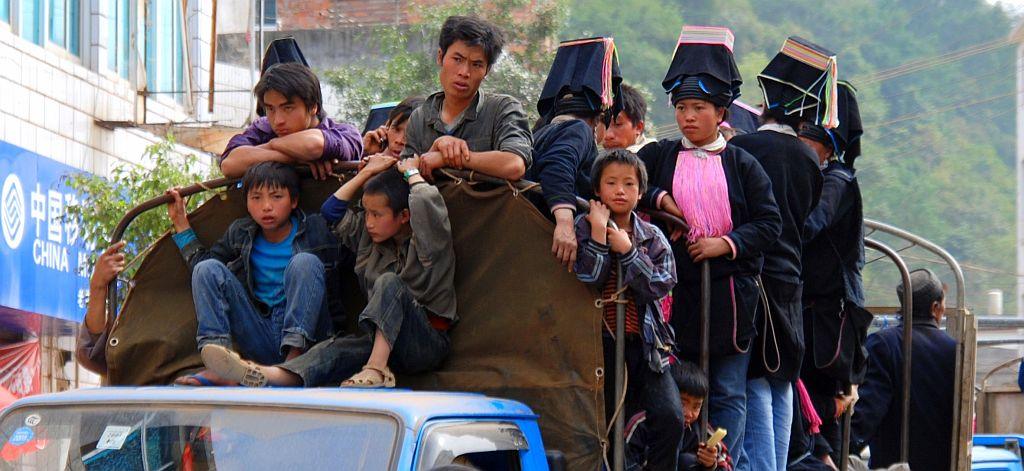
Treating traditional minority clothing as a costume backdrop for your own photos is the fastest way to generate resentment. Bai, Naxi, Dai and Hani dress carries cultural and sometimes religious significance. Renting a Dai outfit for a photoshoot in Xishuangbanna's Tropical Botanical Garden is one thing. Wearing it as a joke or a prop at someone else's festival is another.
The reconstructed ancient towns built or substantially rebuilt in Yunnan since 2000 number at least 12. In Lijiang Old Town, inscribed as a UNESCO World Heritage site in 1997, approximately 60 percent of original buildings were replaced or heavily modified after the 1996 earthquake. The core zone now houses fewer than 600 Naxi families as of a 2023 estimate. Monthly shop rents in that core run CNY 15,000 to 40,000. There are zero functioning livestock markets inside Lijiang Old Town. That place is a stage. Shaxi is not.
The distinction determines your ethics. When you are in a reconstructed town, you are a tourist in a tourism zone. When you are in a working village or market, you are a guest in someone's daily life. Act accordingly.

Gift Giving and Fair Payment
Do not give money or gifts to children in villages. It encourages begging and creates dependency. If you want to contribute, buy from adult artisans directly or donate to a verified local organization. The Yunnan Provincial Department of Culture and Tourism, renamed from the Tourism Bureau in 2018, operates a complaint hotline at 12345 for tourism disputes, including unfair treatment of communities.
If you commission a thangka painting from a working monastery studio in Shangri-La, the 2024 price range was CNY 500 to 5,000 or more. A printed thangka from a tourist shop costs CNY 50 to 200. The difference is the artist, the materials, and the blessing. If you want the real thing, pay the real price. If you want a souvenir, buy the print and do not pretend otherwise.
| Feature | Genuine Market | Reconstructed Market |
|---|---|---|
| Start time | 6 a.m. to 7 a.m. | 9 a.m. or later |
| End time | 11 a.m. to noon | Open all day |
| Livestock | Present | None |
| Handwoven goods | Irregular, one of a kind | Identical stock |
| Seller | Local farmer or artisan | Shopkeeper or middleman |
| Example | Shaxi Friday market, Xizhou Monday market | Most Lijiang Old Town 'markets' |
Who This Style of Travel Suits and Who it Does Not
This approach fits the slow traveller who budgets at least 10 days for Yunnan, who prioritizes one region over four rushed stops, and who would rather sit in a Hani villager's courtyard at dusk than photograph a staged tea ceremony. It fits the photographer who asks permission and pays for portraiture. It fits the hiker who traverses Tiger Leaping Gorge in two days and the tea nerd who traces pu'er sourcing to Jingmai Mountain, inscribed as a UNESCO World Heritage site in 2023.
It does not fit anyone who wants a friction free five star experience. It does not fit the traveller on a seven day itinerary trying to cover Kunming, Dali, Lijiang and Shangri-La in one week. That produces four near identical old towns seen through a bus window and zero time at altitude. It does not fit anyone who expects to attend the Dai Water Splashing Festival and come home dry.
The single thing that most often goes wrong: treating Yunnan's 25 recognised ethnic minority groups, who make up 33.12 percent of the province's 47,209,277 people, as scenery rather than hosts. The line between respectful travel and exploitation is not complicated. You cross it the moment you take without asking.
Read next
-

 Yunnan Hotels Chains Courtyards and the Foreigner Registration Rule
Hotels in Yunnan range from international chains to courtyard guesthouses, but the foreigner registration rule determines where you can actually sleep—here is what to book.
Yunnan Hotels Chains Courtyards and the Foreigner Registration Rule
Hotels in Yunnan range from international chains to courtyard guesthouses, but the foreigner registration rule determines where you can actually sleep—here is what to book.
-
 Where to Stay in Yunnan Town by Town Base Guide
Where to stay in Yunnan, from Kunming to Shangri-La: neighbourhood-by-neighbourhood advice on old town courtyards, Erhai lake villages, and altitude-conscious bases.
Where to Stay in Yunnan Town by Town Base Guide
Where to stay in Yunnan, from Kunming to Shangri-La: neighbourhood-by-neighbourhood advice on old town courtyards, Erhai lake villages, and altitude-conscious bases.
-
 Flying Into Yunnan Kunming Lijiang Dali and Shangri-La Airports Compared
Choosing between Kunming, Lijiang, Dali, and Shangri-La airports shapes your entire Yunnan route—here's how each gateway affects transit time, altitude, and cost.
Flying Into Yunnan Kunming Lijiang Dali and Shangri-La Airports Compared
Choosing between Kunming, Lijiang, Dali, and Shangri-La airports shapes your entire Yunnan route—here's how each gateway affects transit time, altitude, and cost.
-
 What Yunnan Is For Mountains Old Towns and Minority Culture
Yunnan is for high-altitude treks, living old towns like Shaxi, minority markets, winter rice terraces at Yuanyang, and going deep on Pu'er tea at the source.
What Yunnan Is For Mountains Old Towns and Minority Culture
Yunnan is for high-altitude treks, living old towns like Shaxi, minority markets, winter rice terraces at Yuanyang, and going deep on Pu'er tea at the source.
-
 Yunnan Weather Seasons and the Best Time to Visit Without the Crowds
Yunnan spans tropical lowlands and Himalayan peaks, so the best time to visit depends entirely on which region you're targeting and whether you can stomach the October crowds.
Yunnan Weather Seasons and the Best Time to Visit Without the Crowds
Yunnan spans tropical lowlands and Himalayan peaks, so the best time to visit depends entirely on which region you're targeting and whether you can stomach the October crowds.
-
 Getting Around Yunnan Rail Bus and the Mountain Road Reality
Getting around Yunnan means high-speed rail between Kunming, Dali, and Lijiang, then long-distance buses and shared minivans into the mountains—and 200 km takes 5 hours.
Getting Around Yunnan Rail Bus and the Mountain Road Reality
Getting around Yunnan means high-speed rail between Kunming, Dali, and Lijiang, then long-distance buses and shared minivans into the mountains—and 200 km takes 5 hours.
-
 Jianshui
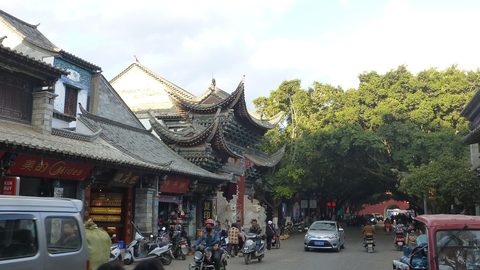
 has a Ming dynasty seventeen-arch bridge, one of China's largest Confucian temples, and tofu grilled on street corners—and almost every Yunnan itinerary skips it.
Jianshui
Jianshui has a Ming dynasty seventeen-arch bridge, one of China's largest Confucian temples, and tofu grilled on street corners—and almost every Yunnan itinerary skips it.
-
 Gejiu
The Yuanyang rice terraces only become the mirror-like spectacle of photographs from November to March—here is how to time the water season and hit the right viewpoints at sunrise and sunset.
Gejiu
The Yuanyang rice terraces only become the mirror-like spectacle of photographs from November to March—here is how to time the water season and hit the right viewpoints at sunrise and sunset.
-
 Baoshan
 unlocks Yunnan's wild western edge: the Gaoligong mountains, Tengchong's volcanic hot springs, and the ghosts of the Burma Road. A frontier for second-time visitors.
Baoshan
Baoshan unlocks Yunnan's wild western edge: the Gaoligong mountains, Tengchong's volcanic hot springs, and the ghosts of the Burma Road. A frontier for second-time visitors.