Walking Harbin Russian Quarter From Central Street to Saint Sophia
Harbin's Russian-built Central Street and Saint Sophia Cathedral are the surviving architecture of a city born from the Chinese Eastern Railway.

Harbin Russian Past Central Street Saint Sophia and the Railway Legacy
A railway company decided this city should exist. Before that, there was nothing here. Harbin's Russian-built heritage is not a tourist overlay applied after the fact. It is the structural DNA of a settlement conjured into existence by the Chinese Eastern Railway, whose construction started in 1897 and finished in 1903. The junction at the Songhua River crossing is why Harbin exists at all, founded as a railway settlement in 1898. Start at Central Street and walk toward Saint Sophia Cathedral. That kilometre and a half tells you exactly how this city was built and by whom.
Central Street: 1,450 Metres of Russian Showcase
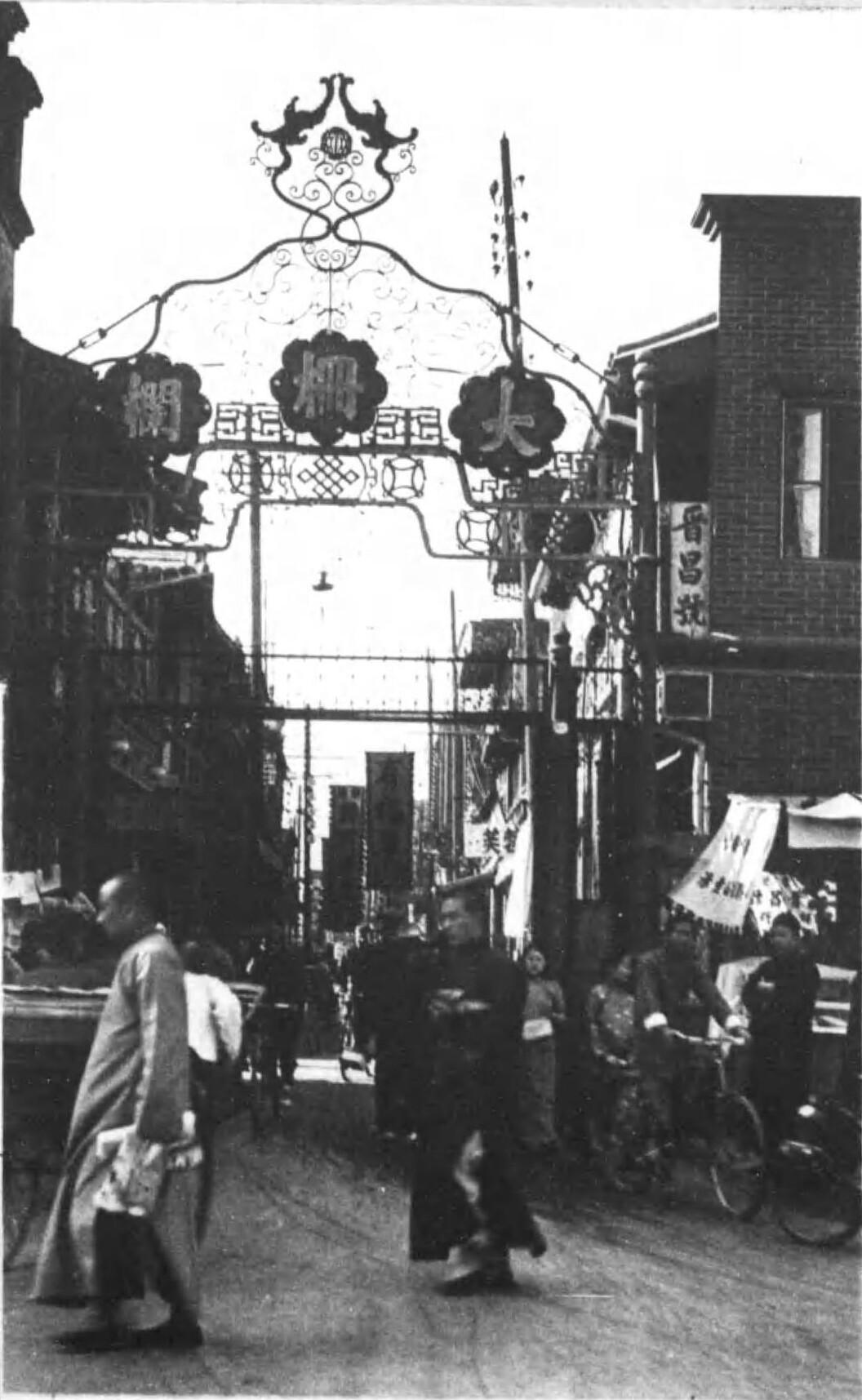
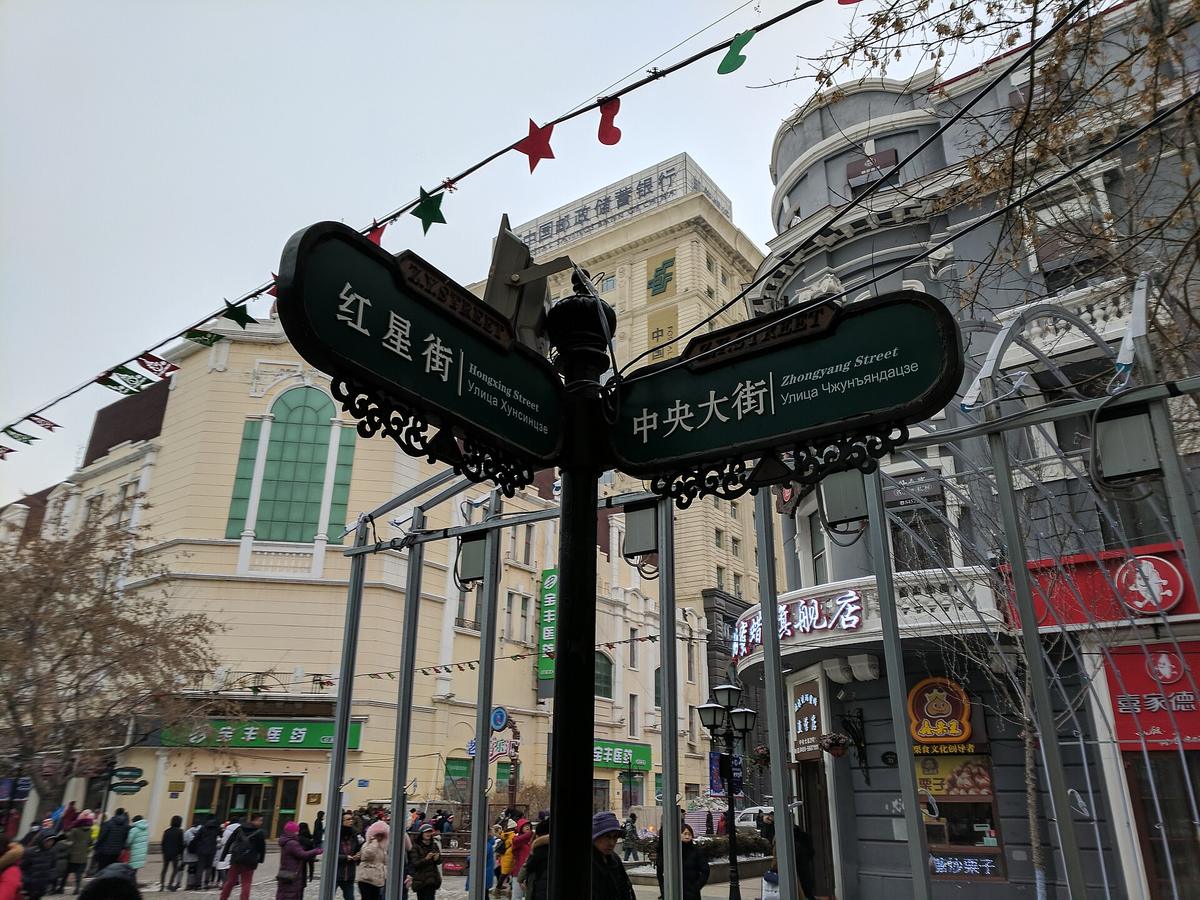
Central Street runs about 1,450 metres from Jingwei Street northwest to the Songhua River. The Chinese name is Zhongyang Dajie. The original Russian name was Kitaiskaya Street, meaning Chinese Street. In 1924, the road was paved with granite setts. You are walking on that same surface now. It has outlasted every regime that ruled here.
Why The Architecture Looks European
The street holds roughly 71 protected buildings across six architectural styles: Baroque, Renaissance, Eclectic, Art Nouveau, Byzantine, and Jewish. That density of European design in a single Chinese street is not decorative. It reflects the population that built the city. By the 1920s, Harbin reached a Russian population peak estimated at 100,000 to 120,000 people, with a pre-1917 Russian population of about 34,000. After the revolution, a White Russian influx between 1917 and 1923 doubled that number. These were not tourists. They were engineers, merchants, bankers, and refugees who expected a European city on Chinese soil.
Key Buildings To Identify
At No. 57, built in 1909, you find the former Churin Company building. Ivan Churin founded the Qiulin Company in 1900, and that company still produces Harbin kvass under the Qiulin brand. At No. 107, an Eclectic-style building housed a Jewish entrepreneur's commercial venture. No. 120, built in the Baroque Revival style, originally held a Japanese pharmacy from the 1920s. The Modern Hotel at No. 89, built in 1906 in Art Nouveau style, was originally called the Moderne Hotel. It is still a hotel. The Huamei Western Restaurant building dates to 1925 and was originally the Mars Café. Eat Russian food on Central Street and in its side alleys, which remain the concentration area for Russian cuisine in Harbin.
When To Walk It
Winter is the season when this architecture looks most itself. Sub-zero temperatures clear the crowds, and snow on the Baroque and Art Nouveau facades makes the European references read correctly. The Harbin Ice Festival, formal since 1985, has included Russian architectural ice sculptures since its informal start in 1963. You can see the winter version of onion domes carved in ice at the festival grounds. In summer, the street is a pedestrian mall packed with selfie sticks and loudspeakers. Go in January or February. Arrive by 08:00 before the day-trip buses unload.
Walk the full length to the river. At the north end, you hit Stalin Park, originally called Riverside Park and renamed in 1953. The flood control monument sits there. Turn around and walk back. The whole circuit takes about 90 minutes if you stop to read plaques.
Saint Sophia Cathedral: the Centrepiece That Was Nearly Lost
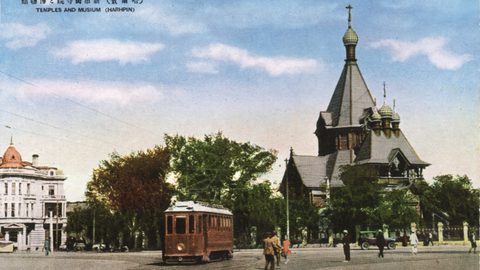
Saint Sophia Cathedral sits about 600 metres southeast of Central Street on a square roughly 6,000 square metres in size. The first church on this site was a wooden structure built in 1907. The current brick building was completed in 1932, designed by architect Mikhail Oskolkov in the Neo-Byzantine style with Russian elements. It rises 53.35 metres with one main dome and four smaller ones.
The cathedral was closed as a church in 1958. It survived the Cultural Revolution because it was used as a warehouse. Since 1997 it has functioned as the Harbin Architectural Art Gallery. The 2024 admission fee was 20 yuan, published by the Harbin Municipal Tourism Bureau. That figure is subject to annual revision. Check the official Harbin Architectural Art Gallery WeChat account for the current rate before you arrive.
Go inside for the architectural photography exhibition on the ground floor. The real value is the interior space itself, which gives you the scale of the original congregation. At its peak in the 1920s, Harbin hosted about 20 Russian Orthodox churches. Only three or four still stand. Saint Sophia is the largest and best restored.
The square outside fills with wedding photographers on mild weekends. If you want a clear exterior shot without a bride in every frame, arrive before 08:30. The cathedral gate opens at 08:30 in all seasons. The museum inside closes at 17:00, last entry at 16:30. For a journey that traces a different imperial frontier, Baoshan offers Yunnan’s wild western edge and the echoes of the Old Burma Road.
The Quiet Streets Where Russian Heritage Still Breathes
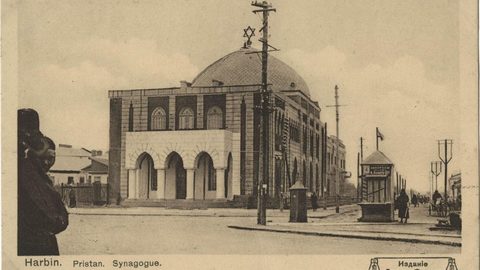
Central Street and Saint Sophia are the restored showpieces. The genuinely atmospheric backstreets lie in the Daoli District, within a ten-minute walk of Saint Sophia. Head east on Jingwei Street to find the Harbin Old Synagogue at No. 82. Built in 1909 in the Judaic with Moorish Revival style, it now houses the Harbin Jewish History and Culture Museum. Harbin's Jewish community peaked in the 1920s at roughly 20,000 to 25,000 people. The New Synagogue at 162 Tongjiang Street, built in 1921, operates as a concert hall and café. Both are quieter than any spot on Central Street.
Walk further into the residential blocks east of Tongjiang Street. You find faded Art Nouveau details on apartment buildings from the 1910s and 1920s: peeling paint, original ironwork. These are not tourist attractions. People still live in them. The Harbin Jewish cemetery, restored in 1992, contains about 600 graves. It sits outside the central area. If you have three hours, it is worth the taxi ride.
What To Eat And Where To Buy It
The Russian food and import shops concentrate along Central Street and Hongzhuan Street, an indoor retail arcade. Buy dalieba, the large sourdough loaf baked locally, and Harbin hongchang, the smoked red sausage. The Qiulin department store, descended from Ivan Churin's 1900 company, still sells both. Do not confuse hongchang with Western sausage. It is a specific Harbin product, denser and redder, developed for the railway labour force.
,_Harbin_15_Road_sign.jpg)
How the Railway Built the City and Then Unbuilt it
The Chinese Eastern Railway did not just bring Russians to Harbin. It brought an entire multinational workforce. Before 1949, Harbin held residents from roughly 30 nationalities, and at its peak, foreign residents made up about 50 percent of the city's population. The railway line ran south to Port Arthur, now Lüshun, making Harbin the junction where the main line met the southern branch. That is why Harbin became the administrative centre rather than a depot.
The railway was co-administered by China and the Soviet Union from 1924 to 1935, then sold to the Japanese puppet state of Manchukuo in 1935. The Soviet Army occupied Harbin from August 1945 to April 1946. The last major Russian exodus happened in the 1950s and 1960s, when most of the remaining White Russian and Soviet families left for Australia, the United States, or the Soviet Union itself. The buildings stayed.
What you see today is not a living Russian community. It is the physical shell of one, preserved because nobody could afford to tear it down during the decades when the city had no money to rebuild. That is why the preservation feels genuine rather than theme-park. The buildings were never demolished and replaced. They were simply abandoned and then reoccupied.
Read next
-
 Harbin Where to Stay for the Ice Festival and Winter Cold
Where to stay in Harbin during winter comes down to heating reliability, distance from the ice sites, and whether you want walkable Zhongyang Street or quick access to Ice and Snow World in Songbei.
Harbin Where to Stay for the Ice Festival and Winter Cold
Where to stay in Harbin during winter comes down to heating reliability, distance from the ice sites, and whether you want walkable Zhongyang Street or quick access to Ice and Snow World in Songbei.
-
 Harbin Things to Do Beyond the Ice and Snow World
Harbin things to do in winter centre on the Ice and Snow World, Sun Island snow sculptures, Zhaolin Park lanterns, and Russian architecture along Zhongyang Street, each demanding a strategy for the cold.
Harbin Things to Do Beyond the Ice and Snow World
Harbin things to do in winter centre on the Ice and Snow World, Sun Island snow sculptures, Zhaolin Park lanterns, and Russian architecture along Zhongyang Street, each demanding a strategy for the cold.
-
 Harbin Best Time to Visit for Ice Festivals Without the Crush
The best time to visit Harbin is late December through late February for the ice festival, but avoid Chinese New Year week for crushing crowds and July through August for oppressive heat with no winter spectacle.
Harbin Best Time to Visit for Ice Festivals Without the Crush
The best time to visit Harbin is late December through late February for the ice festival, but avoid Chinese New Year week for crushing crowds and July through August for oppressive heat with no winter spectacle.
-
 Harbin Getting Around in Winter Without a Chinese Bank Card
Getting around Harbin in winter means relying on the heated metro, preparing for taxi meter refusals after dark, and knowing that Didi wait times can stretch past 30 minutes at minus-25°C.
Harbin Getting Around in Winter Without a Chinese Bank Card
Getting around Harbin in winter means relying on the heated metro, preparing for taxi meter refusals after dark, and knowing that Didi wait times can stretch past 30 minutes at minus-25°C.
-
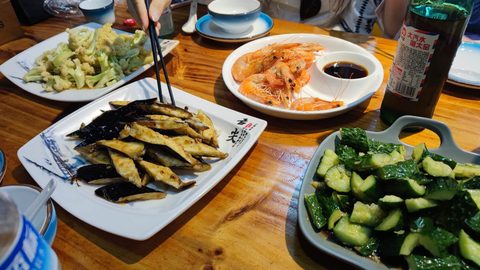 Harbin Food Worth Freezing For From Guo Bao Rou to Madier Ice Cream
Harbin food spans Russian-influenced smoked sausage and sourdough rye to Dongbei guo bao rou and the local ritual of eating Madier ice cream outdoors on Zhongyang Street at minus-20°C.
Harbin Food Worth Freezing For From Guo Bao Rou to Madier Ice Cream
Harbin food spans Russian-influenced smoked sausage and sourdough rye to Dongbei guo bao rou and the local ritual of eating Madier ice cream outdoors on Zhongyang Street at minus-20°C.
-
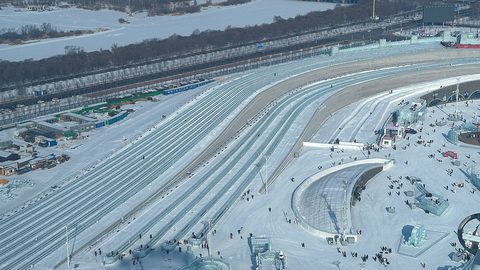 The Harbin Ice and Snow Festival
 spans three paid sites—Ice World, Sun Island, and Zhaolin Park—each with separate tickets, peak hours, and cold-weather demands.
The Harbin Ice and Snow Festival
The Harbin Ice and Snow Festival spans three paid sites—Ice World, Sun Island, and Zhaolin Park—each with separate tickets, peak hours, and cold-weather demands.
-
 Provincial China Beyond Beijing Shanghai Guangzhou and Xi’an
Provincial China rewards slow travellers with compressed continents of culture, cuisine, and landscape far beyond the standard megacity circuit.
Provincial China Beyond Beijing Shanghai Guangzhou and Xi’an
Provincial China rewards slow travellers with compressed continents of culture, cuisine, and landscape far beyond the standard megacity circuit.
-
 What to Wear in Harbin at Minus Thirty and What Breaks in the Deep Cold
Harbin at minus thirty demands a specific layering system, boots with toe room, and plans for phone battery death and camera lens fogging.
What to Wear in Harbin at Minus Thirty and What Breaks in the Deep Cold
Harbin at minus thirty demands a specific layering system, boots with toe room, and plans for phone battery death and camera lens fogging.
-
 Planning a Slow Travel Route Through Yunnan’s Lesser-Visited Villages
Plan a slower Yunnan journey through Dali, Shaxi, and Nuodeng, with realistic transport allowances, guesthouse advice, and respectful village visits.
Planning a Slow Travel Route Through Yunnan’s Lesser-Visited Villages
Plan a slower Yunnan journey through Dali, Shaxi, and Nuodeng, with realistic transport allowances, guesthouse advice, and respectful village visits.