Harbin Winter Clothing Layers, Gear That Fails and Survival at Minus Thirty
Harbin at minus thirty demands a specific layering system, boots with toe room, and plans for phone battery death and camera lens fogging.
_MET_DP841109.jpg)
Harbin Winter Clothing Layers, Gear That Fails and Survival at Minus Thirty
The Four-Layer System That Works
Any winter coat will not do. At minus 25 degrees Celsius, the average January low in Harbin, a specific four-layer system is the only way to stay safe and functional. Skip even one layer or wear the wrong material and you create a sweat-freeze cycle that leaves you colder than if you had worn less.
Your base layer must be merino wool at 200 to 250 grams per square meter. Cotton kills at this temperature. It holds moisture against your skin. On top of that goes a fleece mid layer at 200 to 300 grams per square meter, Polartec 200 or 300 equivalent. The outer insulation is a down jacket with 700 to 800 fill power and a windproof face fabric. Four layers total: base, fleece, down, shell. That is the formula for static use.
The failure case is cheap down. Jackets with fill power below 700 and poor face fabric collapse under their own moisture from sweat and humidity. Within two hours of walking, the insulation compresses, you lose the air pocket that traps heat, and you start shivering. Spend 300 to 1000 CNY on a down jacket from a local Harbin shop like Qiulin Company Department Store or Hongbo Underground Shopping Street. Do not skimp.
Extremities: Hands, Feet and Face
Your extremities need a separate system. Mittens over gloves, not gloves alone. Your glove system for photography should be a thin liner glove with conductive silver or copper thread woven into the fingertips, plus a flip-top mitt with a wrist strap and a Gore-Tex shell with synthetic insulation. The liner lets you operate a camera or phone for up to 30 seconds before your fingers numb. The mitt goes back on immediately. Buy these at Sophia Square area shops for 50 to 150 CNY.
Boots are where most people make a single critical mistake. A tight fit restricts blood circulation and traps cold air against the foot. You need boots 1 to 1.5 sizes larger than your normal shoe size to accommodate thick socks and an insulating air gap. The sock system is two layers: a thin merino liner against the skin and a thick merino or wool outer sock. For static use at minus 25 degrees, your boot insulation needs to be at least 2000 grams of Thinsulate or equivalent. For active use where you are walking hard, 800 to 1200 grams is enough. Movement generates heat. Local insulated boots cost 200 to 600 CNY. Try them on with your sock system inside the store.
Your face mask is not optional. Frostbite onset on exposed skin at minus 25 Celsius with a 20 km/h wind is 10 minutes or less. The wind chill equivalent at that combination is minus 35 to minus 38 Celsius. First-degree frostbite shows as redness and numbness, reversible with rewarming. Second-degree frostbite causes blistering within 24 hours and requires medical attention. A balaclava or a fleece face mask rated to at least minus 30 covers every part of your face except a narrow slit for your eyes.
What Breaks in the Deep Cold: Batteries, Screens, Lenses and Lungs
Batteries and Touchscreens
Phone batteries die in minutes at these temperatures. An iPhone shuts down between 0 and minus 20 Celsius depending on the model. Every camera battery loses 50 to 70 percent of its capacity at minus 20. The fix: keep spare batteries in your inner chest pocket, close to body heat. Swap them in before your camera or phone dies, not after. A battery that has already shut down will not revive until it warms up for 10 to 15 minutes indoors.
Touchscreens become unresponsive. The touchscreen-compatible gloves with silver thread work for about five seconds of contact before your finger goes numb and the screen misreads your input. Use the liner glove for quick taps, then immediately cover your hand with the flip mitt. For anything longer than a brief interaction, step indoors. A coffee shop, a department store, a hotel lobby. You will have 4 to 8 dressing and undressing cycles per day as you enter and exit buildings. That is normal. Budget 2 to 5 minutes to undress indoors and 5 to 10 minutes to gear up for outdoors every single time.
Camera Lenses and Your Lungs
Camera lenses fog irreversibly when you move from the cold outdoors into a heated indoor space. Indoor temperatures in Harbin run 20 to 26 degrees Celsius because of centralized coal-fired district heating. The humidity indoors drops to 10 to 30 percent. Condensation forms instantly on the lens glass and can freeze before it evaporates if you go back outside too soon. The procedure: seal your camera in a ziplock bag before entering a building. Let it come to room temperature inside the bag over 20 to 30 minutes before opening it. Pulling the camera out immediately fogs the lens and interior elements. That fog can take hours to clear and sometimes never fully clears.
Lungs react to minus 25 air. Breathing through your mouth causes a sharp burning sensation in your airways. A scarf or face mask that covers your mouth and nose warms the air before it hits your lungs. Skip this and you get a dry cough that lingers for days after you leave Harbin. The face mask also prevents the cornea-freezing wind that blinds you for seconds at a time. Get a mask rated for the temperature, not a thin cotton gaiter.
The Indoor Overheating Problem and the Sweat Freeze Cycle
Managing the Hot-Cold Switch
The problem you did not expect is that Harbin's indoor spaces are extremely hot. Central heating keeps rooms at 20 to 26 degrees Celsius. You will undress down to your base layer within 2 to 5 minutes of entering any building. If you do not, you sweat. That sweat freezes the moment you step back outside, and frozen sweat against your skin creates the sweat-freeze cycle that makes you dangerously cold.
The rhythm is predictable. You dress fully for outdoors, walk for 10 to 15 minutes, enter a shop or museum, strip to your base layer within 2 minutes, stay inside for 30 to 60 minutes, then layer back up for 5 to 10 minutes before going out again. Repeat 4 to 8 times per day. Your down jacket and fleece mid layer must be easy to remove and store. A backpack or a large tote bag is essential for carrying the removed layers.
Where and When to Buy
The local purchase window matters. Harbin's winter clothing market peaks from November to February. Discounts come in March and April. If you arrive in January, expect to pay full retail prices. The cheapest option is Hongbo Underground Shopping Street, an enormous subterranean mall where a thermal underwear set ran 100 to 300 CNY. Do not buy your winter gear before arriving. The shops in your home city do not stock the insulation ratings you need for Harbin. Buy locally. If you are heading next to Yunnan, the packing logic inverts entirely, trading subzero insulation for lightweight layers suited to tropical valleys and high-altitude winds.
.jpg)
| Layer | Material | Specification | Price Range (2024 CNY) | Where To Buy In Harbin |
|---|---|---|---|---|
| Base layer | Merino wool | 200-250 g/m² | 100-300 (set) | Hongbo Underground, Qiulin |
| Mid layer | Fleece | 200-300 g/m², Polartec equivalent | 200-500 | Qiulin, Sophia Square shops |
| Insulation | Down jacket | 700-800 fill power, windproof shell | 300-1000 | Hongbo, Qiulin, department stores |
| Boots | Thinsulate or equivalent | 2000g (static), 800-1200g (active) | 200-600 | Hongbo Underground, street vendors |
| Gloves | Liner + flip-top mitt | Gore-Tex shell, synthetic insulation | 50-150 | Sophia Square area shops |
| Face mask | Fleece or balaclava | Full coverage, rated to -30 | 30-80 | Any street stall, Hongbo |
The Honest Caveat
No amount of correct gear fixes the fact that Harbin in deep winter is physically punishing. You will be cold for part of every day. Your hands will hurt. Your face will sting. The dressing and undressing cycles will exhaust you. The single thing that most often goes wrong is not the gear failure itself, but the cumulative fatigue of managing the gear. That fatigue makes people skip a layer or rush the face mask, and that is when the real trouble starts.
Read next
-
 Harbin Where to Stay for the Ice Festival and Winter Cold
Where to stay in Harbin during winter comes down to heating reliability, distance from the ice sites, and whether you want walkable Zhongyang Street or quick access to Ice and Snow World in Songbei.
Harbin Where to Stay for the Ice Festival and Winter Cold
Where to stay in Harbin during winter comes down to heating reliability, distance from the ice sites, and whether you want walkable Zhongyang Street or quick access to Ice and Snow World in Songbei.
-
 Harbin Things to Do Beyond the Ice and Snow World
Harbin things to do in winter centre on the Ice and Snow World, Sun Island snow sculptures, Zhaolin Park lanterns, and Russian architecture along Zhongyang Street, each demanding a strategy for the cold.
Harbin Things to Do Beyond the Ice and Snow World
Harbin things to do in winter centre on the Ice and Snow World, Sun Island snow sculptures, Zhaolin Park lanterns, and Russian architecture along Zhongyang Street, each demanding a strategy for the cold.
-
 Harbin Best Time to Visit for Ice Festivals Without the Crush
The best time to visit Harbin is late December through late February for the ice festival, but avoid Chinese New Year week for crushing crowds and July through August for oppressive heat with no winter spectacle.
Harbin Best Time to Visit for Ice Festivals Without the Crush
The best time to visit Harbin is late December through late February for the ice festival, but avoid Chinese New Year week for crushing crowds and July through August for oppressive heat with no winter spectacle.
-
 Harbin Getting Around in Winter Without a Chinese Bank Card
Getting around Harbin in winter means relying on the heated metro, preparing for taxi meter refusals after dark, and knowing that Didi wait times can stretch past 30 minutes at minus-25°C.
Harbin Getting Around in Winter Without a Chinese Bank Card
Getting around Harbin in winter means relying on the heated metro, preparing for taxi meter refusals after dark, and knowing that Didi wait times can stretch past 30 minutes at minus-25°C.
-
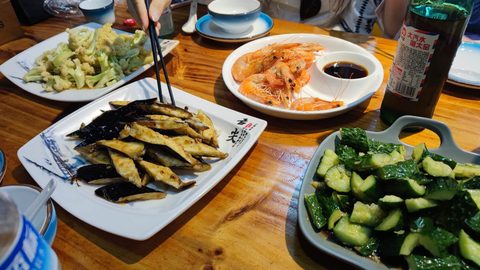 Harbin Food Worth Freezing For From Guo Bao Rou to Madier Ice Cream
Harbin food spans Russian-influenced smoked sausage and sourdough rye to Dongbei guo bao rou and the local ritual of eating Madier ice cream outdoors on Zhongyang Street at minus-20°C.
Harbin Food Worth Freezing For From Guo Bao Rou to Madier Ice Cream
Harbin food spans Russian-influenced smoked sausage and sourdough rye to Dongbei guo bao rou and the local ritual of eating Madier ice cream outdoors on Zhongyang Street at minus-20°C.
-
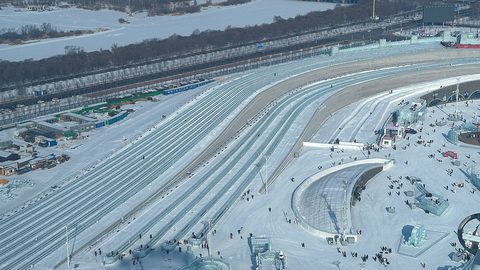 The Harbin Ice and Snow Festival
 spans three paid sites—Ice World, Sun Island, and Zhaolin Park—each with separate tickets, peak hours, and cold-weather demands.
The Harbin Ice and Snow Festival
The Harbin Ice and Snow Festival spans three paid sites—Ice World, Sun Island, and Zhaolin Park—each with separate tickets, peak hours, and cold-weather demands.
-
 Provincial China Beyond Beijing Shanghai Guangzhou and Xi’an
Provincial China rewards slow travellers with compressed continents of culture, cuisine, and landscape far beyond the standard megacity circuit.
Provincial China Beyond Beijing Shanghai Guangzhou and Xi’an
Provincial China rewards slow travellers with compressed continents of culture, cuisine, and landscape far beyond the standard megacity circuit.
-
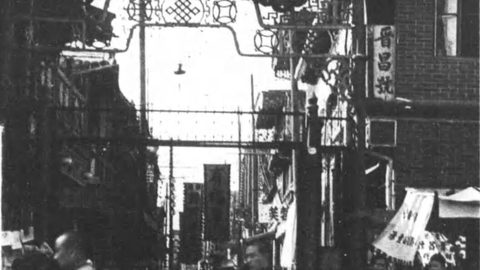 Harbin Russian Past Central Street Saint Sophia and the Railway Legacy
Harbin's Russian-built Central Street and Saint Sophia Cathedral are the surviving architecture of a city born from the Chinese Eastern Railway.
Harbin Russian Past Central Street Saint Sophia and the Railway Legacy
Harbin's Russian-built Central Street and Saint Sophia Cathedral are the surviving architecture of a city born from the Chinese Eastern Railway.
-
 Planning a Slow Travel Route Through Yunnan’s Lesser-Visited Villages
Plan a slower Yunnan journey through Dali, Shaxi, and Nuodeng, with realistic transport allowances, guesthouse advice, and respectful village visits.
Planning a Slow Travel Route Through Yunnan’s Lesser-Visited Villages
Plan a slower Yunnan journey through Dali, Shaxi, and Nuodeng, with realistic transport allowances, guesthouse advice, and respectful village visits.