Harbin Indoor Days The Bathhouses Bowling Alleys and Soviet Era Tea Rooms
A practical guide to Harbin Indoor Days The Bathhouses Bowling Alleys and Soviet Era Tea Rooms.

When Harbin Turns Dangerous
Harbin in January does not merely feel cold. It is cold in a way that rewrites the terms of being outside. The numbers are stark: an average daily high of minus 11.8°C, an average low of minus 22.3°C, and a recorded extreme of minus 38.1°C. The Heilongjiang Provincial Health Commission warns that winter outdoor conditions carry a risk of frostbite that can cause permanent tissue damage, and it advises limiting continuous outdoor exposure. This is not advisory language to treat lightly. It means that on certain days the city’s most famous draw, its frozen outdoor spectacle, becomes genuinely unsafe.
Yet Harbin does not shut down. It has built an entire parallel city of warmth, a network of heated refuges where life continues comfortably and often luxuriously. These are not makeshift shelters. They are purpose-built institutions, some dating back a century, that turn the coldest days into an opportunity for a different kind of Harbin experience. The indoor Harbin is not a compromise. It is a distinct pleasure, and on the days when the air hurts your face, it is the only sensible choice.
The Indoor Ice World That Never Melts
The most counterintuitive indoor escape in Harbin is also the most logical: a building full of ice. The Dream Snow and Ice Pavilion, operated by Harbin Ice and Snow World Co., Ltd., is a year-round indoor attraction covering 23,800 square metres. It holds a Guinness certification as the world’s largest indoor ice-and-snow theme park. The interior is kept at a constant temperature between minus 8°C and minus 12°C, and every sculpture inside is built from genuine ice and snow.
This is not a museum of photographs or a warmed-over exhibition hall. It is a frozen environment, just a controlled one. The operator provides free loaner down jackets and snow boots at the entrance, which changes the experience considerably. You are not layering up in desperation before dashing between outdoor installations. You are stepping into a cold gallery with proper gear supplied at the door, and you can leave whenever you have had enough. The pavilion undergoes an annual refurbishment closure, typically around mid-December. Before planning a visit, check the current operating status directly with Harbin Ice and Snow World Co., Ltd. through their official channels. Do not assume it is open in late December without confirming.
The Bathhouse as an All-Day Refuge
Across Harbin, the bathhouse is not a quick-stop facility. It is a sprawling indoor complex that functions as a social club, dining hall, spa, and overnight rest stop. The Heilongjiang Provincial Department of Culture and Tourism describes these venues as offering hot pools, saunas, steam rooms, body scrubbing, massage, buffet dining, and rest areas. Locals use them as all-day winter refuges, and the model is well suited to a traveller with nowhere else to be while the temperature outside plummets.
During the winter tourism season, many Harbin bathhouses add services specifically designed for visitors escaping the cold. According to Harbin Daily, these can include free luggage storage, free drying for wet clothes, 24-hour ticket validity with re-entry permitted, and overnight sleeping accommodations in capsule-style rest pods. The practical implication is straightforward: you can arrive in the morning, leave to explore during a milder stretch, and return without paying again. You can dry your snow-soaked coat while you soak. You can sleep there.
Entry fees, overnight charges, and specific amenities vary by venue and season. The Heilongjiang Provincial Bathing Industry Association is the relevant industry body, and individual bathhouses set their own pricing. Verify what is included before you commit to a particular location. A bathhouse that offers a full buffet and private resting pod will serve a different need than one with a basic sauna and communal loungers. Choose accordingly.
A Kremlin Dining Room on Zhongyang Dajie
At 112 Zhongyang Dajie, Huamei Western Restaurant has been serving diners since 1925, when it opened as the Mars Tea and Snack Shop. Its founder was a Russian Jew named Chugerman, and the original location was on West Eighth Street in Daoli District. The restaurant was nationalised in 1959, but its identity remains rooted in that earlier era of Harbin’s Russian émigré culture.
The second-floor dining room is the reason to seek it out on a bitter day. It was designed in the style of the Moscow Kremlin from the Soviet period, with a domed ceiling, gold-patterned carvings, chandeliers, and Russian oil paintings. The interior has remained largely unchanged since a 1997 fit-out. This is not a theme-park approximation. It is a preserved room with a specific aesthetic lineage, and sitting in it with a hot meal while the city freezes outside is one of the more transporting indoor experiences Harbin offers.
Whether the Kremlin-style dining room is open to walk-in guests is not a fixed fact. Opening hours and menu prices also shift. Check directly with Huamei Western Restaurant before visiting. If the upstairs room is closed, the ground-floor experience is still warm and historically grounded, but the second floor is the draw.
Books, Coffee, and Ornate Ceilings
Gogol Bookstore at 164 Guogeli Dajie in Nangang District is an ornately decorated European-style bookstore with a café that serves coffee and Western food. It is open to the public as a warm indoor reading and refreshment space. On a day when walking the streets is punishing, a bookstore with a café is a low-stakes, high-comfort option. You can stay for an hour or an afternoon. There is no admission fee, no time limit implied by the available descriptions, and no pressure to do anything except be indoors.
The bookstore’s decorative style sets it apart from a generic coffee shop. The European ornamentation gives it the feel of a destination rather than a functional stop, which matters when the goal is to make an indoor day feel intentional rather than like a cancelled outdoor day. It is also located on Guogeli Dajie, a major Nangang thoroughfare, which puts it within reach of other indoor stops if you are moving between warm stations.
Bowling Alleys and the Indoor Sports Option
Bowling is widely available in Harbin. Most larger hotels have lanes, and several dedicated centres operate across the city. The Singapore Bowling Centre in Xiangfang District has 26 lanes. Ganglong Bowling Centre, inside Harbin No.1 Department Store, has 20 lanes. Heilongjiang Oriental Bowling Entertainment Co. Ltd in Nangang District has 36 lanes.
These are not boutique retro installations. They are large, operational bowling centres, and their presence inside department stores and hotels means they are integrated into heated, accessible buildings. On a dangerous cold day, a bowling alley offers several practical advantages: it is indoors, it requires no special clothing, it can occupy a group for hours, and it typically has food and drink available on site or nearby. Lane fees and opening hours are mutable. Contact the individual venue before going. Do not assume all centres are operational year-round without checking.
Central Avenue’s Warm Station Network
Zhongyang Dajie, Harbin’s central pedestrian street, is lined with shops and restaurants that operate as informal warm stations during winter. The Heilongjiang Provincial Department of Culture and Tourism notes that some businesses along the avenue offer free hot ginger tea, complimentary hand warmers, and emergency device charging to pedestrians escaping the cold. This is not a formal programme with guaranteed coverage at every door. It is a pattern of behaviour that has developed in response to the climate, and it means that walking Central Avenue in extreme cold is less exposed than it might seem. You are never far from a heated interior and, in many cases, a business willing to help you thaw.
The municipal government supplements this with physical infrastructure. The Central Avenue Pedestrian Street Management Committee deploys outdoor heating stoves, anti-slip carpets, and handrail insulation sleeves along the avenue during winter. These measures do not make the street warm, but they reduce the immediate hazards of ice and frozen metal surfaces. The combined effect of government infrastructure and business hospitality turns Central Avenue into a viable corridor between indoor destinations rather than an exposure risk to be avoided entirely.
How to Structure an Indoor Day
An indoor day in Harbin works best when you treat it as a curated itinerary rather than a list of backups. The city’s warm refuges are geographically spread across Daoli, Nangang, and Xiangfang Districts, and moving between them still requires outdoor travel. The advice from the Health Commission is to limit continuous outdoor exposure, not eliminate it. Short, purposeful walks between heated buildings are manageable. Long waits for taxis or extended photo stops are not.
A practical approach is to anchor the day around one major venue, a bathhouse or the Dream Snow and Ice Pavilion, and build shorter stops around it. A morning at the indoor ice pavilion, followed by a walk down Central Avenue with its warm stations and heating stoves, then a long lunch in the Kremlin dining room at Huamei, and an afternoon reading at Gogol Bookstore, is a full and comfortable day. A bathhouse day is its own category: arrive early, use the pools and saunas, eat the buffet, rest in a pod, and leave only when you are ready.
Check mutable details before committing to any venue. The Dream Snow and Ice Pavilion may be closed for its annual refurbishment if you are travelling around mid-December. Huamei’s upstairs dining room may not be open to walk-ins. A bowling centre may have changed its hours. The responsible authorities and operators are named throughout the guidance. A few minutes of verification will prevent a long cold walk to a closed door.
Sources and verification
- extremeweatherwatch.com — Research source checked for this guide
- wlt.hlj.gov.cn — Research source checked for this guide
- hrbicesnow.com — Research source checked for this guide
- wlt.hlj.gov.cn — Research source checked for this guide
- hrbswszyjs.org.cn — Research source checked for this guide
- epaper.hljnews.cn — Research source checked for this guide
Read next
-
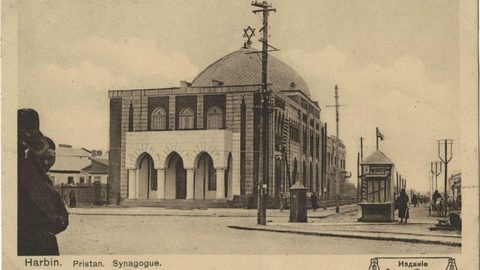
 Harbin Where to Stay for the Ice Festival and Winter Cold
Where to stay in Harbin during winter comes down to heating reliability, distance from the ice sites, and whether you want walkable Zhongyang Street or quick access to Ice and Snow World in Songbei.
-
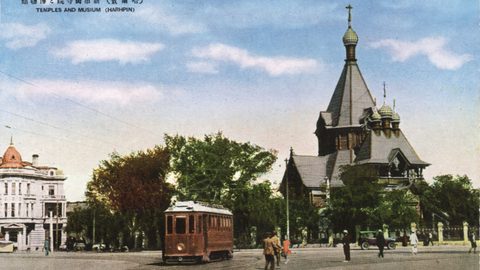 Harbin Things to Do Beyond the Ice and Snow World
Harbin things to do in winter centre on the Ice and Snow World, Sun Island snow sculptures, Zhaolin Park lanterns, and Russian architecture along Zhongyang Street, each demanding a strategy for the cold.
-
 Harbin Best Time to Visit for Ice Festivals Without the Crush
The best time to visit Harbin is late December through late February for the ice festival, but avoid Chinese New Year week for crushing crowds and July through August for oppressive heat with no winter spectacle.
-
 Harbin Getting Around in Winter Without a Chinese Bank Card
Getting around Harbin in winter means relying on the heated metro, preparing for taxi meter refusals after dark, and knowing that Didi wait times can stretch past 30 minutes at minus-25°C.
-
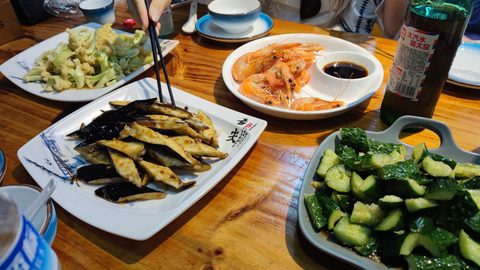 Harbin Food Worth Freezing For From Guo Bao Rou to Madier Ice Cream
Harbin food spans Russian-influenced smoked sausage and sourdough rye to Dongbei guo bao rou and the local ritual of eating Madier ice cream outdoors on Zhongyang Street at minus-20°C.
-
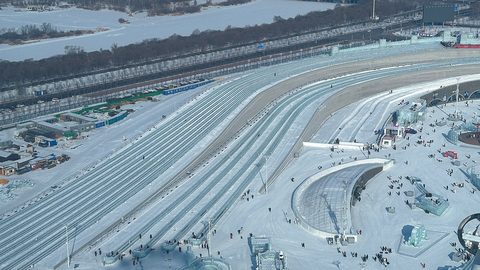 The Harbin Ice and Snow Festival
 spans three paid sites—Ice World, Sun Island, and Zhaolin Park—each with separate tickets, peak hours, and cold-weather demands.
-
 Provincial China Beyond Beijing Shanghai Guangzhou and Xi’an
Provincial China rewards slow travellers with compressed continents of culture, cuisine, and landscape far beyond the standard megacity circuit.
-
 Guizhou Village Travel by Public Transport A Practical Loop
A practical guide to Guizhou Village Travel by Public Transport A Practical Loop.
-
 Yunnan in Winter A Route Built Around Clear Weather and Altitude
A practical guide to Yunnan in Winter A Route Built Around Clear Weather and Altitude.