What to Eat Across Yunnan's Eight Culinary Regions
Yunnan's food spans Kunming noodle theatre, Dali goat-cheese street snacks, Jianshui pungent grilled tofu, and the sour-herb fire of Xishuangbanna's Dai kitchens.
Yunnan’s Eight Culinary Regions: What to Eat Where
You have 10 days minimum and want to eat your way across Yunnan, not just tick off old towns. The problem is that Yunnan's food changes more dramatically than its altitude. Highland Tibetan barley in Shangri-La. Bai cheese and rice cakes around Dali. Tropical Dai sour-spicy river fish in Xishuangbanna. The famous cross-bridge noodles are a Kunming thing; ordering them in Lijiang misses the point entirely. Knowing what to eat where matters because ordering the wrong dish in the wrong valley wastes both time and appetite.
Yunnan is one of China's Eight Great Regional Cuisines, defined by sour and spicy flavors and a heavy use of flowers, ferns, and wild fungi. But that classification flattens eight distinct culinary zones into one label. The real divide is altitude and ethnicity. Below 1,000 meters in Xishuangbanna, Dai cooks use lemongrass, lime, and galangal. At 3,200 meters in Shangri-La, Tibetan kitchens rely on yak butter and barley. In between, every valley has its own fermentation tradition, from Jianshui's grilled tofu to Dali's goat milk fans.


Kunming: the Gateway and the Soup That Made it Famous
Cross-Bridge Noodles Done Right
Start in Kunming for a reason. Cross-bridge rice noodles originated in nearby Mengzi County, where a scholar studied on an island and his wife discovered that a layer of oil kept soup hot enough to cook ingredients after crossing a bridge. The proper order matters: raw quail egg first, then raw meat slices, then vegetables, then the rice noodles. Order this anywhere outside Kunming and you get a pale imitation with a lukewarm broth.
Wild Mushroom Season and What to Order Instead
Kunming is your best bet for wild mushroom dishes between June and September. Over 800 species of edible wild mushrooms grow in Yunnan, and the harvest peaks in July and August. Be aware that 10 to 30 deaths from mushroom poisoning occur annually in Yunnan, with symptoms appearing 6 to 72 hours after ingestion. Eat at a reputable restaurant that sources from known suppliers, not from a roadside stall. If you arrive outside mushroom season, skip the dried versions and order the Er Kuai (chewy rice cakes grilled or stir-fried) or a Pu'er tea hot pot chicken instead.
Dali and Erhai Lake: Bai Cheese, Rice Cakes, and Raw Pork
Goat Cheese at the Morning Market
Dali sits at the center of Bai cuisine, which relies on dairy and fermentation in ways that northern Yunnan does not. The signature is Rushan (goat milk fan, fried and drizzled with rose sugar) and Rubing (pressed goat cheese, pan-fried). Both come from the same principle: fresh goat milk curdled with a souring agent and shaped into blocks or fans. Eat them at the morning market in Zhoucheng Tie-Dye Village, 40 minutes by minibus from Dali Old Town, where vendors grill them on the spot.
Raw Pork and Lake Fish
Do not skip the raw pork dish, Sheng Pi, if you are adventurous. It is cured ham and fermented vegetables served raw. A true Bai specialty. Around Erhai Lake, order fish stewed in a clay pot with pickled plums and tofu, a dish that uses the lake's freshwater catch. The Dali area is also the best place to try Er Kuai: grilled rice cakes with a texture between bread and mochi. Skip the Lijiang Baba here; that layered flatbread belongs to Lijiang and is a different thing entirely.
| Region | Altitude Range | Staple Grain | Signature Dish | Key Ingredient |
|---|---|---|---|---|
| Kunming | 1,800 m | Rice noodles | Cross-bridge rice noodles | Quail egg, raw meat |
| Dali/Erhai | 1,900 m | Rice cakes (Er Kuai) | Rushan (fried goat milk) | Goat milk, rose sugar |
| Lijiang/Shuhe | 2,400 m | Wheat | Baba (layered flatbread) | Butter, sugar or chilli |
| Shangri-La | 3,200 m | Barley | Tsampa, yak butter tea | Yak butter, barley flour |
| Xishuangbanna | 500 m | Sticky rice (bamboo tubes) | Dai lemongrass grilled fish | Lemongrass, lime, galangal |
| Jianshui | 1,300 m | Rice noodles | Grilled tofu | Fermented tofu, chilli powder |


Lijiang and Shangri-La: Where the Wheat Belt Meets the Tibetan Plateau
Lijiang's Wheat Flatbread
Lijiang sits at 2,400 meters and its food switches from rice to wheat. The local staple is Baba: a layered flatbread, either sweet with butter and sugar or savoury with chilli and scallions. Skip cross-bridge noodles here. They arrive tepid and the broth sits too long. Instead, eat Baba from a street vendor in Shuhe, the quieter alternative to Lijiang Dayan, 20 minutes by bus from the main old town.
High-Altitude Eating in Shangri-La
Shangri-La at 3,200 meters is Tibetan country. The altitude hits hard; budget at least 24 hours to acclimatise before attempting any hiking. Tibetan food is simple and high-calorie: tsampa (roasted barley flour mixed with yak butter tea), yak meat stew, and dried yak cheese. Do not expect vegetables; the growing season is short and the soil thin. Songzanlin Monastery area has the most reliable restaurants for Tibetan staples. If you are cycling or hiking the Tiger Leaping Gorge two-day high trail, pack extra tsampa bricks and electrolyte powder. The guesthouses up there serve basic noodles and rice, but nothing with the caloric density of highland Tibetan food.
Common Questions
Can I eat cross-bridge noodles outside Kunming?
You can, but do not. The broth needs to stay above 95°C to cook raw meat and quail egg. Outside Kunming, the soup cools during transport, ingredients arrive raw or overcooked, and the whole dish turns into mediocre noodle soup. Order the local specialty instead.
Is wild mushroom season worth the risk?
Yes, with caution. June to September offers over 800 edible species. The risk is real: 10 to 30 deaths occur annually, peaking in July and August. Eat only at well-reviewed restaurants that source from known suppliers. Symptoms appear 6 to 72 hours after ingestion. Pack charcoal tablets.
What should I eat in Xishuangbanna if I don't like spicy food?
Dai cuisine is relentlessly sour, spicy, and fresh. Sticky rice in bamboo tubes is mild and filling. Try the banana flower salad or boiled river fish without chilli. Ask for 'bu la' (not spicy) and point at your translation app. The heat is real.
How do I order food without speaking Chinese?
You point at photos on the wall or your phone screen. Google Translate and a Chinese SIM card (non-negotiable for Didi and maps) are your tools. English is near zero outside high-end hotels. Learn the dish names in Chinese characters before you arrive.
Read next
-

 Yunnan Hotels Chains Courtyards and the Foreigner Registration Rule
Hotels in Yunnan range from international chains to courtyard guesthouses, but the foreigner registration rule determines where you can actually sleep—here is what to book.
Yunnan Hotels Chains Courtyards and the Foreigner Registration Rule
Hotels in Yunnan range from international chains to courtyard guesthouses, but the foreigner registration rule determines where you can actually sleep—here is what to book.
-
 Where to Stay in Yunnan Town by Town Base Guide
Where to stay in Yunnan, from Kunming to Shangri-La: neighbourhood-by-neighbourhood advice on old town courtyards, Erhai lake villages, and altitude-conscious bases.
Where to Stay in Yunnan Town by Town Base Guide
Where to stay in Yunnan, from Kunming to Shangri-La: neighbourhood-by-neighbourhood advice on old town courtyards, Erhai lake villages, and altitude-conscious bases.
-
 Flying Into Yunnan Kunming Lijiang Dali and Shangri-La Airports Compared
Choosing between Kunming, Lijiang, Dali, and Shangri-La airports shapes your entire Yunnan route—here's how each gateway affects transit time, altitude, and cost.
Flying Into Yunnan Kunming Lijiang Dali and Shangri-La Airports Compared
Choosing between Kunming, Lijiang, Dali, and Shangri-La airports shapes your entire Yunnan route—here's how each gateway affects transit time, altitude, and cost.
-
 What Yunnan Is For Mountains Old Towns and Minority Culture
Yunnan is for high-altitude treks, living old towns like Shaxi, minority markets, winter rice terraces at Yuanyang, and going deep on Pu'er tea at the source.
What Yunnan Is For Mountains Old Towns and Minority Culture
Yunnan is for high-altitude treks, living old towns like Shaxi, minority markets, winter rice terraces at Yuanyang, and going deep on Pu'er tea at the source.
-
 Yunnan Weather Seasons and the Best Time to Visit Without the Crowds
Yunnan spans tropical lowlands and Himalayan peaks, so the best time to visit depends entirely on which region you're targeting and whether you can stomach the October crowds.
Yunnan Weather Seasons and the Best Time to Visit Without the Crowds
Yunnan spans tropical lowlands and Himalayan peaks, so the best time to visit depends entirely on which region you're targeting and whether you can stomach the October crowds.
-
 Getting Around Yunnan Rail Bus and the Mountain Road Reality
Getting around Yunnan means high-speed rail between Kunming, Dali, and Lijiang, then long-distance buses and shared minivans into the mountains—and 200 km takes 5 hours.
Getting Around Yunnan Rail Bus and the Mountain Road Reality
Getting around Yunnan means high-speed rail between Kunming, Dali, and Lijiang, then long-distance buses and shared minivans into the mountains—and 200 km takes 5 hours.
-
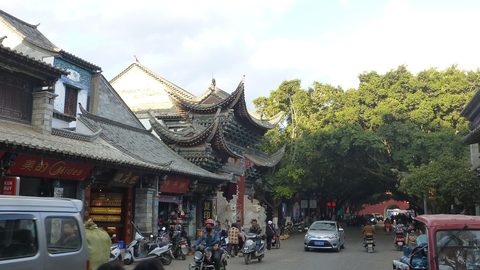 Jianshui
 has a Ming dynasty seventeen-arch bridge, one of China's largest Confucian temples, and tofu grilled on street corners—and almost every Yunnan itinerary skips it.
Jianshui
Jianshui has a Ming dynasty seventeen-arch bridge, one of China's largest Confucian temples, and tofu grilled on street corners—and almost every Yunnan itinerary skips it.
-
 Gejiu
The Yuanyang rice terraces only become the mirror-like spectacle of photographs from November to March—here is how to time the water season and hit the right viewpoints at sunrise and sunset.
Gejiu
The Yuanyang rice terraces only become the mirror-like spectacle of photographs from November to March—here is how to time the water season and hit the right viewpoints at sunrise and sunset.
-
 Baoshan
 unlocks Yunnan's wild western edge: the Gaoligong mountains, Tengchong's volcanic hot springs, and the ghosts of the Burma Road. A frontier for second-time visitors.
Baoshan
Baoshan unlocks Yunnan's wild western edge: the Gaoligong mountains, Tengchong's volcanic hot springs, and the ghosts of the Burma Road. A frontier for second-time visitors.